Author name: yash soman

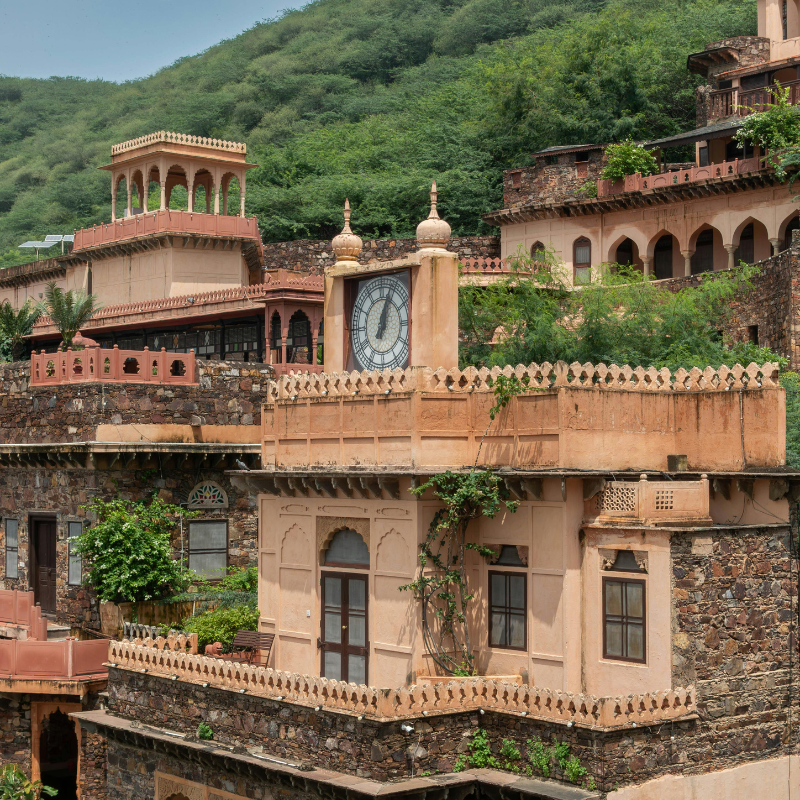
The 15th-century Neemrana Fort Palace perched on a cliffside
Destination

Neemrana Fort Palace

Neemrana Fort Palace Neemrana Fort Palace: Cut dramatically into a jagged quartzite hill of the ancient Aravalli Range in the Alwar district, Neemrana Fort Palace is one of India’s premier heritage wonders. Originally constructed in 1464 AD under the lineage of the legendary Prithviraj Chauhan III, the last Hindu king of Delhi, this sprawling fortress served as the proud third capital of the descendant Chauhan rajas. Rather than standing as a singular, imposing block on flat ground, Neemrana is a spectacular vertical hill fort. It cascades down a horseshoe-shaped hillside across 14 distinct tiers, creating a brilliant architectural tapestry of rugged stone ramparts, hidden courtyards, hanging gardens, and grand balconies that step organically down the mountain slopes. Following India’s independence, the massive fort was eventually abandoned by its royal occupants in 1947, falling into severe structural decay for nearly forty years as roofs caved in and vegetation reclaimed the stone wings. In 1986, a visionary restoration project breathed new life into the historic site, carefully stabilizing the medieval ruins and transforming them into a highly acclaimed “living heritage” destination. Great care was taken to preserve the raw, authentic character of the 15th-century battlements. Modern comforts were seamlessly integrated without altering the layout of the old pathways, turning historical defensive watchtowers, royal bedchambers, and artillery decks into stunning architectural spaces that look exactly as they did during the height of Rajput regional power. Top Things to See & Do Inside: Wander the Cascading Hanging Gardens: Explore the beautifully manicured stone terraces that step down the hill face. These levels feature lush green lawns, large terracotta planters, and elegant stone arches that open up to a breathtaking, unobstructed view of the surrounding countryside and the modern highway far below. See the Open-Air Amphitheater: Nestled beautifully into the central tiers sits a grand, semi-circular stone amphitheater. Modeled loosely after classical Roman designs but built using traditional Rajasthani stone masonry, this space serves as an atmospheric venue for live traditional folk dances and musical performances under the stars. Marvel at the Maha Burj (The Great Bastion): Climb up to the massive, rounded defensive watchtower positioned on the upper levels. It still features old iron-spiked platforms that once held heavy medieval cannons, providing an incredible birds-eye perspective of the entire palace grid. Fly Across the Zipline Aerial Tour: For thrill-seekers, Neemrana houses India’s very first aerial zipline course. The tour features five distinct zip lines spanning across the mountain valleys and fort roofs, letting you glide smoothly high above the ancient stone ramparts. View Nearby Destinations All Events Destination Neemrana Fort Palace Deshnoke Saheliyon-ki-Bari Jag Mandir Shilpgram Jaigarh Fort Load More End of Content.
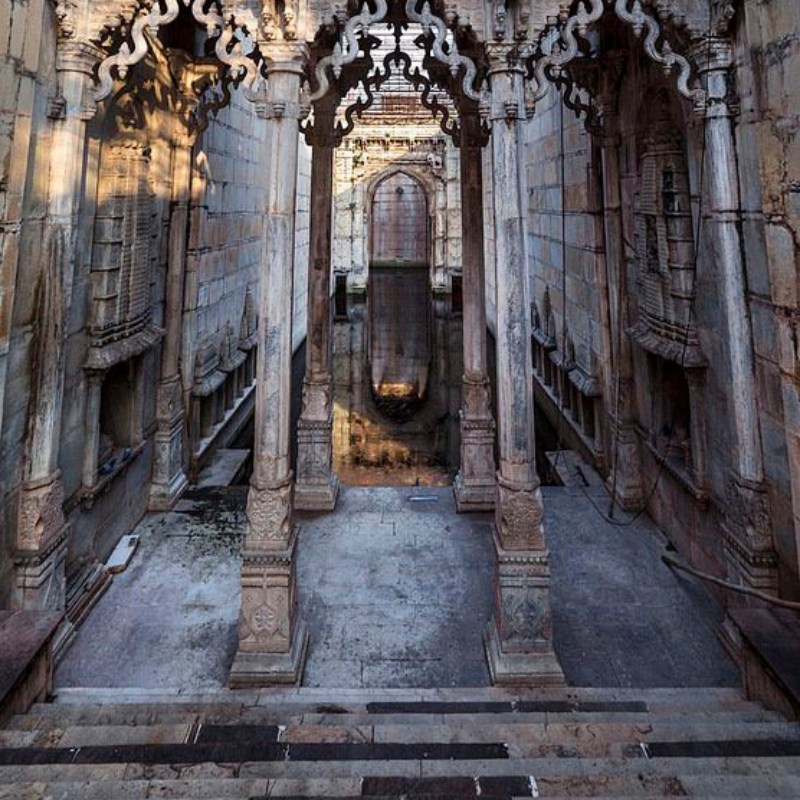
Ornate carvings of the Queen’s Stepwell (Raniji ki Baori) in Bundi
Destination

Raniji ki Baori

Raniji ki Baori Raniji ki Baori: Located right in the heart of Bundi town, Raniji Ki Baori (The Queen’s Stepwell) is widely recognized as the architectural crown jewel among the hundred-plus stepwells that dot this historic region. Built in 1699 AD, this breathtaking subterranean structure was commissioned by Rani Nathavati, the younger queen of the ruling Hada Chauhan monarch Rao Raja Anirudh Singh, during the regency of her young son Maharao Raja Budh Singh. While many stepwells across India were designed primarily as utilitarian water-gathering stations, Raniji Ki Baori was built as an exquisite, multi-story spiritual monument and a high-art community sanctuary. Plunging 46 meters (150 feet) into the earth, its dramatic vertical corridors seamlessly blend complex hydraulic design with some of the finest high-relief stone carvings found in southeastern Rajasthan. The Legacy of the Benevolent Queen In the arid landscape of Rajasthan, constructing a water body was considered the ultimate act of religious merit and civic benevolence. Rani Nathavati, renowned for her deep spirituality and care for her subjects, stepped forward during a period of intense drought to finance and oversee the construction of this massive well. The stepwell was engineered not just to tap into deep underground aquifers, but to serve as a cool, underground palace for women to socialize away from the blazing summer heat. The design follows an exceptionally elegant linear path, guiding visitors down a wide flight of steps through a series of increasingly grand, pillared subterranean gateways that mark the transition from the sunny surface to the cool, sacred depths of the water table. Top Things to See & Do Inside: The Sinuous Torana Arches: The absolute highlight of the structure is its beautifully preserved entry gates. The pillars are joined by magnificent, S-shaped Torana arches carved out of fine sandstone. These arches are incredibly delicate, featuring intricate scrollwork and floral waves that look almost weightless despite being carved from massive stone slabs. The Avatars of Lord Vishnu: Study the stone panels lining the interior walls and pillars as you descend. The stepwell serves as an open-air religious gallery, housing masterfully executed carvings of the Dashavatara (the ten divine incarnations of Lord Vishnu). The reliefs of Lord Varaha (the boar) and Narasimha (the lion-man) are exceptionally expressive and detailed. The Intricate Elephant Corbel Brackets: Look closely at the tops of the structural pillars supporting the lower roofs. The brackets are carved into beautifully detailed figures of elephants with their trunks curled inward, looking as though they are effortlessly carrying the weight of the massive stone floors above them. The Symmetrical Places of Rest: The stepwell features wide, sheltered stone platforms (jharokhas) on either side of the central staircase. These side bays allowed ancient travelers and locals to sit, meditate, and enjoy the cool, naturally air-conditioned drafts rising off the water surface below. View Nearby Destinations All Events Destination Raniji ki Baori Deshnoke Saheliyon-ki-Bari Jag Mandir Shilpgram Jaigarh Fort Load More End of Content.
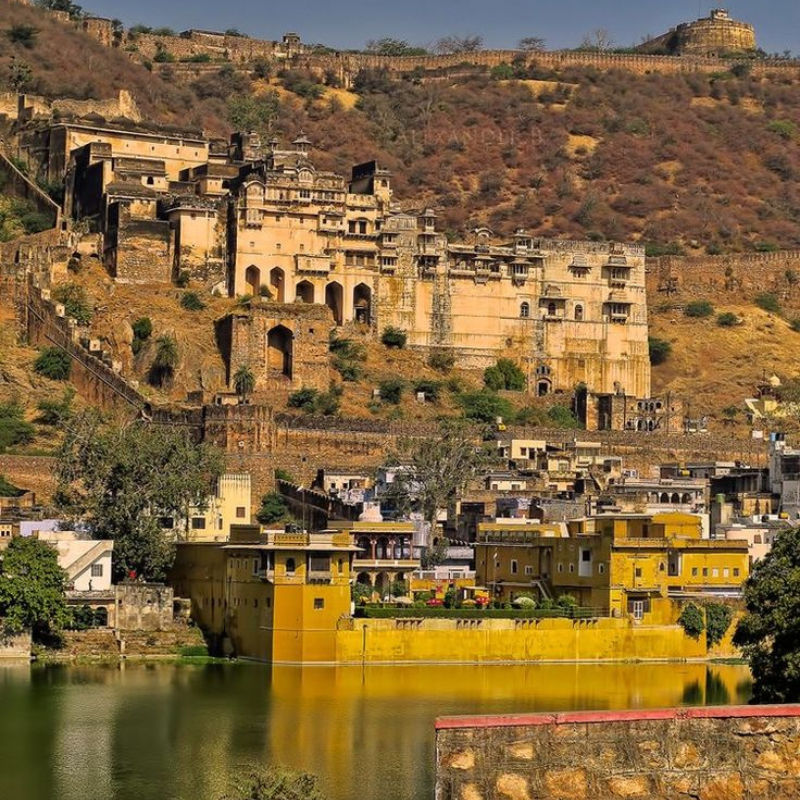
The rugged historic ramparts of Taragarh Fort in Bundi
Destination

Taragarh Fort

Taragarh Fort Taragarh Fort (Bundi): Perched formidably on a steep crest of the Aravalli hills directly above the Garh Palace, Taragarh Fort (or Star Fort) is one of the oldest, most rugged, and historically unaltered military fortresses in Rajasthan. Constructed in 1354 AD by Rao Deva, the visionary founder of the Hada Chauhan dynasty, this sprawling medieval citadel was engineered as the absolute shield of the Hadoti region, protecting the kingdom from the ambitious imperial expansion of the Delhi Sultanate, Mewar, and the Mughals. Unlike many of Rajasthan’s heavily restored commercial forts, Taragarh has been largely left to the forces of nature. Its weathered stone ramparts crawl over the jagged green hillsides like a dragon’s spine, offering an extraordinarily raw, wild, and adventurous exploration for travelers seeking a genuine glimpse into medieval military history. The fortress owes its name to its unique architectural geometry. When viewed from the valley floor or a distant mountain peak, the sprawling network of zigzagging battlements, bastions, and outer defensive lines closely resembles the shape of a massive, multi-pointed star crowning the mountain. The fort’s engineering was way ahead of its time, relying entirely on the steep, near-vertical mountain slopes for its defense. The outer stone walls are remarkably thick and feature grand circular watchtowers. Taragarh is famous in military history for its absolute structural strength; it survived centuries of fierce siege attempts without ever being fully compromised by an invading army, earning it a legendary reputation for invincibility in southeastern Rajasthan. Top Things to See & Do Inside: Marvel at the Garbh Gunjam (Thunder from the Womb): Located on a high, massive stone bastion sits the legendary Garbh Gunjam cannon. Cast in the 16th century, this colossal medieval firearm was once among the largest in India. Local folklore states that the cannon was so phenomenally loud when fired that the deep shockwave forced gunners to leap into deep water tanks to protect their eardrums, giving the weapon its terrifying name. Discover the High Mountain Reservoirs: Because the fort is perched high above seasonal river streams, medieval architects carved three massive water reservoirs—Bhim Lat, Kadki Baori, and Sukh Sagar—directly into the solid granite bedrock of the hilltop. These deep, stone-lined engineering marvels gathered millions of gallons of rainwater, allowing the garrison to comfortably survive years-long military sieges. Wander Through the Haunted Palace Ruins: Walk past the overgrown entryways of the Rani Mahal (Queens’ Palace). While the roofs have long since collapsed and wild vegetation has reclaimed the courtyards, you can still spot faded, centuries-old murals, elegant stone pillars, and carved window balconies that hint at its past royal luxury. Take in the Panoramic View of the Blue City: Climb up to the highest lookout towers near the central TV tower tower ridge. From this vantage point, you get a spectacular, unobstructed view of the thousands of distinct blue-washed houses of Bundi wrapping around the shimmering waters of Nawal Sagar and Jait Sagar lakes below. View Nearby Destinations All Events Destination Taragarh Fort Deshnoke Saheliyon-ki-Bari Jag Mandir Shilpgram Jaigarh Fort Load More End of Content.
Medieval murals and the Umaid Mahal interior at Bundi Palace
Destination

Bundi Palace

Bundi Palace Bundi Palace (Garh Palace): Perched dramatically on the steep, rocky slopes of the Aravalli hills overlooking the historic blue-washed town of Bundi, the Bundi Palace (also known as Garh Palace) is one of India’s most atmospheric and structurally unique royal monuments. Built primarily between the late 16th and early 17th centuries by the rulers of the Hada Chauhan clan—beginning with Rao Raja Ratan Singh—this grand palace complex is globally celebrated as the supreme epicenter of the Bundi School of painting. Unlike the massive, heavily symmetric Mughal palaces of Jaipur or Jodhpur, Bundi Palace features an organic, asymmetrical maze of stone terraces, overhanging balconies (jharokhas), and intricately carved brackets that seem to grow organically straight out of the mountain cliffside. The legendary author Rudyard Kipling famously described it as “the work of goblins rather than of men,” owing to its surreal, timeless appearance. What elevates Bundi Palace from a military fortress to a world-class cultural treasure is its matchless collection of vivid mural frescoes. The palace interiors served as a royal canvas during the 17th and 18th centuries when local artists developed a highly distinct style characterized by glowing, vibrant colors (dominated by turquoise, orange, and vivid greens), graceful human figures, and a deep, poetic focus on lush natural landscapes. The pinnacle of this artistic movement is preserved inside the Chitrashala (also known as the Ummed Mahal). Built under the patronage of Maharao Ummed Singh, this sheltered courtyard gallery features walls and ceilings entirely covered in pristine miniature murals that have never been restored, yet retain their brilliant luster. The paintings illustrate complex scenes from the Raslila (the divine dance of Radha and Lord Krishna), royal court processions, dynamic hunting expeditions, and highly detailed depictions of the local monsoon wilderness. Top Things to See & Do Inside: Enter Through Hathi Pole (The Elephant Gate): The primary royal entrance to the inner complex is guarded by a monumental stone gateway crowned by two massive, beautifully sculpted stone elephants whose trunks interlock to form a majestic defensive archway. Marvel at the Chitrashala (The Picture Gallery): Located on an upper garden terrace, this is the absolute crown jewel of Bundi. Walk slowly past the pillars to study the intricate brushwork, where artists used natural minerals and real gold leaf to depict rolling monsoon clouds, playful monkeys, and the legendary love stories of Hindu mythology. Explore the Badal Mahal (The Palace of Clouds): Positioned high within the older apartment blocks, the ceilings of this grand chamber are completely covered in exquisite, early 17th-century frescoes depicting Chinese-influenced cloud patterns, celestial angels, and traditional court life. See the Phool Mahal (The Palace of Flowers): Built by Raja Bhoj, this grand audience hall features striking wall murals depicting massive armies marching with columns of war elephants, historic fortress layouts, and fine ornamental patterns. Climb to Taragarh Fort: Located directly above the palace complex along a steep, rugged mountain path sits the crumbling, heavily fortified Taragarh Fort (Star Fort). Built in 1354 AD, this wild, untamed fortress houses massive medieval water reservoirs and offers a breathtaking panoramic view over the entire valley. View Nearby Destinations All Events Destination Bundi Palace Deshnoke Saheliyon-ki-Bari Jag Mandir Shilpgram Jaigarh Fort Load More End of Content.
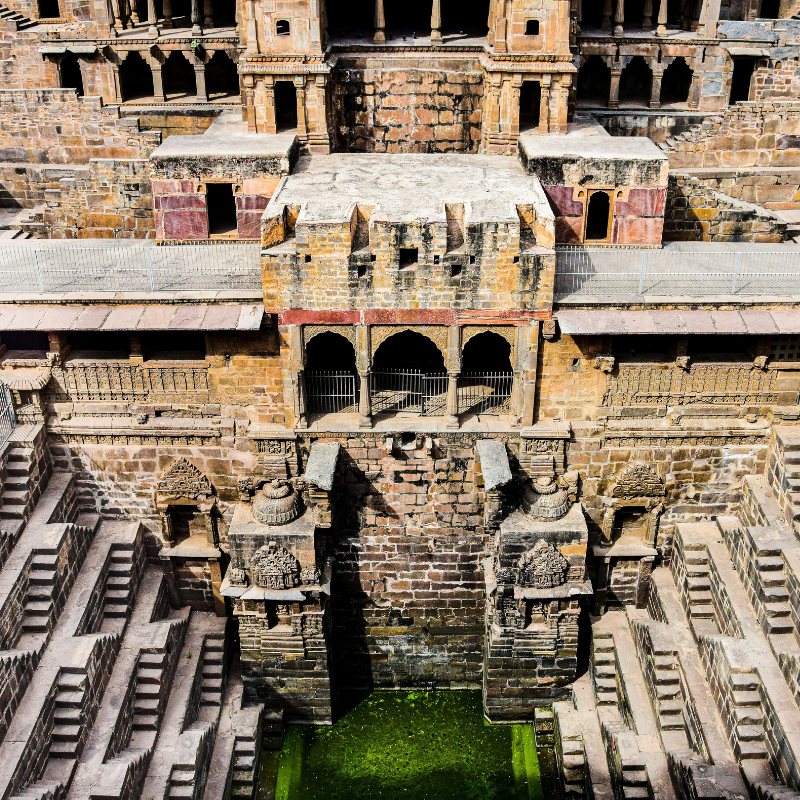
The symmetrical geometric steps of Chand Baori stepwell in Abhaneri
Destination

Chand Baori

Chand Baori Chand Baori (Abhaneri): Located in the quiet village of Abhaneri, roughly 95 kilometers east of Jaipur, Chand Baori is the oldest, deepest, and most architecturally jaw-dropping stepwell (baori) in India. Constructed in the 8th century AD by King Chanda of the Nikumbha dynasty, this massive subterranean structure is an absolute masterclass in ancient hydraulic engineering and structural geometry, plunging over 100 feet (30 meters) into the earth across 13 distinct tiers. While palaces catch the sun above ground, Chand Baori turns architecture completely inward. It was designed not just as a monumental water reservoir to combat the intense, cyclical droughts of arid Rajasthan, but as a cool, breezy community sanctuary and a sacred prelude to the adjacent Harshat Mata Temple. The Symphony of 3,500 Symmetric Steps What makes Chand Baori a global artistic icon is its mesmerizing visual rhythm. Three of its internal walls are lined with a staggering maze of 3,500 narrow stone steps arranged in a flawless, hyper-symmetrical pattern. The steps look like an intricately woven stone textile or an optical illusion: as you look down from the rim, the triangular formations repeat infinitely toward the shimmering green water at the base. The fourth wall of the stepwell breaks this pattern with a multi-story royal pavilion. This subterranean palace features grand pillared corridors, arched balconies, and two projecting chambers housing beautiful sculptures of the deities Mahishasuramardini (Durga) and Ganesha. The entire layout reflects a deep understanding of thermodynamics: down at the water’s edge, the air temperature naturally hovers a refreshing 5 to 6 degrees Celsius cooler than the scorching desert heat at the surface, allowing medieval royals to rest comfortably during peak summer. Top Things to See & Do Inside: Marvel at the Geometric Optical Illusion: Walk slowly along the secure upper viewing corridors to appreciate the mathematical precision of the 8th-century artisans. The layout was engineered so perfectly that every single step catches the light evenly, casting sharp geometric shadows that shift dramatically throughout the day. Explore the Royal Pavilion and Carving Galleries: Peer into the multi-tiered royal galleries on the north face. The surrounding sheltered arcades serve as an open-air museum, housing hundreds of beautifully preserved, deeply carved stone panels recovered from the site, depicting mythological beasts, celestial dancers, and intricate floral patterns. Visit the Adjacent Harshat Mata Temple: Located just a few steps away from the stepwell rim, this 8th-century temple is dedicated to Harshat Mata, the Goddess of Happiness and Joy. Though partially ruined during a 10th-century siege by Mahmud of Ghazni, its high stone plinth offers an incredible view over the village fields and features exceptional early medieval relief carvings. View Nearby Destinations All Events Destination Chand Baori Deshnoke Saheliyon-ki-Bari Jag Mandir Shilpgram Jaigarh Fort Load More End of Content.
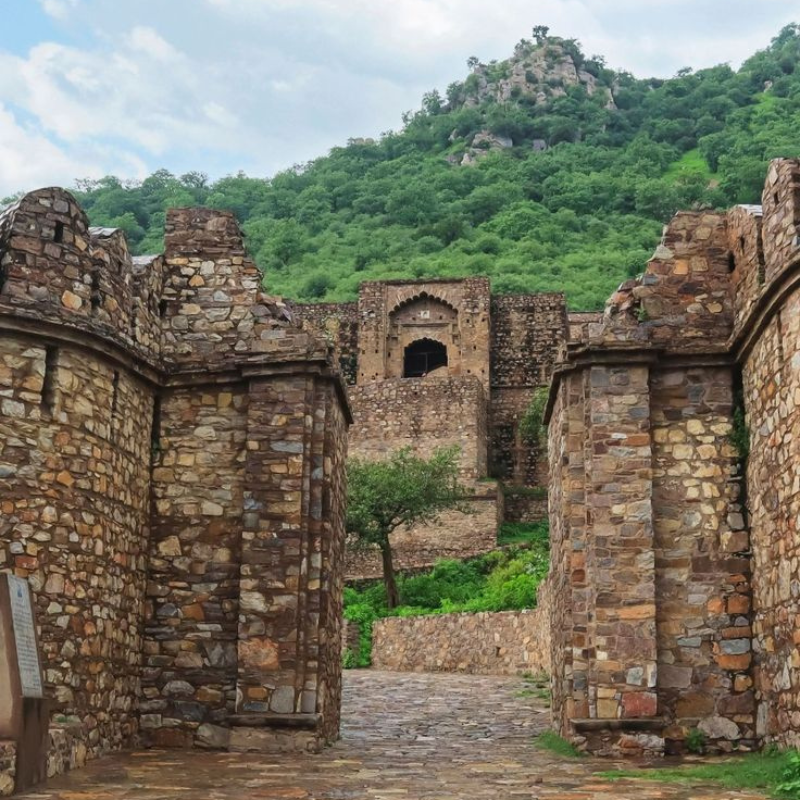
Ruins of the haunted Bhangarh Fort near Sariska Tiger Reserve
Destination

Bhangarh Fort

Bhangarh Fort Bhangarh Fort: Bordering the rugged expanses of the Sariska Tiger Reserve in the Alwar district of Rajasthan, Bhangarh Fort is an exceptionally well-preserved 17th-century fortified city. Built in 1573 AD by the Kachwaha Rajput ruler Raja Bhagwant Das for his younger son Madho Singh (brother of the legendary Mughal general Man Singh I), this extensive complex was once a prosperous urban hub featuring a multi-story royal palace, bustling market lanes, grand entry gates, and beautiful stone temples. Today, Bhangarh is globally infamous as India’s most haunted location. Cloaked in chilling local lore and eerie ghost stories, the ruined city presents a fascinating juxtaposition: it is a stunning masterclass in medieval town planning that is legally abandoned to the wilderness the absolute moment the sun dips below the horizon. The sudden, mysterious abandonment of Bhangarh by the early 18th century is explained by two dominant local legends, both involving absolute curses that allegedly doomed the city to ruin: The Shadow of the Ascetic: The first legend states that Raja Ajab Singh (grandson of Madho Singh) sought to expand the fort. However, a revered ascetic named Guru Balu Nath, who meditated nearby, had permitted the fort’s construction on one strict condition: “The moment the shadow of your palaces touches my sanctuary, the city shall be no more.” Ambition overrode caution, and a higher column block cast a long shadow directly over the yogi’s retreat, causing the entire city to rapidly fall into ruin. The Curse of the Dark Wizard: The more popular, romantic legend centers around Princess Ratnavati, the exceptionally beautiful daughter of Bhangarh. A wicked sorcerer named Singhia, deeply adept in black magic, fell in love with her. Knowing he could never marry her, he tried to enchant her hair oil with a love potion. Sensing the trick, the princess threw the vial against a massive boulder. The enchanted rock rolled over, crushing the sorcerer. Before drawing his final breath, Singhia cursed the town, declaring that everyone within the fort would perish and their souls would remain trapped inside the walls for eternity without rebirth. Top Things to See & Do Inside: Walk Through the Five Fortified Gates: The outer defensive grid is guarded by five monumental stone gates. Entering through the main Hanuman Gate reveals a sprawling historical layout. The pathway leads past the crumbling stone foundations of the Johari Bazar (the ancient market lanes) and residential quarters, where all houses conspicuously lack roofs. Marvel at the Gopinath and Someshwar Temples: Curiously, while the residential sectors are entirely ruined, the complex’s grand Hindu temples remain beautifully intact. The Gopinath Temple, raised on a high stone plinth, features exceptional yellow stone carvings and elegant pillars that display classic Solanki structural styling. Climb the Royal Palace Ruins: Positioned at the very back of the valley slope, the seven-story royal palace has now reduced to four atmospheric tiers. Stepping carefully through its vaulted dark stone corridors, broken archways, and sweeping stepwells offers a panoramic view over the entire valley. See the Chhatri of the Sorcerer: Looking way up to the crest of the steep hill overlooking the palace, you can spot a small, solitary stone canopy (chhatri). Local guides point to this structure as the lookout point utilized by the legendary sorcerer to monitor the princess’s movements. View Nearby Destinations All Events Destination Bhangarh Fort Deshnoke Saheliyon-ki-Bari Jag Mandir Shilpgram Jaigarh Fort Load More End of Content.
The yellow-soiled valley of Haldi Ghati, site of the legendary battle
Destination

Haldi Ghati

Haldi Ghati Haldighati: The Turmeric Mountain Pass of Mewar Situated in the Aravalli Range between the towns of Khamnore and Bagicha, roughly 40 kilometers north of Udaipur, Haldighati is one of the most historically charged mountain passes in India. Literally translating to “Turmeric Valley,” this narrow, rocky pass gets its distinctive name from its fine, bright yellow-colored clay soil, which closely resembles turmeric (haldi) powder. Beyond its unique geological features, Haldighati is deeply etched into India’s cultural memory as an epic, ancient battlefield. It stands as a profound symbol of fierce patriotism, strategic guerrilla warfare, and the unbreakable spirit of the legendary Rajput warrior king, Maharana Pratap. The Epic Clash of 1576 The valley is the exact site of the historic Battle of Haldighati, fought on June 18, 1576. The conflict saw a deeply outnumbered Mewari force led by Maharana Pratap stand firmly against the massive, imperial Mughal army commanded by Kunwar Man Singh I of Amer, representing Emperor Akbar. The narrow, bottleneck geography of the pass was the core of Pratap’s defensive strategy. Imperial cavalry and heavy artillery could not easily navigate the tight, rocky gaps, allowing the local Mewari forces and their trusted Bhil tribal archer allies to launch devastating guerrilla ambushes from the overlooking cliffs. While the battle itself was incredibly brutal and bloody, it ultimately proved inconclusive; Maharana Pratap successfully retreated deep into the safety of the surrounding Aravalli forests to launch a decades-long campaign to reclaim his kingdom. Key Historical Sites and Landmarks to Explore: Walk the Historic Haldighati Pass: Take a quiet walk through the actual, preserved narrow mountain gap. The rock walls rise steeply on both sides of the road, showing off the vivid yellow soil that has drawn travelers and historians for generations. Pay Respects at the Chetak Samadhi: Located just a short distance from the pass at Rakt Talao sits the historic Cenotaph of Chetak. This small, peaceful stone canopy marks the exact spot where Maharana Pratap’s legendary blue-eyed stallion, Chetak, succumbed to his battle wounds after leaping across a massive mountain stream to carry his injured master to safety. Visit the Haldighati Museum (Maharana Pratap Museum): A fantastic, privately run cultural complex located nearby. It features detailed animatronic displays, light-and-sound miniature models of the battle layouts, an impressive collection of authentic medieval weapons, and a short historical film that brilliantly brings the saga of Mewar to life. Explore Rakt Talao (The Pool of Blood): A large, open field located at the mouth of the pass. During the height of the 1576 battle, the combat was so intense and concentrated that the seasonal depression filled completely with blood, earning it its chilling, historic name. Today, it features quiet, manicured memorial gardens dedicated to the fallen heroes of both sides. View Nearby Destinations All Events Destination Haldi Ghati Deshnoke Saheliyon-ki-Bari Jag Mandir Shilpgram Jaigarh Fort Load More End of Content.
The ancient 108-temple complex of Eklingji dedicated to Lord Shiva
Destination

Eklingji Temple

Eklingji Temple Eklingji Temple: Located in the town of Kailashpuri, just 22 kilometers north of Udaipur, the Eklingji Temple is one of the most historically significant and spiritually revered pilgrimage sites in Rajasthan. Founded originally in 734 AD by Bappa Rawal, the legendary ancestor of the Mewar dynasty, this magnificent multi-temple complex is dedicated to Lord Shiva, worshipped here as Eklingji—the single, supreme ruling deity of the region. What gives Eklingji a unique place in Indian history is its profound political philosophy. The Maharanas of Udaipur do not consider themselves the true kings of Mewar; instead, they historically rule as the Dewans (prime ministers) or trustees under the divine sovereignty of Eklingji, making this temple the ultimate spiritual anchor of the kingdom for over a millennium. The story of Eklingji is deeply intertwined with the rise of the Mewar Kingdom. Legend states that a young Bappa Rawal was wandering the Aravalli hills when he met the great sage Harit Rashi, a devout ascetic of the Pashupata Shaivite sect. Deeply impressed by the boy’s character, the sage blessed him and prophesied that he would rule the land. Before passing away, the sage directed Bappa Rawal to construct a grand shrine on the spot where he meditated. Over the centuries, the temple was targeted and damaged during various medieval invasions, but it was continuously rebuilt, expanded, and fortified by successive visionary rulers like Rana Raimal and Rana Kumbha. The architecture we see today showcases an extraordinary blend of classic Solanki styling, heavy defensive stone walls, and incredibly intricate marble work. Top Things to See & Do Inside: Marvel at the Four-Faced Black Marble Lingam: The spiritual core of the complex sits inside the main double-story temple tower. The inner sanctum houses a stunning, 5-foot-tall idol of Eklingji carved entirely from a single block of gleaming black marble. It features a unique four-faced (Chaumukha) design, representing the four distinct aspects of Lord Shiva: Surya (east), Brahma (west), Vishnu (north), and Rudra (south), topped by a classic stone crown. See the Shimmering Silver Nandi Statues: Right outside the main prayer hall sits a colossal, masterfully crafted statue of Nandi (the sacred bull) made of solid brass. As you walk through the inner white marble courtyards, you will encounter multiple silver-plated Nandi icons positioned beautifully facing the central shrine. Explore the Sahasra Bahu (Sas-Bahu) Temples nearby: Located just a few minutes down the road in the ancient village of Nagda, this twin temple complex from the 10th century is a jaw-dropping monument to early medieval stone artistry. While non-active, its exterior walls are completely packed with thousands of microscopic, deeply carved figures depicting epics, musicians, and geometric patterns. Stroll Past the 108 Shrines: The high-walled temple compound is structured like a mini spiritual city. It encloses a total of 108 smaller sub-shrines dedicated to various deities, complete with beautiful pillared corridors and serene lotus-filled stepped water tanks. View Nearby Destinations All Events Destination Eklingji Temple Deshnoke Saheliyon-ki-Bari Jag Mandir Shilpgram Jaigarh Fort Load More End of Content.
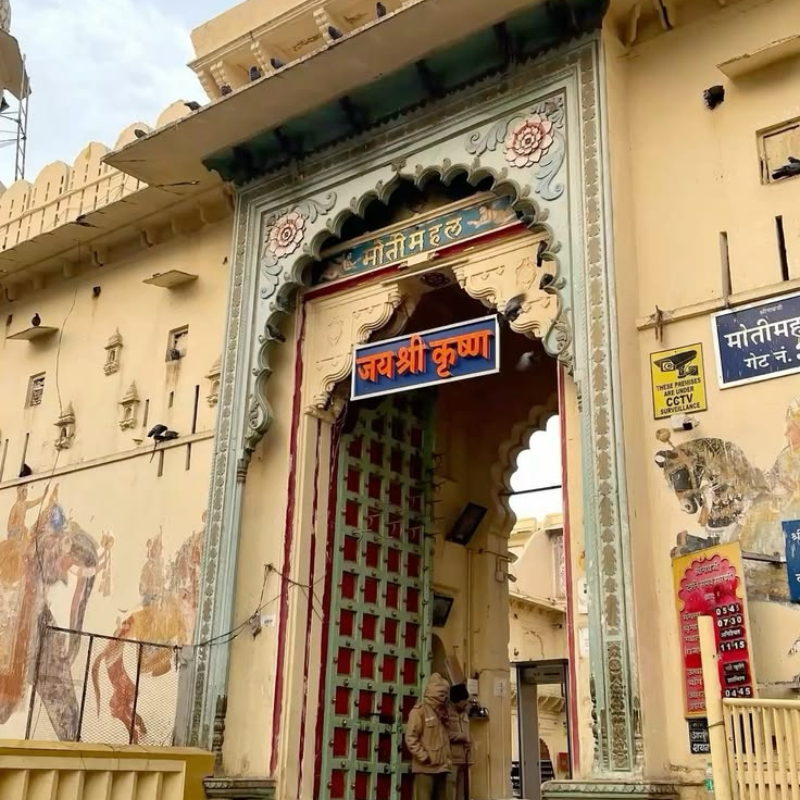
The vibrant pilgrimage site of Shrinathji Temple in the town of Nathdwara
Destination

Nathdwara

Nathdwara Nathdwara: Nestled along the banks of the Banas River in the Rajsamand district, just 48 kilometers north of Udaipur, Nathdwara is a highly revered, vibrant temple town in Rajasthan. Literally translating to “The Gateway to the Lord,” the town is globally celebrated as the supreme seat of the Pushtimarg sect of Vaishnavism, centered entirely around the grand 17th-century shrine of Shrinathji—a manifestation of Lord Krishna as a seven-year-old child lifting the Govardhan mountain. While deeply rooted in classical medieval devotion, Nathdwara has beautifully evolved into a rich cultural ecosystem. It is a place where royal temple culinary arts, centuries-old miniature painting lineages, and monumental modern engineering come together against the backdrop of the scenic Aravalli foothills. The founding of Nathdwara is tied to a dramatic historical escape from religious persecution. Originally, the highly sacred black marble deity of Shrinathji was worshipped on the holy hills of Govardhan near Mathura. In 1669 AD, to safeguard the ancient icon from the iconoclastic campaigns of Mughal Emperor Aurangzeb, the chief priests placed the deity in a covered chariot and headed south toward the protective territories of Rajputana. Legend states that as the chariot reached a small, quiet village named Sihar, its wheels sank deep into the muddy desert clay and refused to move forward. The high priests interpreted this sudden halt as a divine sign that the Lord wished to reside permanently on this exact spot. Maharana Raj Singh of Mewar stepped forward to offer full royal patronage, constructing a fortified temple palace modeled after a traditional haveli (Nandbavan) to shield the Lord. The village of Sihar quickly grew into the thriving holy township of Nathdwara. Top Things to See & Do Inside: Experience Darshan at the Shrinathji Temple: The spiritual epicenter of the town. Unlike standard Hindu temples, the shrine is structured as a royal mansion (Haveli). The daily routine revolves around eight distinct Darshans (viewing periods) that mimic the daily schedule of a royal child, transitioning from Mangala (waking up) to Shayan (going to sleep). The viewing slots are intensely packed, filled with devotional music, rich fabrics, and deep spiritual energy. Marvel at the Statue of Belief (Vishwas Swaroopam): Located dynamically on a hill ridge within the town, this colossal monument is the tallest statue of Lord Shiva in the world, towering at an incredible height of 369 feet (112 meters). Constructed over a decade with high-grade reinforced steel and concrete, it depicts Lord Shiva in a serene, meditative sitting posture, complete with an internal elevator system that whisks visitors up to viewing galleries hidden within his shoulders. Explore the Pichwai Art Lanes: The streets surrounding the main temple complex are an open-air art gallery. Nathdwara is the birthplace of Pichwai paintings—exquisite, highly detailed textile art painted with natural stone pigments and pure gold leaf trim, historically hung behind the Shrinathji icon to depict changing seasons and pasture scenes. You can sit with master artists in their ancestral workshops to watch them work with fine squirrel-hair brushes. Visit Lal Bagh and Moti Mahal: Sprawling gardens and secondary palace estates located on the city edges. Lal Bagh houses a historic museum featuring old royal carriages, vintage temple artifacts, and a classical collection of hand-painted manuscripts from the early Mewar courts. View Nearby Destinations All Events Destination Nathdwara Deshnoke Saheliyon-ki-Bari Jag Mandir Shilpgram Jaigarh Fort Load More End of Content.

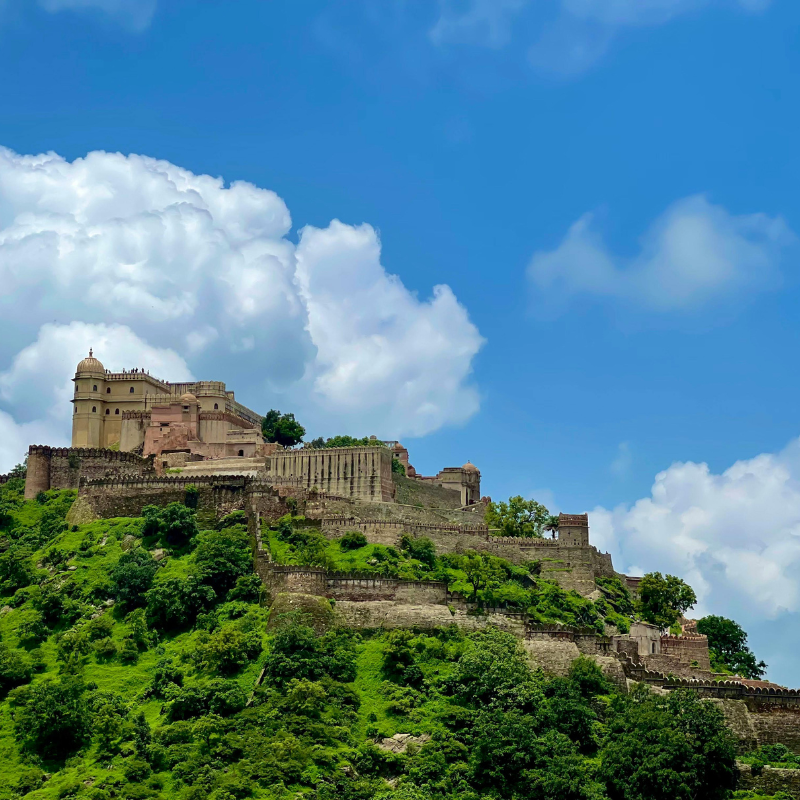
The massive defensive wall of Kumbhalgarh Fort, the world's second-longest
Destination

Kumbhalgarh Fort

Kumbhalgarh Fort Kumbhalgarh Fort: Perched high on the Aravalli Range roughly 85 kilometers north of Udaipur, Kumbhalgarh Fort is a colossal 15th-century mountain citadel and a UNESCO World Heritage Site. Built by the legendary polymath monarch Rana Kumbha between 1443 and 1458 AD, this architectural marvel served as the most secure, impregnable refuge for the rulers of Mewar during times of extreme crisis. What places Kumbhalgarh in the global record books is its monumental fortification system. The citadel is encircled by a continuous, sweeping stone wall that stretches across 36 kilometers, making it the second-longest continuous wall on Earth, surpassed only by the Great Wall of China. The Great Wall of India Rana Kumbha engineered Kumbhalgarh to be completely self-sustaining and invisible from the plains below. The fort is strategically nestled amidst thirteen mountain peaks; its clever topography means that an invading army could approach within a few kilometers without ever seeing the main bastions. The colossal outer walls are exceptionally thick, measuring up to 15 feet wide in some sectors—legend states that eight horses could gallop abreast along the top ramparts. The defensive line is punctuated by seven massive, iron-spiked gates (Poles) designed with sudden curves to neutralize enemy battering rams. Over its centuries of active military service, this formidable defense ensured the fort fell only once in its entire history, and even then, it required the combined, massive coalition forces of Emperor Akbar, Raja Man Singh of Amer, and the Sultan of Gujarat to temporarily compromise its water supply. Top Things to See & Do Inside: Ascend to the Badal Mahal (The Palace of Clouds): Positioned at the absolute highest point of the fortress plateau, this two-tiered palace complex was built by Rana Fateh Singh in the late 19th century. The palace is split into two distinct wings—the Zanana Mahal (women’s quarters) and the Mardana Mahal (men’s quarters)—and features beautiful pastel wall frescoes. Looking out from its high terrace corridors provides a breathtaking view of the Aravalli hills fading into the Thar Desert sands. Pay Respects at the Birthplace of Maharana Pratap: Located within the upper residential sectors lies the historic palace suite where Rajasthan’s most iconic warrior king, Maharana Pratap, was born in 1540 AD. Marvel at the Neelkanth Mahadev Temple: Located just past the main entry gates, this imposing 15th-century stone temple features a unique multi-tiered dome structure supported by 24 massive pillars. The inner sanctum houses a colossal, 5-foot-tall single-block black stone Shiva Lingam that is still actively worshipped today. Discover the Vedi Temple Complex: A rare, masterfully preserved three-story sacrificial temple built by Rana Kumbha to commemorate the successful completion of the fort’s construction. Its unique open-pillared architecture reflects classic geometric principles of ancient Indian structural design. View Nearby Destinations All Events Destination Kumbhalgarh Fort Deshnoke Saheliyon-ki-Bari Jag Mandir Shilpgram Jaigarh Fort Load More End of Content.

Scroll to Top
