Author name: yash soman

Destination

Amer Fort

Amer Fort Perched high on a rugged hill overlooking Maota Lake, Amber Palace Click to open side panel for more information (widely known as Amer Fort) is the crown jewel of Jaipur’s royal heritage. Constructed in 1592 by Raja Man Singh I, this massive UNESCO World Heritage site is a masterclass in ancient military defense and opulent palace design, blending Hindu and Mughal architectural styles flawlessly. The Glittering Heart of the FortAs you wander past the grand courtyards and ascend through the monumental Ganesh Pol gateway, you will discover the absolute highlight of the complex: the world-famous Sheesh Mahal (Mirror Palace). The walls and ceilings of this breathtaking hall are completely blanketed in thousands of tiny, convex mirror mosaics imported from Belgium centuries ago. When a single candle is lit inside at night, the entire room transforms into a dazzling, flickering galaxy of stars. Key Highlights to Explore:Diwan-i-Aam: The grand, multi-pillared Hall of Public Audience where the king met his subjects. Sukh Niwas: A fascinating hall featuring an ancient water channel cooling system designed to beat the intense desert summer heat. Panoramic Hilltop Views: Walk out onto the ramparts for an endless, sweeping view of the ancient city walls snaking across the surrounding Aravalli hills. City Palace View More Jantar Mantar View More Nahargarh Fort View More Jaigarh Fort View More Jal Mahal View More Birla Mandir View More Albert Hall Museum View More Galta Ji (Monkey Temple) View More Hawa Mahal View More Sisodia Rani Garden View More Patrika Gate View Mores
Destination

Jaisamand Lake

Jaisamand Lake Jaisamand Lake: Exploring Asia’s Massive, Hidden Desert SeaIf you’re willing to take a short, scenic drive about 45 kilometers south of Udaipur city, you’ll encounter a water body so massive it feels more like an inland sea than a lake. Welcome to Jaisamand Lake (historically called Dhebar Lake), which holds the proud title of being the second-largest artificial lake in all of Asia! A Royal Feat of EngineeringBuilt in 1685 by Maharana Jai Singh, this mind-boggling lake spans an area of over 36 square miles. The most beautiful feature of the lake is its massive marble dam. The top of the dam is decorated with six elegant, pillared marble chhatris (domes) and a beautiful temple dedicated to Lord Shiva in the center. Beautifully carved stone elephants with their trunks raised face the water, adding a grand, royal feel to the lakeside. What to Do at Jaisamand: Explore the Islands: The lake houses seven distinct islands inhabited by local tribal fishermen. You can hire a boat to cruise around them. Jaisamand Wildlife Sanctuary: Flanking the shores of the lake is a thick forest sanctuary home to leopards, wild boars, panthers, and a massive variety of migratory water birds. The Summer Palaces: Look up at the hilltop to spot the beautiful, matching summer palaces of the Udaipur queens (Hawa Mahal) offering great views of the vast water below. View Nearby Destinations :- Shilpgram View More Udaisagar Lake View more Ambrai Ghat View More Monsoon Palace (Sajjangarh) View More Bagore Ki Haveli View More Saheliyon-ki-Bari View More Jagdish Temple View More Fateh Sagar Lake View More Jag Mandir View More Lake Pichola View More City Palace View Mores

Destination

Monsoon Palace (Sajjangarh)

Monsoon Palace (Sajjangarh) Floating Above the Clouds: A Guide to Udaipur’s Monsoon Palace (Sajjangarh)Perched dramatically on top of the steep Bansdara peak of the Aravalli hills, Sajjangarh Palace—popularly known as the Monsoon Palace—looks like a lonely mountain fortress guarding the valley below. Built in 1884 by Maharana Sajjan Singh, this striking white marble palace was designed to be a grand astronomical center to track the movement of monsoon clouds, as well as a luxury hunting lodge for the royal family. A Bird’s-Eye View of the KingdomBecause the palace sits high above the main town, the drive up the winding hill road through the surrounding wildlife sanctuary is an adventure in itself. Once you step onto the grand stone terraces of the palace, you are treated to a jaw-dropping, bird’s-eye panoramic view of the entire city of Udaipur, its sprawling lakes, and the endless mountain ranges extending into the horizon. Why You Need to Go for Sunset: The Sky Spectacle: The Monsoon Palace is universally considered the absolute best sunset vantage point in Udaipur. The Vibe: Watching the blazing orange sun drop below the distant mountains while the city lakes far below begin to glow with evening lights is a visual you won’t forget anytime soon. View Nearby Destinations :- Bagore Ki Haveli View More Ambrai Ghat View More Shilpgram View More Jaisamand Lake View More Udaisagar Lake View More Saheliyon-ki-Bari View More Jagdish Temple View More Fateh Sagar Lake View More Jag Mandir View More Lake Pichola View More City Palace View More

Destination

Jagdish Temple

Jagdish Temple Jagdish Temple: The Spiritual Heart and Architectural Marvel of the Old CityLocated just a few steps outside the main entrance of the City Palace, Jagdish Temple is a monumental pillar of faith that has watched over the old city of Udaipur since 1651. Commissioned by Maharana Jagat Singh I, this highly revered temple is dedicated to Lord Jagannath (a powerful form of Lord Vishnu) and stands as a stunning example of Indo-Aryan architecture. Mind-Boggling Stone CarvingsTo enter the temple, you must climb a grand, steep flight of 32 marble steps flanked by stone elephants. The moment you reach the top platform, the sheer level of detail on the structure will take your breath away. The main three-storey spire towers 79 feet into the sky, and every square inch of its exterior walls is deeply carved with figures of deities, musicians, dancers, and mythical creatures. The Living Energy  Unlike empty historical monuments, Jagdish Temple is a bustling, living space of deep devotion. The Atmosphere: Step inside the main sanctum to view the magnificent, four-armed idol of Lord Vishnu carved out of a single piece of polished black stone. The Rituals: On any given day, you’ll hear the uplifting sounds of local devotees clapping and singing rhythmic morning bhajans or evening aarti prayers, creating an atmosphere that is completely authentic and deeply spiritual. View Nearby Destinations :- Fateh Sagar Lake View More Saheliyon-ki-Bari View More Bagore Ki Haveli View More Monsoon Palace (Sajjangarh) View More Ambrai Ghat View More Shilpgram View More Jaisamand Lake View More Udaisagar Lake View More Jag Mandir View More Lake Pichola View More City Palace View More

Destination

Bagore Ki Haveli

Bagore Ki Haveli Bagore Ki Haveli: The Waterfront Mansion Alive with Rajasthani Folk MusicLocated right on the edge of the historic Gangaur Ghat, Bagore Ki Haveli is an 18th-century lakeside mansion that offers a magnificent window into old Mewari culture. Built by an influential Prime Minister of Mewar, this sprawling structure holds over a hundred rooms, multiple balconies, and traditional open-air courtyards. A Museum of Royal CuriositiesDuring the day, the haveli operates as an excellent museum. You can wander through rooms displaying vintage royal costumes, ancient games, traditional hookahs, and even a unique gallery displaying the world’s largest turban! The rooms are beautifully preserved, giving you a very genuine sense of how the wealthy elite lived centuries ago. The Real Magic: The Dharohar Dance ShowThe absolute main reason you need to visit Bagore Ki Haveli is its world-famous evening cultural show called Dharohar: The Setting: Set in an open-air courtyard lit by flickering oil lamps under the night sky. The Performance: You’ll witness highly energetic, passionate performances of traditional folk dances like Ghoomar and Chari (where dancers balance lit brass pots on their heads). The Grand Finale: A 70-year-old dancer takes the stage to balance up to 11 clay pots on her head while dancing on broken glass—it is absolutely mind-blowing! View Nearby Destinations :-  Monsoon Palace (Sajjangarh) View More Ambrai Ghat View More Shilpgram View More Saheliyon-ki-Bari View More Jagdish Temple View More Fateh Sagar Lake View More Jag Mandir View More Lake Pichola View More City Palace View More Jaisamand Lake View More Udaisagar Lake View More

Destination

Fateh Sagar Lake

Fateh Sagar Lake Cool Breezes & Street Food: Why Locals Love Fateh Sagar LakeWhile Lake Pichola gets all the attention from international tourists, Fateh Sagar Lake is where the actual heartbeat of Udaipur lives. Flanked by the beautiful, rolling green Aravalli Hills on three sides, this massive artificial lake is the absolute favorite evening hangout spot for locals looking to relax, chat, and catch a breeze. The Three Islands of Fateh Sagar Fascinatingly, Fateh Sagar houses three distinct islands right out in the middle of its waters: Nehru Park: The largest island, featuring a beautiful public park, an oval-shaped restaurant, and a floating fountain. It is accessible by a quick, fun ferry ride. The Udaipur Solar Observatory: One of the premier solar observation sites in Asia, chosen specifically because the lake water provides perfect climate conditions for stable imaging. A Public Jet Fountain Park: A lovely, illuminated water park perfect for evening photography. The Ultimate Evening Routine The best way to experience Fateh Sagar is to take a slow walk or drive along the scenic lakeside promenade known as The Chowpatty. The street is packed with local food stalls selling sizzling Maska Bun, spicy chaat, and steaming cups of kullhad coffee. Grab a snack, watch the speedboats zoom across the water, and watch the sun slowly drop behind the mountain peaks. View nearby Destination :- Shilpgram View More Jaisamand Lake View More Udaisagar Lake View More Ambrai Ghat View More Monsoon Palace (Sajjangarh) View More Bagore Ki Haveli View More Saheliyon-ki-Bari View More Jagdish Temple View More Jag Mandir View More Lake Pichola View More City Palace View More

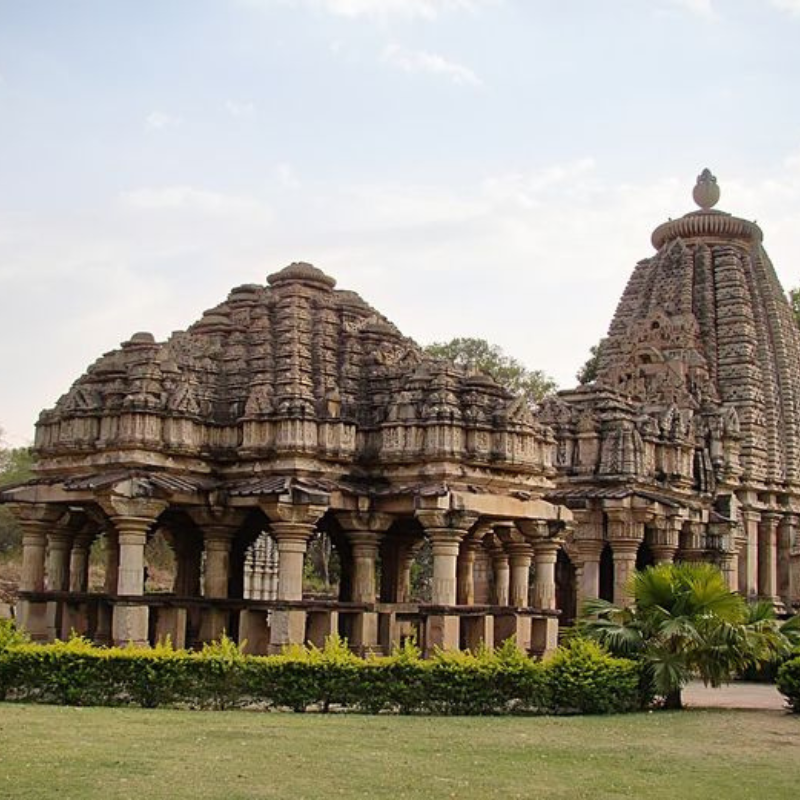
A cluster of ancient stone temples at Baroli in Chittorgarh
Destination

Baroli Temples

Baroli Temples Baroli Temples: Tucked away in a serene, mango-shaded complex in the fortified township of Rawatbhata, roughly 50 kilometers southwest of Kota, the Baroli Temples (also spelled Badoli) are among the earliest, most masterfully executed temple groups in Rajasthan. Built primarily between the 9th and 10th centuries AD under the Gurjara-Pratihara style, this group of nine architectural marvels predates the famous temples of Khajuraho and Udaipur’s lines, representing a golden age of early medieval stone carving. While the location feels completely cut off from the main tourist trail, the sheer refinement of the stone masonry is staggering. Unlike later temples that were heavily altered or expanded, Baroli has preserved its raw, ancient stone textures, making it a peaceful haven for heritage explorers and art historians alike. The Baroli complex is situated near the rocky gorge where the Chambal River cuts through the mountain plateau. The historic structures were first brought to the attention of modern historians by the legendary British chronicler Colonel James Tod in 1821, who openly marveled at their perfect structural symmetry, writing that the carvings defied description. Architecturally, the temples are built following the classic Nagara style, characterized by curvilinear stone towers (shikhars) and open pillared assembly halls. The local artisans carved these monuments out of incredibly dense, weather-resistant local sandstone, which allowed them to execute crisp, deep reliefs of deities, celestial dancers, and foliage that have survived over a thousand years with minimal erosion. Top Things to See & Do Inside: Marvel at the Ghateshwar Mahadev Temple: The largest, most intact, and artistically significant shrine in the entire yard. Dedicated to Lord Shiva, its name stems from the unique, vase-shaped (ghat) design elements built onto its tower. The open entrance pavilion (Rangamandapa) is supported by columns carved into incredibly expressive, curved figures of dancing nymphs (surasundaris) that look completely alive in the changing daylight. Study the Carvings of the Trimurti Temple: Though partially ruined, the sanctum houses a spectacular, deeply expressive three-faced bust of Lord Shiva representing his three cosmic roles: the Creator, the Preserver, and the Destroyer. See the Sheshashayan Vishnu Shrine: A dedicated, open rectangular stone pavilion that protects a beautiful, horizontal relief carving of Lord Vishnu reclining gracefully on the coils of the multi-headed serpent king, Ananta Shesha. Discover the Mahishamardini and Ganesha Shrines: Walk along the manicured lawns to explore the smaller sub-shrines. The Mahishamardini temple features an exceptionally dynamic carving of the Goddess Durga slaying the buffalo demon, filled with tight, fine armor details and moving lines. View Nearby Destinations All Events Destination Baroli Temples Tonk Deeg Palace Deshnoke Saheliyon-ki-Bari Jag Mandir Load More End of Content.

Destination

Tonk

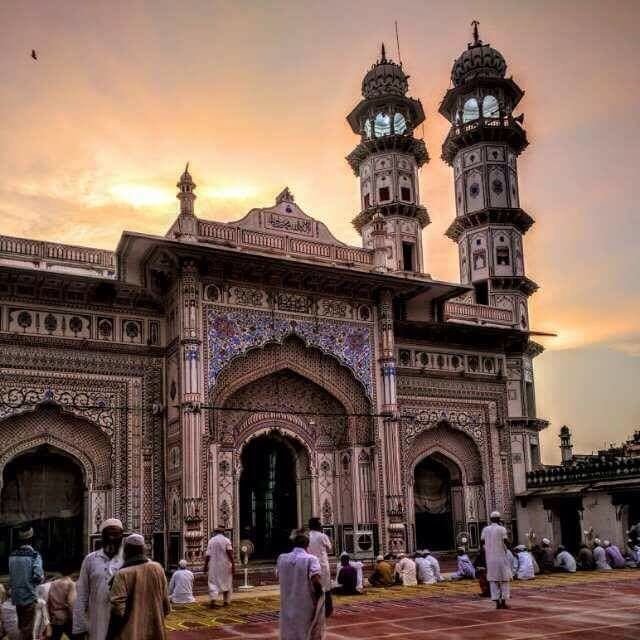
Tonk Tonk: The Nawabi Crossroads of Rajasthan Nestled along the banks of the Banas River roughly 95 kilometers south of Jaipur, Tonk is an exceptionally distinct and culturally rich town. While the vast majority of Rajasthan’s historical destinations are defined by their grand Hindu Rajput dynasties, Tonk stands out as one of the very few historic princely states ruled by a Muslim Nawab pathan clan. Founded as a sovereign state in 1817 AD by the fierce Pashtun military commander Amir Khan Pindari under a treaty with the British East India Company, Tonk is fondly referred to as the “Nawabi Nagari” (The City of Nawabs). The town serves as a beautiful cultural crossroads where classical Pashtun martial heritage, fine Persian calligraphy lineages, and ornate Indo-Islamic architecture seamlessly blend into the fabric of rural Rajasthan. Top Things to See & Do Inside: Marvel at the Luminous Sunehri Kothi (The Golden Mansion): Located near the old city palace complex sits the absolute crown jewel of Tonk. Built by Nawab Mohammed Ibrahim Ali Khan, this otherwise modest exterior opens up into a jaw-dropping, double-story royal audience hall (Sheesh Mahal). The walls and ceilings are completely blanketed in exquisite pure gold leaf gilding, intricate glass inlay art, and thousands of multi-colored Belgian mirrors arranged in delicate floral patterns. Visit the Arabic and Persian Research Institute (APRI): For history enthusiasts, this world-class academic repository is an absolute must-visit. APRI houses one of the most phenomenal collections of historical Arabic and Persian manuscripts in the world. Among its priceless treasures are ancient hand-written Qurans, heavily illuminated Mughal administrative decrees bearing original royal seals, and a microscopic Quran carved elegantly onto a single grain of rice. Explore the Ghanta Ghar (The Historic Clock Tower): Built in 1937 AD by Nawab Saadat Ali Khan, this imposing, multi-story stone clock tower sits right in the bustling heart of Tonk’s central market lanes. The monument stands as a classic architectural landmark, blending traditional British colonial clock tower lines with fine Islamic archways. See the Rasiya Ke Tekri and Shahi Jama Masjid: Pay a visit to the Shahi Jama Masjid, one of the most grand and spacious mosques in Rajasthan, featuring sweeping central courtyards, towering minarets, and delicate fresco art on its internal domes. Nearby, check out Rasiya Ke Tekri, a historic hill ridge featuring a series of old stone structures and stepwells wrapped in local romantic folklore. View Nearby Destinations All Events Destination Tonk Deeg Palace Deshnoke Saheliyon-ki-Bari Jag Mandir Shilpgram Load More End of Content.

Elaborate fountain systems and the Water Palaces of Deeg
Destination

Deeg Palace

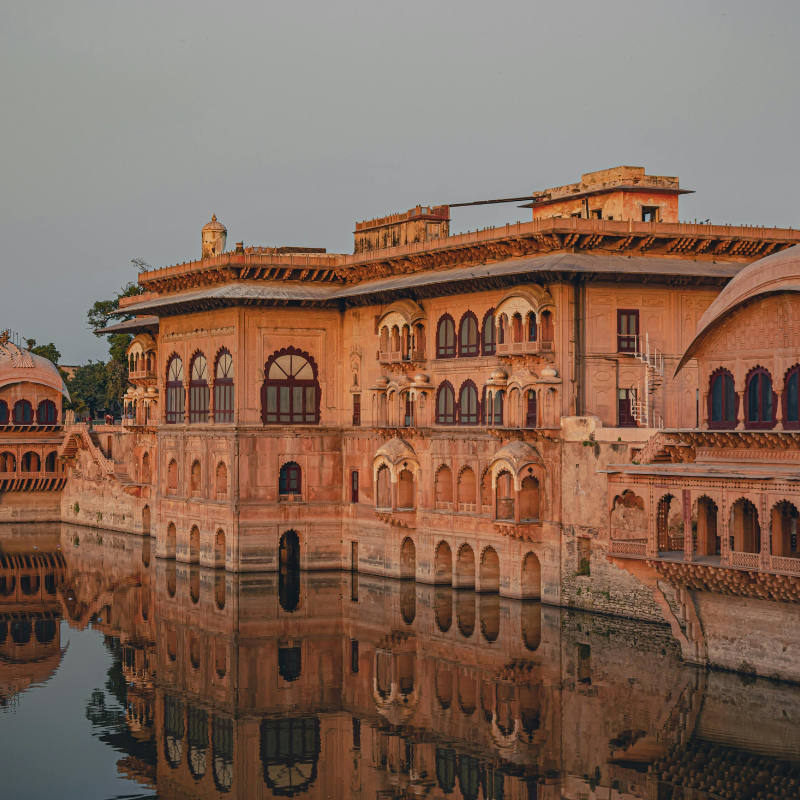
Deeg Palace Deeg Palace: Located in the historic town of Deeg, roughly 32 kilometers north of Bharatpur, Deeg Palace is a magnificent 18th-century royal complex. Built primarily by the legendary Jat ruler Maharaja Suraj Mal and his successor Jawahar Singh, this sprawling estate served as the luxurious summer resort and secondary capital for the rulers of Bharatpur. While Rajasthan is famous for its rugged mountain strongholds, Deeg Palace turns its back on typical desert themes. Instead, it features an elegant layout of formal Mughal-style charbagh gardens, vast artificial lakes, and open-air pavilions. The estate was engineered with a highly sophisticated network of thousands of water fountains designed to simulate the cool, misty weather of the monsoon season. The Jat rulers frequently clashed with the Mughal Empire, often raiding Delhi and bringing back wealth, structural materials, and elite architectural ideas. When designing Deeg, Maharaja Suraj Mal aimed to create an artificial oasis that could completely mask the oppressive summer heat of the north Indian plains. The palace complex is flanked by two massive water reservoirs—the Gopal Sagar and the Rup Sagar. At the heart of the garden sits a massive, elevated water tank holding hundreds of thousands of gallons of water. Workers would spend days filling this overhead reservoir. When opened, gravity pushed the water down into a sprawling underground network of clay pipes, triggering over 500 fountains simultaneously. To make the experience truly sensory, small organic color spheres were inserted into the pipe vents to tint the spraying water, while large stone balls were rolled inside the hollow ceilings of the pavilions to mimic the rumbling sound of thunder.     Top Things to See & Do Inside: Wander the Grand Gopal Bhavan: The largest and most imposing pavilion in the entire grid. Raised over a high stone basement right on the edge of the Gopal Sagar lake, it features a grand central hall with beautiful, curved Bengal-style (bangaldar) roofs. Inside rests a massive, solid marble archway (hindola) that Maharaja Suraj Mal famously plundered from a Mughal palace in Delhi as a war trophy. See the Monsoon Engineering at Keshav Bhavan: Known as the Monsoon Pavilion, this single-story square structure sits right over the Rup Sagar reservoir. The building is ringed by an intricate open gallery supported by rows of finely carved pillars, containing an advanced water-delivery grid designed to spray a dense curtain of rain entirely around the building. Admire the Carvings of Suraj Bhavan: Constructed entirely out of luminous white marble and buff sandstone, this palace was built directly by Suraj Mal for his queen. It showcases an exceptional level of stone craftsmanship, featuring thin, delicate walls inlaid with multi-colored semi-precious stones following classic Pietra Dura techniques. Discover Nand Bhavan and Purana Mahal: Explore the spacious, vaulted assembly halls of Nand Bhavan, designed with massive arched corridors. Nearby sits the Purana Mahal (Old Palace), the oldest structure within the royal complex, which contains a series of inner courtyards decorated with traditional motifs. View Nearby Destinations All Events Destination Deeg Palace Deshnoke Saheliyon-ki-Bari Jag Mandir Shilpgram Jaigarh Fort Load More End of Content.

Destination

Bala Quila

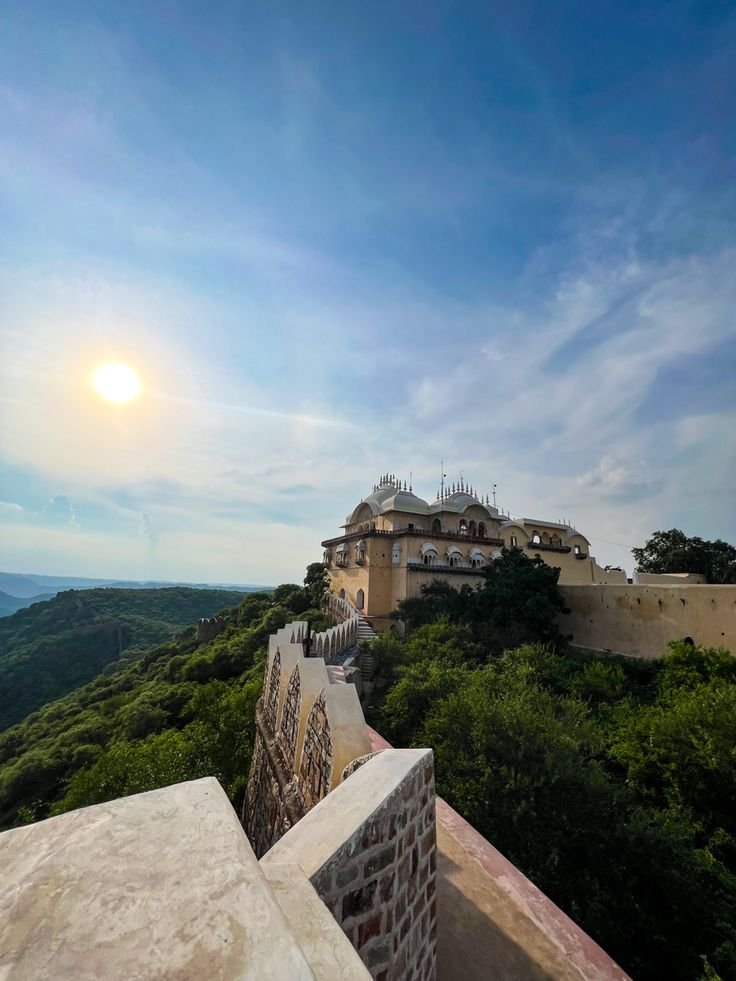
Bala Quila Bala Quila (Alwar): Perched on a steep, craggy cliff of the Aravalli Range rising roughly 1,000 feet above the city of Alwar, Bala Quila (literally meaning “The Young Fort”) is a massive, highly underrated military stronghold. Originally founded on the ruins of an ancient 10th-century mud fort, the stone citadel was extensively constructed and fortified in 1550 AD by Hasan Khan Mewati. Over the centuries, it changed hands among the Khanzadas, the Mughals, the Marathas, and finally the Jats, when Maharao Raja Pratap Singh captured it in 1775 AD to lay the foundations of the princely state of Alwar. Unlike tourist-centric palaces designed for luxury, Bala Quila is a raw, rugged mountain outpost. Spanning 5 kilometers from east to west and 2 kilometers north to south, its formidable battlements follow the undulating contours of the forested hills, seamlessly doubling as an active sentinel protecting both the city below and the fragile wilderness of the surrounding mountain ranges. Bala Quila was engineered strictly for defensive warfare, designed to be completely self-sustaining during intense regional conflicts. Its location allowed the garrison to spot enemy forces miles away across the plains of Mewat before they could even reach the base of the mountains. The fortifications are legendary for their scale. The citadel is ringed by a massive wall punctuated by 51 circular bastions and 446 musketry loopholes specifically angled to allow soldiers to rain down gunfire and burning oil on invading armies. The main approach route is guarded by six monumental, heavy stone gates—including the Jai Pole, Laxman Pole, Chand Pole, and Suraj Pole—engineered with tactical choke points to neutralize enemy charges. Top Things to See & Do Inside: Walk Through the Salim Mahal Ruins: Explore the atmospheric, partially ruined apartment block within the core complex. This palace is named after the Mughal Prince Salim (who later became Emperor Jahangir), who was famously exiled to Bala Quila for three years by his father, Emperor Akbar, after leading a brief rebellion. Marvel at the Nikumbh Mahal Architecture: Step inside this inner residential wing to view beautiful, structural archways and remnants of fine plasterwork that reflect a unique blend of classic Rajput and early Indo-Islamic engineering styles. Visit the Historic Topkhana (Artillery Deck): Climb up to the broad, elevated stone battlements where heavy medieval cannons were once stationed. The open platforms offer a spectacular, 360-degree panoramic view over Alwar’s historic lakes, city layout, and the deep valleys below. See the Suraj Kund Water System: Discover the large, stone-lined step-reservoirs carved directly into the mountain bedrock. These sophisticated water-harvesting systems gathered millions of gallons of rainwater, ensuring the fort’s military garrison could comfortably survive years-long sieges. View Nearby Destinations All Events Destination Bala Quila Deshnoke Saheliyon-ki-Bari Jag Mandir Shilpgram Jaigarh Fort Load More End of Content.

Scroll to Top