
Nathdwara
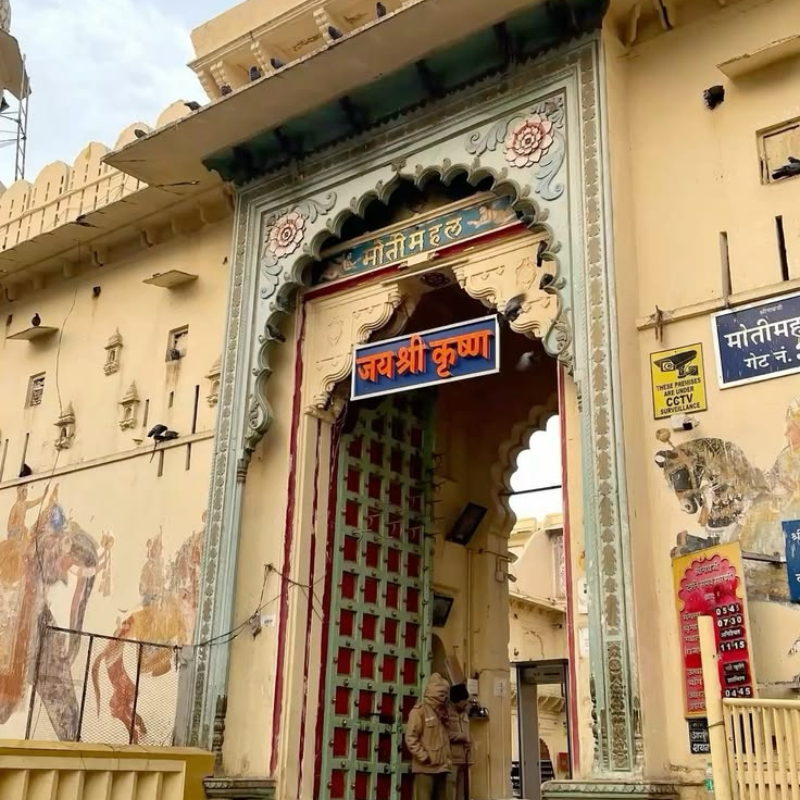
Nathdwara:
Nestled along the banks of the Banas River in the Rajsamand district, just 48 kilometers north of Udaipur, Nathdwara is a highly revered, vibrant temple town in Rajasthan. Literally translating to “The Gateway to the Lord,” the town is globally celebrated as the supreme seat of the Pushtimarg sect of Vaishnavism, centered entirely around the grand 17th-century shrine of Shrinathji—a manifestation of Lord Krishna as a seven-year-old child lifting the Govardhan mountain.
While deeply rooted in classical medieval devotion, Nathdwara has beautifully evolved into a rich cultural ecosystem. It is a place where royal temple culinary arts, centuries-old miniature painting lineages, and monumental modern engineering come together against the backdrop of the scenic Aravalli foothills.
The founding of Nathdwara is tied to a dramatic historical escape from religious persecution. Originally, the highly sacred black marble deity of Shrinathji was worshipped on the holy hills of Govardhan near Mathura. In 1669 AD, to safeguard the ancient icon from the iconoclastic campaigns of Mughal Emperor Aurangzeb, the chief priests placed the deity in a covered chariot and headed south toward the protective territories of Rajputana.
Legend states that as the chariot reached a small, quiet village named Sihar, its wheels sank deep into the muddy desert clay and refused to move forward. The high priests interpreted this sudden halt as a divine sign that the Lord wished to reside permanently on this exact spot. Maharana Raj Singh of Mewar stepped forward to offer full royal patronage, constructing a fortified temple palace modeled after a traditional haveli (Nandbavan) to shield the Lord. The village of Sihar quickly grew into the thriving holy township of Nathdwara.
Top Things to See & Do Inside:
Experience Darshan at the Shrinathji Temple: The spiritual epicenter of the town. Unlike standard Hindu temples, the shrine is structured as a royal mansion (Haveli). The daily routine revolves around eight distinct Darshans (viewing periods) that mimic the daily schedule of a royal child, transitioning from Mangala (waking up) to Shayan (going to sleep). The viewing slots are intensely packed, filled with devotional music, rich fabrics, and deep spiritual energy.
Marvel at the Statue of Belief (Vishwas Swaroopam): Located dynamically on a hill ridge within the town, this colossal monument is the tallest statue of Lord Shiva in the world, towering at an incredible height of 369 feet (112 meters). Constructed over a decade with high-grade reinforced steel and concrete, it depicts Lord Shiva in a serene, meditative sitting posture, complete with an internal elevator system that whisks visitors up to viewing galleries hidden within his shoulders.
Explore the Pichwai Art Lanes: The streets surrounding the main temple complex are an open-air art gallery. Nathdwara is the birthplace of Pichwai paintings—exquisite, highly detailed textile art painted with natural stone pigments and pure gold leaf trim, historically hung behind the Shrinathji icon to depict changing seasons and pasture scenes. You can sit with master artists in their ancestral workshops to watch them work with fine squirrel-hair brushes.
Visit Lal Bagh and Moti Mahal: Sprawling gardens and secondary palace estates located on the city edges. Lal Bagh houses a historic museum featuring old royal carriages, vintage temple artifacts, and a classical collection of hand-painted manuscripts from the early Mewar courts.
View Nearby Destinations
- All Events
- Destination


