
Chittorgarh Fort
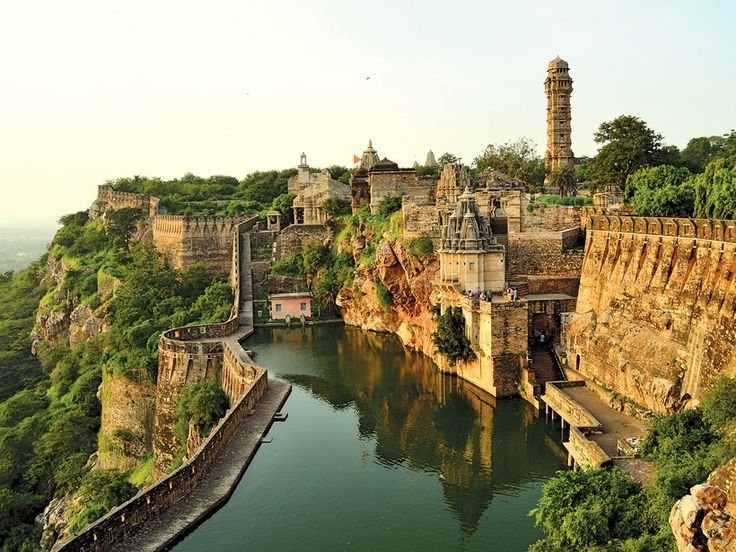
Chittorgarh Fort:
Spread across a colossal 700-acre hilltop plateau that rises abruptly out of the plains of southern Rajasthan, Chittorgarh Fort is the largest fortified complex in India and a UNESCO World Heritage Site. Originally constructed by the Mori Rajputs in the 7th century and later serving as the glorious, fiercely defended capital of the Mewar Kingdom, this epic citadel stands as the ultimate national symbol of Rajput courage, sacrifice, and chivalry.
Unlike valley palaces designed purely for luxury, Chittorgarh is a massive, self-sustaining hill fort engineered to hold entire city populations during years of medieval warfare. Shaped roughly like a giant fish when viewed from above, its rocky cliffs are ringed by kilometers of thick stone battlements that have witnessed some of the most dramatic battles in Indian history.
Chittorgarh’s legendary status is forged by its tragic history of three great historical sieges, each ending in the ultimate sacrifice of Jauhar (sacred self-immolation by royal women) and Saka (a final, desperate battle unto death by the warriors):
1303 AD: Besieged by Alauddin Khalji of the Delhi Sultanate, driven by imperial expansion and legends surrounding the beauty of Queen Padmini.
1535 AD: Attacked by Bahadur Shah of Gujarat, pushing the young fortress to its structural limits.
1567-1568 AD: Invaded by the Mughal Emperor Akbar. Despite a ferocious defense led by the young commanders Jaimal and Patta, the fort fell, prompting Maharana Udai Singh II to retreat into the hills and establish the new capital of Udaipur.
Iconic Landmarks and Architectural Wonders to Explore:
Ascend the Seven Fortified Gates: The winding, 1-kilometer uphill road to the plateau forces travelers through seven monumental, heavy stone gateways. The final entryways—including Bhairon Pole and Ram Pole—feature historical cenotaphs marking the exact spots where brave Rajput commanders fell defending the fort.
Marvel at the Vijay Stambha (Tower of Victory): Constructed between 1440 and 1448 AD by Rana Kumbha to celebrate his triumph over the combined armies of Malwa and Gujarat, this breathtaking 9-story stone tower rises 37 meters high. The entire surface is covered in fine carvings of Hindu deities, structural weapons, and musical instruments.
Discover the Kirti Stambha (Tower of Fame): A stunning 22-meter-high tower built by a wealthy Digambara Jain merchant in the 12th century. Dedicated to Adinath, the first Jain Tirthankara, this 7-story architectural marvel features a narrow inner staircase and is completely blanketed from base to summit in deeply carved figures of Jain monks.
Explore Padmini’s Palace and Gaumukh Kund: Visit the serene, water-side palace structure where Queen Padmini resided. Nearby sits the Gaumukh Kund, a deeply carved, natural rock reservoir fed by a continuous spring that flows out from a cliff face shaped like a cow’s mouth (gaumukh), serving as the fort’s main water source during ancient sieges.
Walk the Grounds of Rana Kumbha Palace: Wander through the atmospheric, vaulted stone ruins of the oldest palace complex on the plateau. This historic site features grand elephant stables, hidden royal chambers, and the subterranean vaults where historical royal ceremonies took place
View Nearby Destinations
- All Events
- Destination


