
Baggar
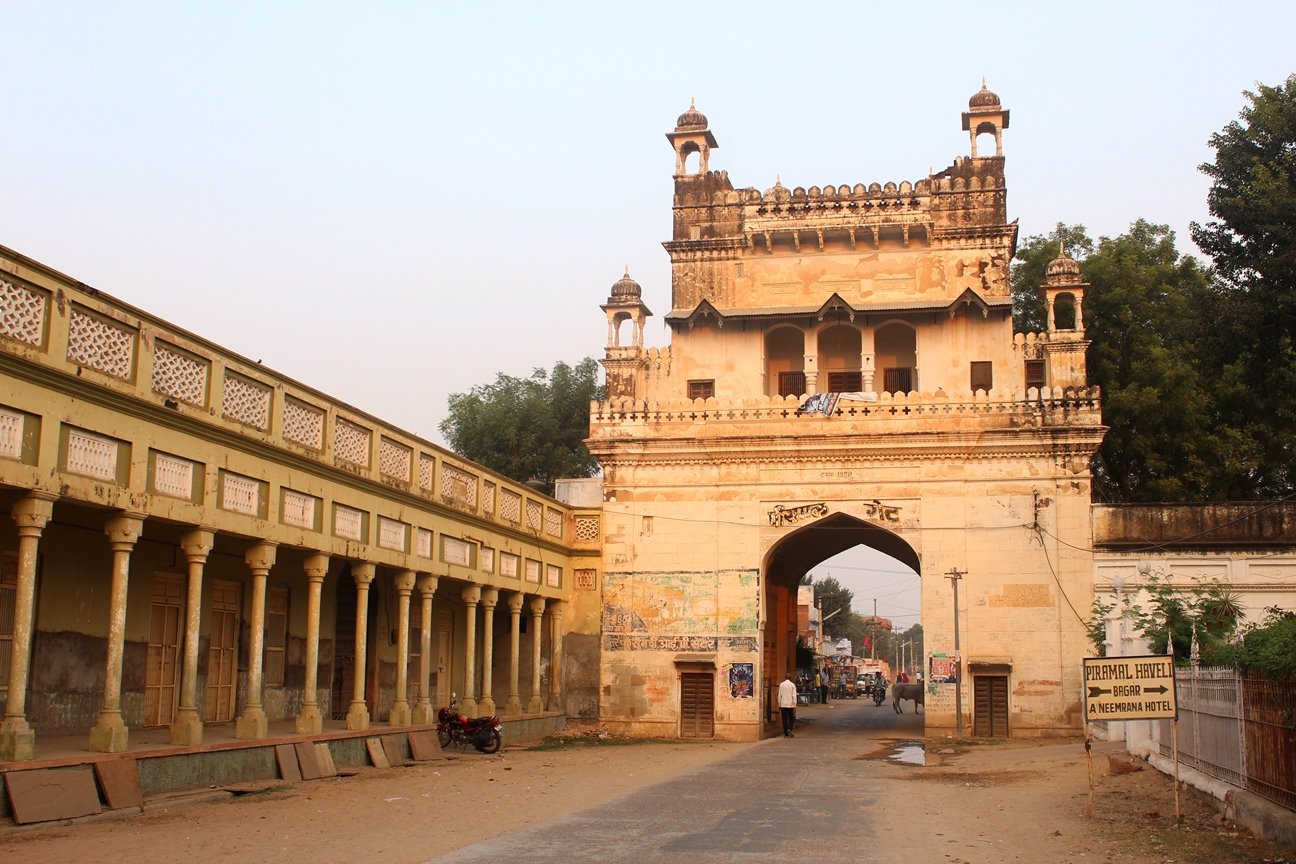
Baggar:
Located in the Jhunjhunu district of northern Rajasthan, Baggar (also spelled Bagar) is an enchanting, offbeat heritage town within the Shekhawati region. Unlike its more commercialized neighbors, Baggar offers a beautifully serene and undisturbed look into the twilight era of the great Marwari merchant dynasties.
Established initially as a fortified settlement, the town underwent a massive architectural boom in the late 19th and early 20th centuries. Wealthy industrialist families—most notably the Piramals and the Rungtas—funneled their trading fortunes back into their ancestral home, creating massive, sprawling compounds that represent a fascinating blend of traditional Rajasthani design and early European art deco style.
What makes Baggar uniquely significant to art historians is the timing of its construction. Most of its major mansions were built around the 1920s to 1930s, long after the old desert caravan trade routes had declined and British colonial influence had fully integrated into Indian elite life.
As a result, the frescoes of Baggar are deeply unique. While they still depict classic religious narratives, they are completely dominated by early 20th-century modernity. Walking past the old pillared verandas, you will spot highly accurate, detailed murals of British lifestyle, early motor cars, gramophones, mechanical clocks, and European-style portraits featuring unique shades of imported synthetic paints that have beautifully resisted fading over the decades.
Top Places and Havelis to Explore in Baggar:
Marvel at the Piramal Haveli: The absolute crown jewel of Baggar. Built in 1928 by Seth Piramal Chaturbhuj Makharia, this sprawling mansion features a highly unusual architectural layout. Instead of the classic closed double-courtyard design, it features an open, pillared courtyard heavily influenced by British colonial architecture. The upper terraces are swathed in magnificent frescoes showing flying angels, old motor cars, and traditional royal processions.
Explore the Rungta Havelis: A spectacular cluster of massive, interconnected family mansions. These havelis are famous for their colossal wooden doorways, intricate ironwork balconies, and grand exterior walls completely covered in detailed line art and pastel-toned fresco panels.
Discover the Miya Ki Baori: A historic, deeply carved stepwell located on the outskirts of the town. Engineered centuries ago to conserve precious desert rainwater, it features symmetric stone staircases and subterranean chambers that provided a cool, shady refuge for traveling caravans.
Stroll Through the Old Bazaar Lanes: Take a slow walk through the old town market lines to see beautifully carved wooden shopfronts, old temples, and hidden, semi-restored structures that show the authentic, unhurried pace of rural Rajasthani life.
View Nearby Destinations
- All Events
- Destination


