
Adhai Din Ka Jhonpra
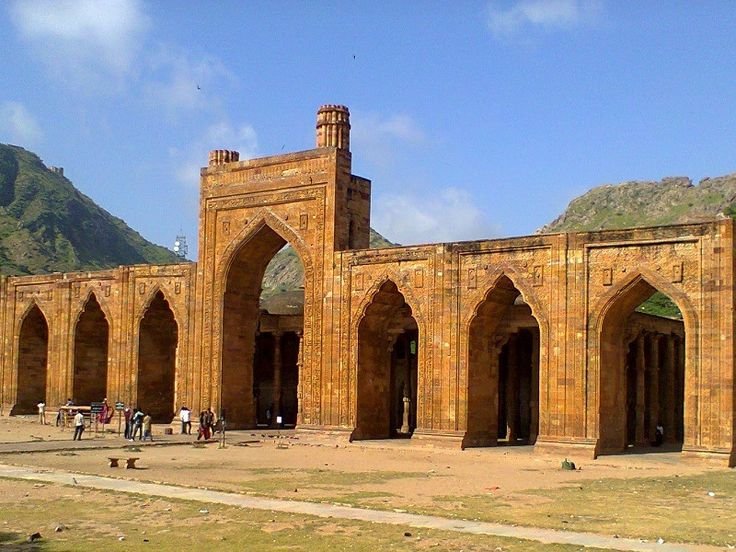
Adhai Din Ka Jhonpra:
Located just a short walk beyond the crowded lanes of the Ajmer Sharif Dargah, Adhai Din Ka Jhonpra is one of the oldest and most architecturally significant monuments in all of India. This fascinating structure stands as a literal, physical timeline of Rajasthan’s dramatic medieval history, showcasing an extraordinary blend of early Hindu, Jain, and Islamic craftsmanship.
Its unusual name translates directly to “The Hut of Two-and-a-Half Days.” While the building boasts massive, towering stone arches and a grand courtyard, its complex origins and the legends surrounding its rapid construction make it an unmissable stop for history buffs and architecture lovers.
A Tale Written in Sandstone and Spoils
The monument we see today was originally constructed in 1153 CE as a grand Sanskrit college and monastery commissioned by the Chahamana (Chauhan) king, Vigraharaja IV. The original complex was dedicated to the goddess Saraswati and was built using highly ornate yellow sandstone pillars, beautifully carved ceilings, and traditional Hindu temple layouts.
However, following the defeat of Prithviraj Chauhan in the late 12th century, Sultan Qutb-ud-din Aibak of the Ghurid Empire ordered the site to be rapidly converted into a congregational mosque.
To achieve this transformation quickly, a massive front screen featuring seven towering, beautifully pointed Islamic arches was constructed out of red and yellow sandstone. Legend has it that the core conversion work was completed in an unbelievable span of just two and a half days (60 hours), giving the monument its timeless name. Other historians believe the name derives from a 2.5-day Sufi festival (Urs) that was held on the grounds centuries later.
Top Things to See & Do Inside:
Marvel at the Main Arched Screen: The central feature of the monument is the massive front screen added by the early Sultans. Look closely at the stone carvings—the arches are completely covered in incredibly detailed Arabic inscriptions, verses from the Quran, and delicate geometric patterns.
Examine the Intricate Interior Pillars: Step inside the main prayer hall to see a jaw-dropping forest of stone columns. To gain enough height for the mosque ceiling, the builders stacked carved pillars directly on top of one another. No two pillars are exactly alike, featuring traditional Hindu and Jain motifs like bells, chains, and floral garlands.
Search for the Sanskrit Inscriptions: Scattered throughout the courtyard and embedded in parts of the structure are fragments of stone tablets containing ancient Sanskrit plays and inscriptions from the original 12th-century college.
Photograph the Giant Domed Ceilings: Look straight up while standing inside the hall. The concentric, overlapping stone rings forming the domes are masterpieces of ancient Indian corbeled architecture.
Essential Traveler Tips for Your Visit:
Operating Timings & Entry: The monument is open daily from 6:00 AM to 7:00 PM. There is absolutely no entry fee to explore the complex, making it highly accessible for budget travelers.
The Best Walking Combo: Because Adhai Din Ka Jhonpra is situated on the lower slopes of Taragarh Hill, immediately behind the Ajmer Sharif Dargah, it is best visited on foot directly after your visit to the Sufi shrine.
Dress Modestly: While it functions primarily as an archaeological monument under the protection of the Archaeological Survey of India (ASI), it maintains its identity as a historic place of worship. Ensure your shoulders and knees are fully covered, and you will need to remove your shoes before stepping onto the main raised prayer platform.
Hire a Local Guide: The deep, layered history of this monument is written in tiny architectural details that are easy to miss. Hiring a licensed local guide at the entrance for a nominal fee will help you understand which parts of the building belong to which century.
View Nearby Destinations
- All Events
- Destination


