Destination

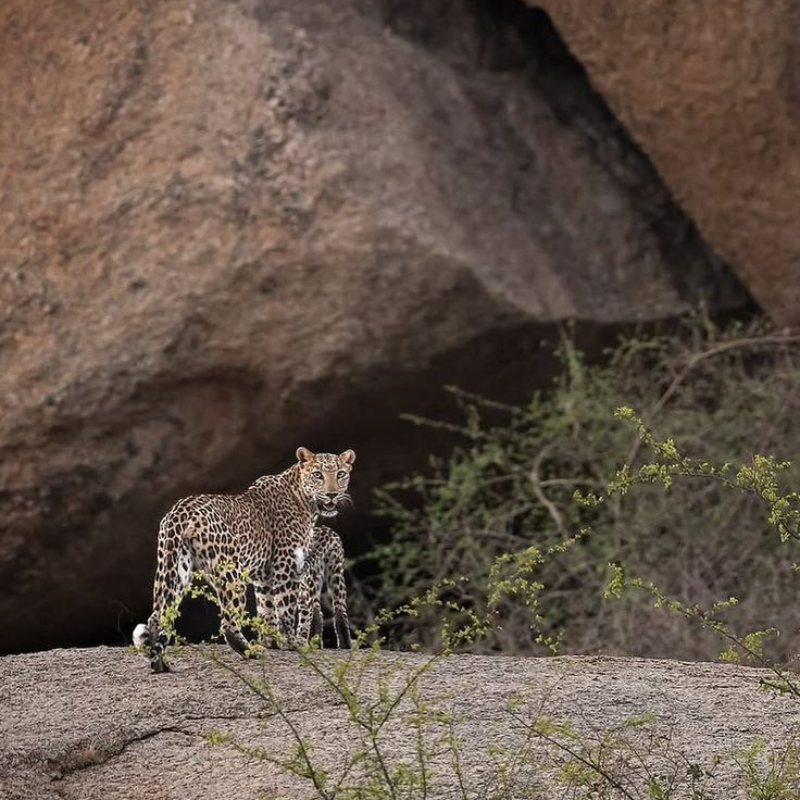
Leopards on granite hills at Jawai Leopard Reserve Rajasthan
Destination

Jawai Leopard Reserve

Jawai Leopard Reserve Jawai Leopard Reserve Tucked away in the Pali district of southwestern Rajasthan, the Jawai Leopard Reserve (often centered around the village of Bera) is one of the most extraordinary and unique wildlife destinations on the planet. Unlike the dense, sprawling jungles of Ranthambore or Sariska, Jawai features a surreal, dramatic landscape of billion-year-old volcanic granite rock formations, winding sand rivers, and the expansive waters of the Jawai Dam. What makes Jawai globally legendary isn’t just its thriving population of wild leopards—it is the heartwarming, unbroken bond of coexistence between these apex predators and the local humans, making it a place where wildlife and ancient pastoral culture exist in perfect, conflict-free harmony. Top Things to See & Do Inside: Go on a Granite Hill Leopard Safari: Safaris here are a thrilling, high-energy experience conducted in customized open-top 4×4 Gypsies. Instead of driving down flat dirt tracks, expert local drivers navigate nearly vertical, smooth granite rock faces to track leopards resting, mating, or playing with their cubs on the rocky ledges. Birdwatching at Jawai Bandh (Dam): The massive reservoir created by the Jawai Dam is a spectacular oasis in the dry terrain. During the winter months, the water edges become alive with thousands of migratory birds, including greater flamingos, sarus cranes, bar-headed geese, and massive flocks of pelicans. Spot the Giant Marsh Crocodiles: The rocky shores of the reservoir are home to some of the largest mugger (marsh) crocodiles in Rajasthan. It is an incredible sight to watch these massive reptiles sunbathing on the stone slabs right below the hills where the leopards prowl. Experience a Rabari Cultural Walk: Take a guided walking tour through a local village to interact with the Rabari herdsmen. Learning about their traditional lifestyle, witnessing their unique cattle-herding techniques, and understanding their deep connection to the environment adds an unforgettable cultural layer to your trip. View Nearby Destinations All Events Destination Jawai Leopard Reserve Deshnoke Saheliyon-ki-Bari Jag Mandir Shilpgram Jaigarh Fort Load More End of Content.

Sprawling forest landscapes and ruins at Sariska Tiger Reserve Rajasthan
Destination

Sariska Tiger Reserve

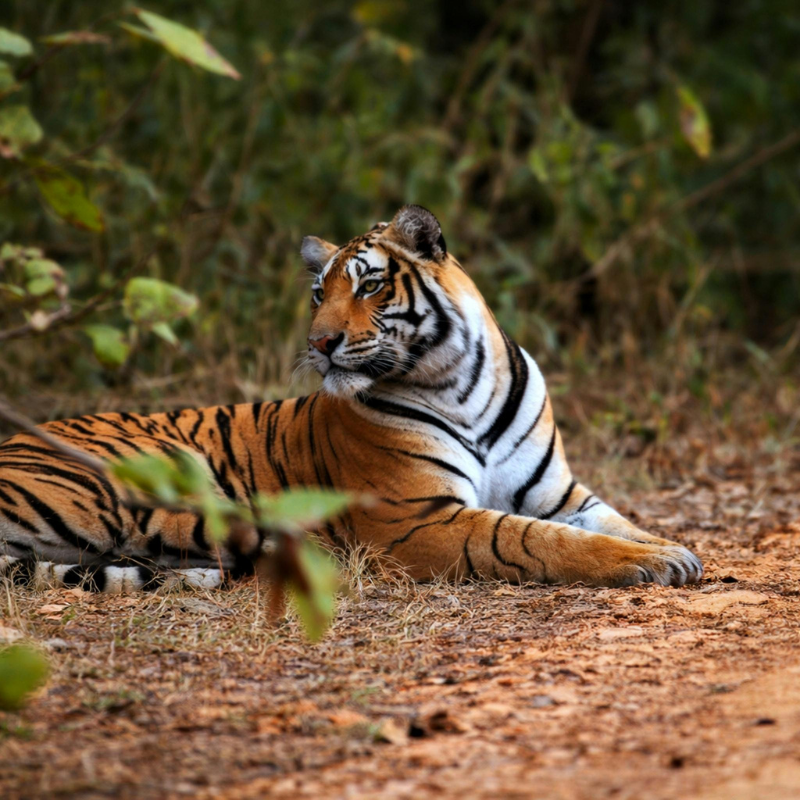
Sariska Tiger Reserve Sariska Tiger Reserve: The Rugged Wilderness of the Aravalli Hills Nestled within the jagged, mineral-rich peaks of the ancient Aravalli Range in the Alwar district of northern Rajasthan, Sariska Tiger Reserve is one of India’s most ecologically fascinating and historically dramatic wildlife sanctuaries. Sprawling across more than 800 square kilometers, this rugged terrain transforms seamlessly from dry deciduous forests and steep rocky cliffs to deep gorges and wide, open grassy valleys. While it sits as a premier sanctuary for tracking the Royal Bengal Tiger, Sariska holds a profound place in global wildlife history. In 2008, it became the setting for the world’s first successful airborne tiger relocation program, bouncing back to life after facing a severe poaching crisis. Today, it stands as a triumphant symbol of nature’s resilience, where imperial history and untamed wildlife thrive side-by-side. A Royal Playground Framed by Epic History Long before it was declared a wildlife sanctuary in 1955 and later a tiger reserve under Project Tiger, Sariska served as the ultra-exclusive private hunting ground for the Maharajas of Alwar. The park’s landscape is heavily dotted with medieval ruins that tell tales of ancient times. According to local folklore, the deep valleys of Sariska provided shelter to the Pandava brothers of the epic Mahabharata during their final year of hidden exile. Later, in the 17th century, the Mughal Emperor Aurangzeb used the isolated hilltop fortresses inside the forest to imprison his older brother, Dara Shikoh, in a fierce battle for the imperial crown. Top Things to See & Do Inside: Embark on a Wilderness Safari: Safaris are conducted twice daily in open-top 6-seater Gypsies or larger 20-seater Canter vehicles. The reserve is split into various tracking zones, where you can watch trained forest trackers look for fresh pugmarks along the rocky, dry riverbeds. Explore Kankwari Fort: Hidden deep within the core forest zone, this imposing 17th-century fortress sits high atop a solitary hill. It offers a stunning, undisturbed panoramic view of the vast green valley below and is the exact historical site where Dara Shikoh was held captive. Visit the Ancient Neelkanth Temples: Take a rugged detour to explore a magnificent complex of over 30 crumbling stone temples built between the 6th and 10th centuries. Dedicated primarily to Lord Shiva, the structures feature jaw-dropping, intricate stone carvings that closely rival the famous sculptures of Khajuraho. Spot the Wildlife Near Siliserh Lake: While the Royal Bengal Tiger is the star attraction, the park boasts a rich, thriving ecosystem. Keep your eyes peeled to spot Indian leopards, striped hyenas, sloth bears, massive herds of sambar deer, nilgai (blue bulls), four-horned antelopes, wild boars, and a vibrant variety of desert birds. View Nearby Destinations All Events Destination Sariska Tiger Reserve Deshnoke Saheliyon-ki-Bari Jag Mandir Shilpgram Jaigarh Fort Load More End of Content.

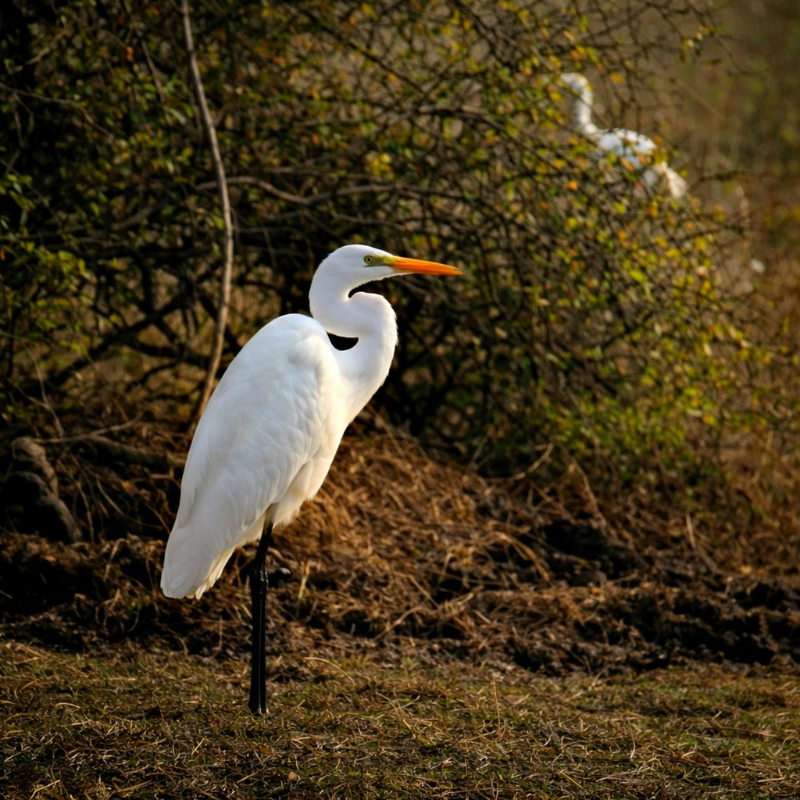
Migratory birds at Keoladeo National Park UNESCO bird sanctuary Bharatpur
Destination

Keoladeo National Park

Keoladeo National Park Keoladeo National Park (Bharatpur): Located in the Bharatpur district of eastern Rajasthan, Keoladeo National Park (historically known as the Bharatpur Bird Sanctuary) is a world-renowned oasis of green wetlands and one of the finest bird sanctuaries on the planet. Recognized globally as a UNESCO World Heritage Site, this spectacular reserve serves as a vital wintering ground for thousands of rare and migratory waterbirds, drawing ornithologists, wildlife photographers, and nature lovers from every corner of the globe. Unlike many of Rajasthan’s rugged, dry wildlife sanctuaries, Keoladeo is a man-made and man-managed wetland ecosystem. Sprawling across just 29 square kilometers, its mosaic of shallow marshes, woodlands, and grassy swamps creates a vibrant sanctuary where the air hums continuously with the calls of over 370 distinct bird species. An Imperial Duck Shoot Turned Conservation Sanctuary The park’s history is a fascinating tale of ecological transformation. In the late 19th century, the Maharaja of Bharatpur artificially converted this naturally low-lying depression into a private hunting reserve by building small earthen dams (bunds) to divert water from nearby irrigation canals. The area quickly became a highly exclusive duck-shooting ground for the royal family and visiting British elites—famously hosting Lord Linlithgow, who managed to shoot over 4,200 birds in a single day in 1938. The hunting grounds were officially declared a protected national park in 1982. The park takes its modern name from an ancient Keoladeo (Lord Shiva) Temple that stands silently in the very heart of the forest, transforming a site of past imperial sport into an enduring sanctuary for global avian conservation. Top Things to See & Do Inside: Take a Traditional Cycle-Rickshaw Safari: One of the most charming aspects of the park is that motor vehicles are strictly banned past the main entry gate. You can explore the paved forest paths via a unique cycle-rickshaw safari. The local rickshaw pullers are trained by the wildlife department and double as expert naturalists who can spot highly camouflaged owls and rare waders from a distance. Spot the Magnificent Migratory Birds: If you visit during the winter peak, the wetlands crawl with incredible life. Look out for massive flocks of painted storks nesting in the acacia trees, elegant demoiselle cranes, pelicans, bar-headed geese, spoonbills, and the rare, globally threatened greater spotted eagle. Wander the Python Point Trail: Head down toward the southern edge of the central path to visit Python Point. On sunny winter afternoons, massive Indian rock pythons can routinely be spotted emerging from their underground burrows to sunbathe on the warm, open rocks. Enjoy a Sunrise Boat Ride: When the water levels are high following the monsoon, the forest department operates quiet, non-motorized boat rides through the marshes. Floating silently through the morning mist offers an incredibly intimate look at feeding herons, egrets, and cormorants up close. Essential Traveler Tips for Your Visit: The Best Months to Visit: October to March (Peak Season): This is the absolute prime time to visit. The weather is beautifully cool and crisp, and the marshes are completely packed with thousands of exotic migratory birds arriving from Siberia and Central Asia. August to October (Breeding Season): This is a wonderful time to witness thousands of resident waterbirds building massive communal nesting colonies in the treetops. Park Timings & Nominal Entry Fees: The park is open daily from sunrise to sunset (typically 6:00 AM to 6:00 PM in winter). There is a nominal entry fee for visitors (around ₹75 for Indians and ₹500 for international tourists). Safari Hiring Logistics: Cycle-rickshaws, bicycles, and government-approved binoculars can be rented directly at the main entrance gate for fixed hourly rates. Hiring a rickshaw naturalist is highly recommended to help you identify the complex bird calls. The Ultimate Golden Triangle Stop: Bharatpur is perfectly situated right along the main transit highway between Agra (55 km) and Jaipur (180 km). It makes for an incredible, relaxing overnight stop or a half-day excursion for travelers moving between the Taj Mahal and the Pink City. View Nearby Destinations All Events Destination Keoladeo National Park Ranthambore Fort Ranthambore National Park Pushkar Mela Varaha Temple Savitri Temple Load More End of Content.

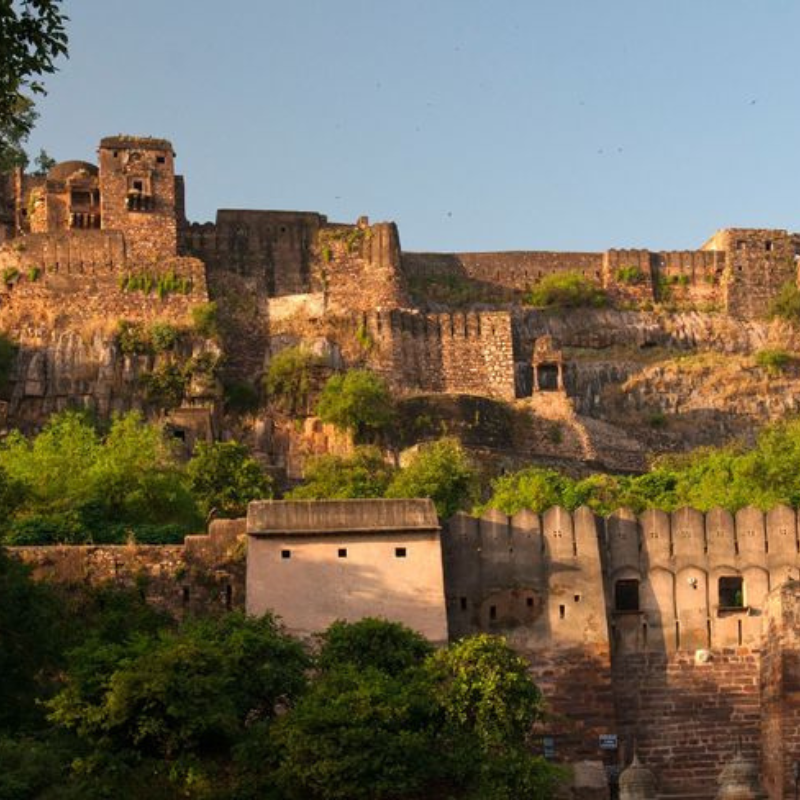
Ancient Ranthambore Fort ruins located deep inside the tiger reserve forest
Destination

Ranthambore Fort

Ranthambore Fort Ranthambore Fort: Rising dramatically from the heart of Ranthambore National Park, high atop a sheer cliff 700 feet above the surrounding plains, Ranthambore Fort is one of the oldest, most formidable, and visually stunning fortresses in India. Recognized globally as a UNESCO World Heritage Site under the “Hill Forts of Rajasthan” cluster, this massive 10th-century stronghold offers a spectacular blend of ancient military architecture and raw, reclaimed nature. While the surrounding valley draws millions of visitors hoping to spot a Royal Bengal Tiger, stepping inside the fort walls allows you to explore the very crown of the reserve. Here, historic battles, royal palaces, and sacred shrines stand enveloped by the dense green canopy of the wild, offering a truly unforgettable look into Rajasthan’s imperial past. A Stronghold Reclaimed by the Wild Constructed originally in 944 CE by the Chauhan dynasty, Ranthambore Fort was engineered to be completely impregnable. Its strategically design mimics the natural contours of the massive rock mountain, making the fort virtually invisible from a distance until you are standing directly beneath its looming stone gates. Over the centuries, control of this prized military prize shifted between various empires—including the Delhi Sultanate, the Mewar Kingdom, and the Mughals—before finally serving as the private hunting lodge for the Maharajas of Jaipur. Today, nature has slowly woven itself back through the abandoned structures. It is a common, breathtaking sight to see langur monkeys hanging from the palace arches, peacocks preening on the stone terraces, and eagles soaring directly level with the fort’s highest lookout towers. Top Things to See & Do Inside: Visit the Trinetra Ganesha Temple: This is the spiritual heart of the fort and one of the oldest Ganesha shrines in India. The temple houses a unique, self-manifested idol of Lord Ganesha featuring three eyes. It is an incredible living cultural tradition where thousands of devotees from all over the world mail physical wedding invitations, letters, and cards directly to the temple to seek the deity’s blessings. Explore Hammir’s Court (Hammir Kachahari): Walk through the grand public audience hall built entirely out of hand-chiseled stone. Supported by a forest of beautifully carved pillars, this historic structure is where the legendary ruler Raja Hammir Dev Chauhan held court and delivered justice to his subjects. Photograph Padam Talao Viewpoint: Head to the edge of the fort’s western ramparts to look down over the national park. From here, you get an absolute bird’s-eye view of the dense forests and the sweeping Padam Talao lake down below. If you bring a pair of binoculars, you can often spot marsh crocodiles sunbathing or herds of sambar deer feeding near the water edges. Admire the Badal Mahal & Toran Dwar: Explore the crumbling ruins of the “Palace of Clouds” (Badal Mahal) and pass beneath the magnificent Toran Dwar, a beautifully preserved ceremonial stone archway that stands as a testament to the sheer skill of 10th-century artisans. View Nearby Destinations All Events Destination Ranthambore Fort Ranthambore National Park Pushkar Mela Varaha Temple Savitri Temple Brahma Temple Load More End of Content.

Destination

Ranthambore National Park

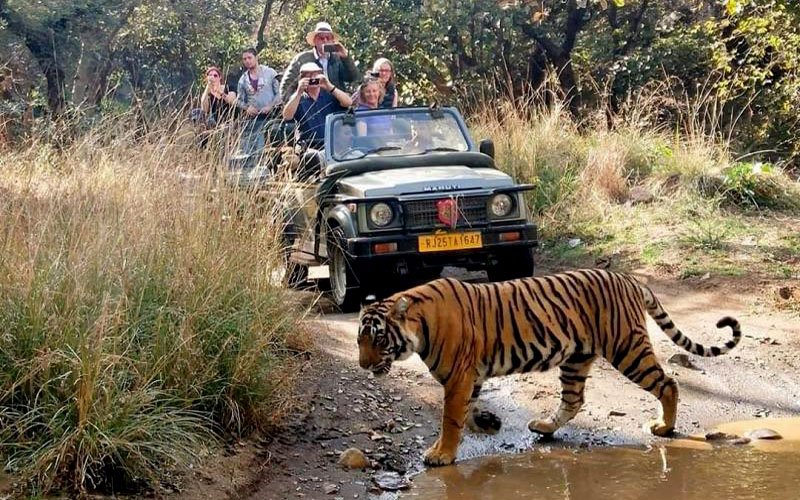
Ranthambore National Park Ranthambore National Park: The Land of the Royal Bengal Tiger Situated in the Sawai Madhopur district of southeastern Rajasthan, Ranthambore National Park is one of the biggest, most renowned, and visually dramatic wildlife sanctuaries in Northern India. Once serving as the private, exclusive hunting grounds for the Maharajas of Jaipur, today it stands as a premier global destination for wildlife photographers and travelers eager to catch a glimpse of the majestic Royal Bengal Tiger hunting in its natural habitat. What sets Ranthambore completely apart from other tiger reserves across Asia is its unique blend of natural wilderness and crumbling ancient history. The park is uniquely punctuated by historic semi-arid forests, deep gorges, pristine lakes, and the massive stone ramparts of a 10th-century fortress looming directly over the jungle canopy. Top Things to See & Do Inside: Embark on a Tiger Safari: The ultimate highlight of any visit. Safaris are conducted twice daily in open-top 6-seater Gypsies or larger 20-seater Canter vehicles. The park is split into 10 distinct safari zones, with Zones 1 through 5 widely recognized as the prime sectors for tracking famous resident tigers. Explore Ranthambore Fort: Take a break from the jungle vehicles to hike up the ancient stone pathways of the fortress. The fort offers incredible panoramic views of the entire national park and houses the highly revered Trinetra Ganesha Temple, an ancient three-eyed deity shrine that draws thousands of pilgrims daily. Birdwatching at Padam Talao: This is the largest lake inside the reserve, famous for its beautiful water lilies. It is a fantastic spot to observe marsh crocodiles sunbathing on the banks, alongside incredible birdlife including kingfishers, painted storks, herons, and visiting migratory waterfowl in winter. Spot Diverse Wildlife: While tigers are the main attraction, the park boasts a rich ecosystem. Keep your cameras ready to spot sloth bears, Indian leopards, spotted deer (chital), sambar deer, nilgai, langurs, and a massive variety of desert reptiles. View Nearby Destinations All Events Destination Ranthambore National Park Deshnoke Saheliyon-ki-Bari Jag Mandir Shilpgram Jaigarh Fort Load More End of Content.

Destination

Pushkar Mela

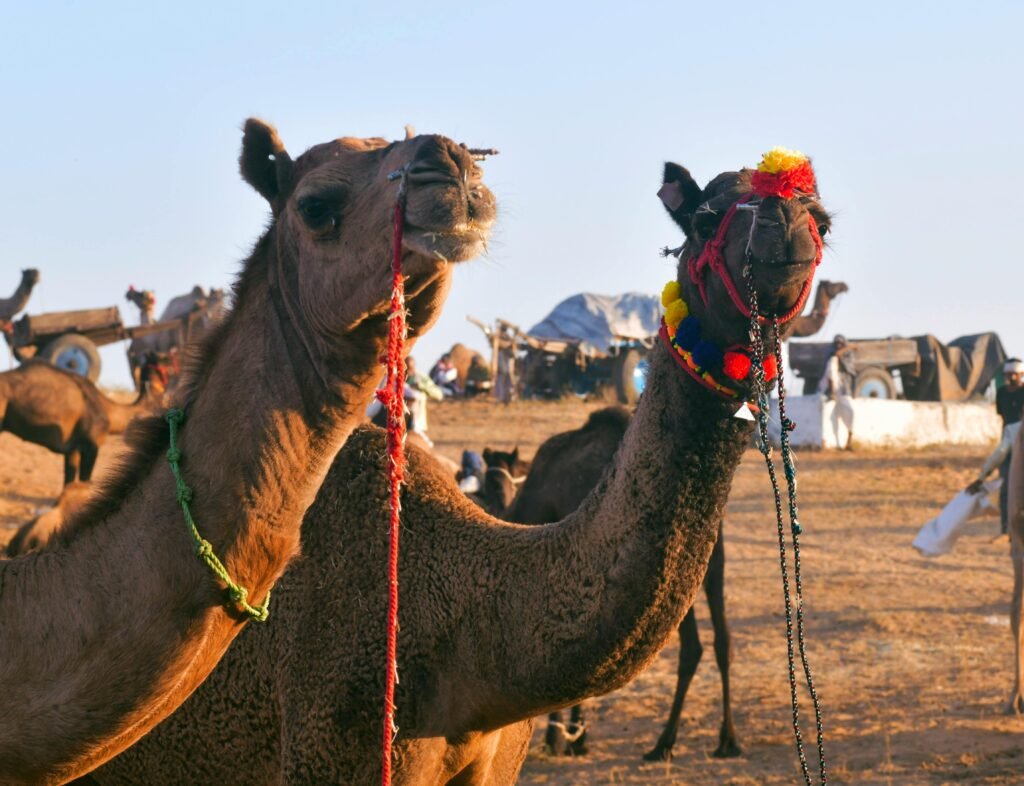
Pushkar Mela Pushkar Mela: India’s Most Vibrant Desert Festival he Pushkar Mela (popularly known as the Pushkar Camel Fair) is an absolutely massive, globally famous cultural and livestock festival that takes place annually in the desert town of Pushkar. It stands as one of the world’s largest camel and cattle fairs, drawing hundreds of thousands of nomadic traders, pilgrims, rural artisans, and international travelers to the edge of the Thar Desert. Held over several days during the holy Hindu month of Kartik, the Mela is a mind-blowing explosion of sights, sounds, and colors. It seamlessly bridges a giant rural trading market with intense spiritual devotion at the adjacent Pushkar Lake, creating a festival experience unlike any other on earth. The Twin Identities of the Fair The Pushkar Mela is uniquely split into two distinct, fascinating phases: The Cultural & Livestock Trading Phase: During the first few days, the focus is entirely on the vast desert dunes outside the main town. Thousands of camels, horses, and cattle are brought by herdsmen from all across Rajasthan and neighboring states. The dunes transform into a massive camping ground filled with trading negotiations, camel grooming competitions, and lively rural markets. The Spiritual Phase: As the festival reaches its final days, the energy shifts dramatically toward the town center and the banks of the sacred lake. Pilgrims crowd the 52 bathing ghats to take a holy dip during the auspicious night of Kartik Purnima (the full moon), celebrating the divine creation legend associated with the Brahma Temple. Top Things to See & Do Inside: Witness the Iconic Camel Competitions: Head into the main festival stadium to watch highly unusual, entertaining events. You will see the Camel Dance Competition, where animals move rhythmically to traditional drums, and the Best Groomed Camel Contest, featuring animals decorated with intricate hair art, colorful pom-poms, and fine silver embroidery. Enjoy Quirky Rural Contests: The fair is famous for bridging gaps between locals and global tourists through fun competitions. Don’t miss the world-famous Longest Moustache Competition, the traditional Matka Phod (pot breaking) contest, and friendly kabaddi or cricket matches played between local villagers and international visitors. Take a Hot Air Balloon Ride: For an unforgettable perspective, book a sunrise hot air balloon flight. Floating smoothly above the desert allows you to see the jaw-dropping scale of the thousands of tents, campfire smoke, and herded camels spread across the sandy valley as the sun peaks over the Aravalli hills. Shop the Vibrant Desert Bazaar: The entire town of Pushkar turns into a massive open-air shopping lane. It is the absolute best time to hunt for authentic Rajasthani handicrafts, hand-woven textiles, traditional silver jewelry, camel-leather footwear, and colorful patchwork tapestries. View Nearby Destinations All Events Destination Pushkar Mela Varaha Temple Savitri Temple Brahma Temple Pushkar Lake Adhai Din Ka Jhonpra Load More End of Content.

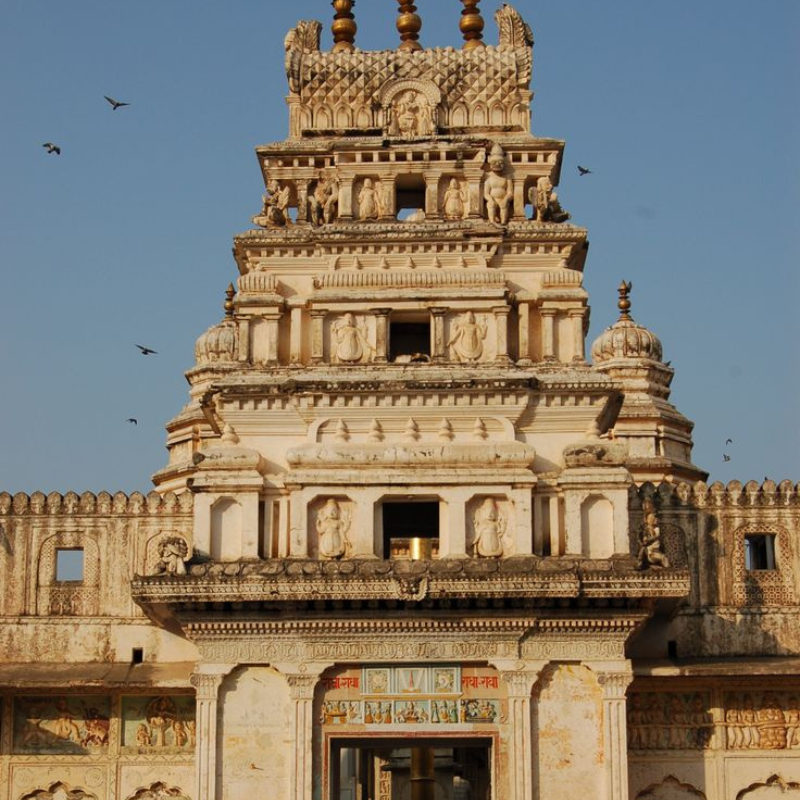
Ancient stone carvings and pillars of the Varaha Temple in Pushkar
Destination

Varaha Temple

Varaha Temple Varaha Temple: While the famous Brahma and Savitri temples draw the largest crowds, the Varaha Temple is the absolute ultimate hidden gem for history buffs and architecture lovers visiting Pushkar. Tucked away just a short walk from the main market lanes, this remarkable fortress-like shrine is actually the oldest standing temple in the entire region, dating back originally to the 12th century. Dedicated to Lord Vishnu’s third avatar—Varaha, the Boar God—this ancient monument has survived centuries of dramatic medieval battles, structural destruction, and royal restorations. Stepping past its massive stone walls feels less like entering a typical temple and more like discovering a rugged, sacred time capsule that holds the deep, unbroken history of Rajasthan. The Legend of the Cosmic Boar The temple’s dedication to the Boar incarnation of Lord Vishnu is deeply connected to both cosmic Hindu mythology and the physical creation of Pushkar itself. According to ancient scriptures, a powerful demon named Hiranyaksha had dragged the Earth (Bhudevi) down into the dark, chaotic depths of the cosmic ocean. To rescue humanity, Lord Vishnu manifested as Varaha—a magnificent, unstoppable giant boar. He dove into the primeval waters, defeated the demon in a fierce battle, and balanced the Earth safely back on his massive tusks to restore cosmic order. Local folklore tells us that after saving the planet, Varaha manifested right here in the holy valley of Pushkar to rest. Because of this divine footprint, King Anaji Chauhan (the same ruler who commissioned Ajmer’s Ana Sagar Lake) constructed this grand temple between 1123 and 1150 CE to serve as a protective shield for the sacred desert oasis. Top Things to See & Do Inside: Marvel at the Unique Idol: Inside the inner sanctum, you will come face-to-face with a rare, highly striking white marble idol of the deity. Instead of a human form, the statue features a powerful human body topped with a beautifully chiseled boar’s head, capturing the exact moment of cosmic rescue. Examine the Battle-Scarred Pillars: Look closely at the massive yellow sandstone pillars and base beams holding up the main hall. You can still see intricate, hand-carved details of traditional Hindu iconography that survived the medieval raids of Sultan Ghori and Emperor Aurangzeb, who partially dismantled the temple. Admire the Royal Mughal-Era Dome: Notice the unique architectural blend. When the Mughal Emperor Jahangir ordered the temple’s destruction, it was later beautifully reconstructed in the 17th century by Maharaja Raja Sawai Jai Singh II of Jaipur. He added fortified walls and a grand, palace-style roof dome that seamlessly fuses Rajput and Mughal architecture. Discover Ancient Sculptures in the Walls: As you stroll through the quiet, shaded courtyards, keep an eye on the side walls. The reconstruction builders embedded fragmented stone carvings, ancient script pieces, and beautiful reliefs from the original 12th-century structure directly into the masonry. Essential Traveler Tips for Your Visit: A Quiet Oasis (No Crowds): Unlike the bustling Brahma Temple, Varaha Temple is rarely visited by mass tour groups. It is an incredibly quiet, meditative space where you can sit on the cool stone steps, read a book, or photograph the historic carvings in absolute peace. Operating Timings & Entry: The temple doors are open daily from 6:00 AM to 8:00 PM (with a brief midday break between 1:00 PM and 4:00 PM). There is absolutely no entry fee, and photography is completely permitted within the outdoor courtyard spaces. Getting There on Foot: The temple is located in a quiet neighborhood just a 5-minute walk from Varaha Ghat on the banks of Pushkar Lake. Because the surrounding streets are wonderfully narrow and filled with local heritage houses, walking is the absolute best way to reach it. Combine It with a Walking Heritage Loop: To make the most of your morning, structure a walking loop starting with an early dip or stroll at Varaha Ghat, a quiet explore through the Varaha Temple, and finish with a short walk to the main bazaar for a hot cup of masala chai and fresh Malpua (Pushkar’s famous sweet pancake). View Nearby Destinations All Events Destination Ranthambore Fort Ranthambore National Park Pushkar Mela Varaha Temple Savitri Temple Brahma Temple Load More End of Content.

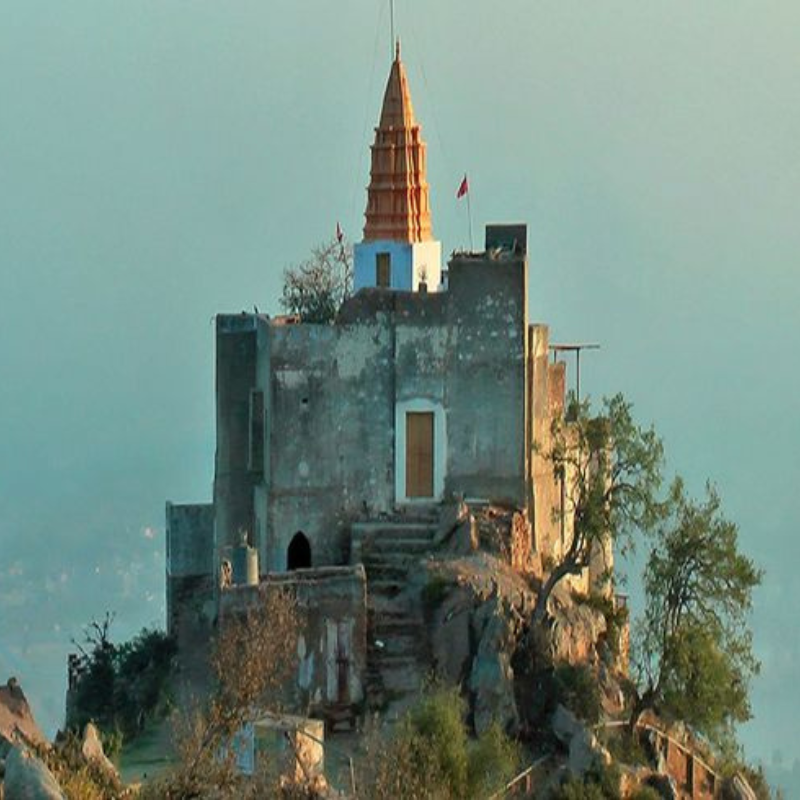
The hilltop Savitri Temple overlooking the town and lake of Pushkar
Destination

Savitri Temple

Savitri Temple Savitri Temple: The Sunset Point over Pushkar Perched high atop the rugged summit of Ratnagiri Hill, directly overlooking the sacred waters of Pushkar Lake, the Savitri Devi Temple offers one of the most spiritually profound and visually spectacular experiences in Rajasthan. While the bustling town below is dedicated to Lord Brahma, this mountaintop sanctuary belongs to his estranged first wife, Goddess Savitri. For travelers and pilgrims alike, making the journey up to this hilltop shrine is an absolute rite of passage. It seamlessly combines a deep dive into fascinating Hindu mythology with a dramatic, bird’s-eye view of the entire golden desert landscape sprawling as far as the eye can see. The Sanctuary of an Enraged Goddess The temple’s unique location is tied directly to the famous legend of the Brahma Temple below. When Lord Brahma hastily married a local milkmaid, Gayatri, to complete his divine sacrifice on time, an enraged Goddess Savitri cursed him. Deeply hurt and refusing to witness the ceremony, she retreated away from the main valley to the absolute highest peak in the area—Ratnagiri Hill. Local tradition dictates that the gods must be worshipped in the order of their grievance. To this day, devotees visiting Pushkar traditionally climb up to seek the blessings of Goddess Savitri first, before heading down to the valley to visit the shrines of Brahma and Gayatri. The temple houses beautiful marble idols of both Savitri and Gayatri, standing together as a symbol of eventual cosmic reconciliation. Top Things to See & Do at the Hilltop: Catch the Ultimate Sunrise or Sunset: This is the absolute best viewpoint in Pushkar. Watching the sun dip below the vast Thar Desert or seeing the first morning rays illuminate the white ghats of the lake below is a mesmerizing experience that draws photographers from around the world. Ride the Savitri Ropeway: If you want to skip the intense physical climb, hop into one of the modern cable car cabins. The 5-minute ropeway ride glides smoothly up the steep mountain face, offering thrilling panoramic views of the entire valley as you ascend. Walk the Ancient Stone Steps: For fitness enthusiasts and pilgrims, the traditional trek up the zig-zagging stone staircase is a rewarding challenge. The path winds up the rocky hillside, providing plenty of spots to sit back, catch your breath, and enjoy the changing vistas. Photograph the Hilltop Wildlife: The summit and the surrounding cliffs are home to a massive population of bold, curious grey langurs and rhesus monkeys. Watching them navigate the steep rock faces with ease adds a wonderful touch of nature to your visit. Essential Traveler Tips for Your Visit: Ropeway vs. Trekking Logistics: The Trek: The climb consists of roughly 1,000 stone steps and takes anywhere from 30 to 45 minutes depending on your pace. It is best tackled in the cool early morning before the desert sun gets intense. The Ropeway: Tickets are highly nominal (around ₹160 per person for a round-trip). It operates continuously throughout the day, making the peak fully accessible to families, children, and elderly travelers. Operating Timings: The temple is generally open from 5:00 AM to 7:00 PM daily. If you plan to watch the sunset from the top, ensure you head down immediately after, as the hillside steps are not heavily lit past dark. Secure Your Food & Belongings: The monkeys at the summit are notorious pickpockets! Keep all food items, plastic bags, sunglasses, and loose water bottles safely inside a zipped backpack. Avoid flashing snacks or offerings openly, as the langurs will not hesitate to playfully grab them straight out of your hands. Combine It with a Camel Safari: The base of Ratnagiri Hill sits right on the edge of the desert dunes. It is incredibly easy to pair an afternoon visit to the Savitri Temple with an evening camel ride or desert camp experience immediately afterward. View Nearby Destinations All Events Destination Savitri Temple Brahma Temple Pushkar Lake Adhai Din Ka Jhonpra Ana Sagar Lake Ajmer Sharif Dargah Load More End of Content.

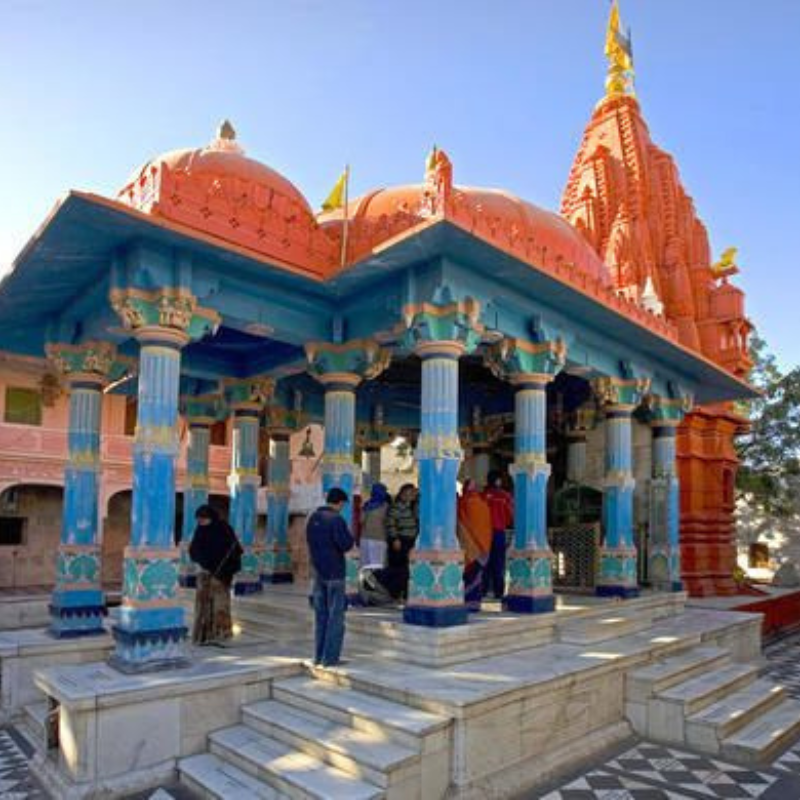
The red-spired Brahma Temple in Pushkar, one of the world's few dedicated to Lord Brahma
Destination

Brahma Temple

Brahma Temple Brahma Temple: Located just a short walk from the sacred banks of Pushkar Lake, the Jagatpita Brahma Mandir is one of the most unique, historically significant, and deeply revered shrines in all of India. While there are thousands of temples dedicated to Lord Shiva and Lord Vishnu across the globe, temples dedicated to Lord Brahma—the Creator of the Universe—are exceptionally rare. Dating back in its current form to the 14th century, with origins stretching back over 2,000 years, this striking temple stands as the spiritual anchor of Pushkar. Its iconic bright red spire, soaring white marble steps, and mysterious origins make it an absolute must-visit for travelers seeking to understand the deep roots of Rajasthani culture and Hindu mythology. The Mystery of the Missing Temples In Hindu theology, Lord Brahma forms the sacred trinity (Trimurti) alongside Vishnu the Preserver and Shiva the Destroyer. Yet, despite his monumental role as the creator of all life, he is almost never worshipped with a dedicated temple. According to ancient folklore, this anomaly is due to a fiery curse. Legend has it that when Brahma dropped a divine lotus flower to create Pushkar Lake, he decided to perform a grand religious sacrifice (Yajna) on its shores. To complete the rituals at the exact auspicious astrological hour, he required his wife, Goddess Saraswati, by his side. When Saraswati was delayed, Brahma hastily married a local milkmaid named Gayatri to sit with him for the ceremony. Arriving to find another woman in her place, an enraged Saraswati cursed Brahma, decreeing that he would never be worshipped anywhere on Earth except in the sacred valley of Pushkar. Top Things to See & Do Inside: Marvel at the Four-Faced Idol: Inside the inner sanctum (Garbhagriha), you will come face-to-face with a magnificent life-sized idol of Lord Brahma. Crafted out of pure chiseled marble, the statue features four distinct faces looking out in all four cardinal directions, symbolizing his all-knowing creator energy. Spot the Silver Turtle Motif: As you step into the main outdoor courtyard, look down at the polished marble floor. Embedded directly into the stone is a beautiful silver turtle motif surrounded by hundreds of vintage silver coins donated by pilgrims from across generations. Admire the Red Spire and Swan Symbols: Look up at the architecture before entering. The temple features a highly distinct, vibrant red shikhara (spire) that can be seen from almost anywhere in Pushkar. The spire is crowned with a flag and features beautiful carvings of a Hamsa (a mystical swan), which serves as Lord Brahma’s divine vehicle. Seek Blessings at the Gayatri Shrine: Located adjacent to the main hall is a separate, smaller sanctuary dedicated to Goddess Gayatri, honoring her role in the creation legend of the town. Essential Traveler Tips for Your Visit: Strict Security & Locker Rules: To preserve the sanctity and safety of the inner shrine, mobile phones, cameras, large bags, and leather items are strictly banned inside the temple complex. You must leave your belongings in the secure, free locker counters located right outside the main entrance steps. Timings & the Magic of Aarti: The temple doors open daily from 6:00 AM to 8:30 PM (with a brief closure between 1:30 PM and 3:00 PM for the deities’ afternoon rest). For an unforgettable spiritual experience, time your visit for the Sandhya Aarti at sunset, when the air fills with the thunderous ringing of brass bells and traditional chants. Avoid the Rose Petal Trap: Just like at the nearby Pushkar Lake, self-proclaimed priests waiting on the approach steps may offer you loose rose petals for a “free blessing.” This is a known commercial trap designed to demand high donations once inside. Simply walk past them politely and buy your simple offerings from the fixed-price flower stalls line the public street if you wish to donate. Footwear Etiquette: You will need to take off your shoes at the designated footwear stalls outside the main gate. The marble floors inside can get incredibly hot under the afternoon desert sun, so visiting in the early morning or late evening is highly recommended for a comfortable walk. View Nearby Destinations All Events Destination Savitri Temple Brahma Temple Pushkar Lake Adhai Din Ka Jhonpra Ana Sagar Lake Ajmer Sharif Dargah Load More End of Content.

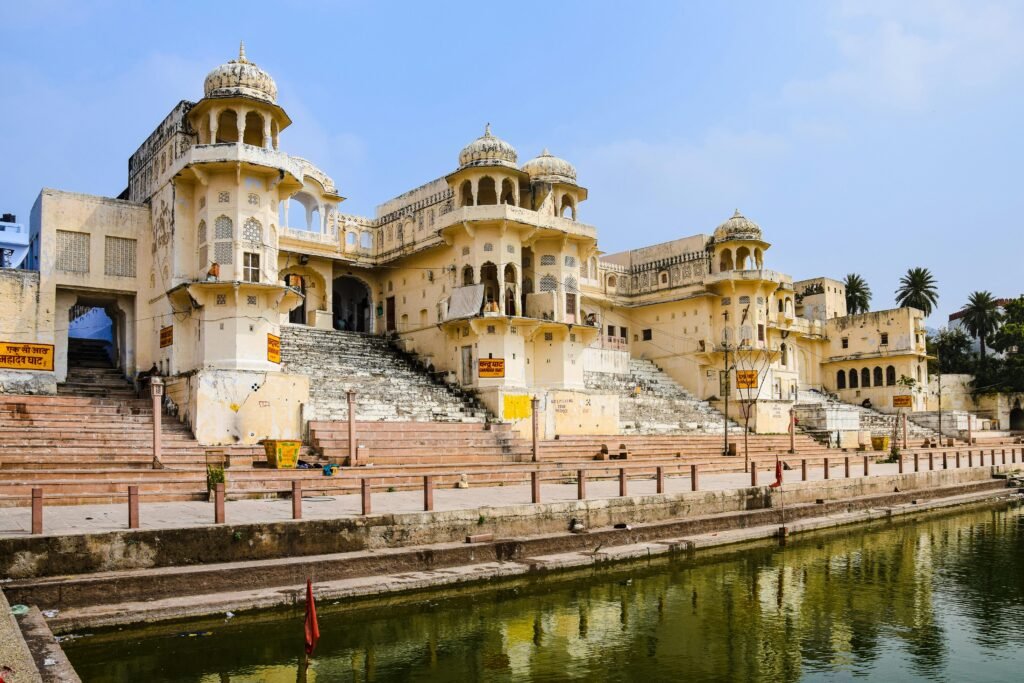
Pilgrims and ghats at the sacred Pushkar Lake
Destination

Pushkar Lake

Pushkar Lake Pushkar Lake: Nestled on the edge of the Thar Desert and surrounded by the rugged Aravalli hills, Pushkar Lake (also known as Pushkar Sarovar) is one of the most sacred and culturally profound water bodies in all of India. For centuries, this serene, semi-circular lake has served as the spiritual heart of Hinduism, drawing millions of pilgrims, sages, and travelers to its mystical shores. According to ancient Hindu scriptures, Pushkar is one of the five holiest pilgrimage destinations (Panch Tirtha). What makes a visit here truly unforgettable isn’t just the natural beauty of an oasis framed by desert sands—it is the continuous, living layer of deep spiritual devotion that hums along the waterfront from sunrise to sunset. The Divine Lotus Legend The origin of Pushkar Lake is rooted in a beautiful Vedic creation story. According to the Padma Purana, the universe’s creator, Lord Brahma, was looking for a peaceful place to perform a grand religious sacrifice (Yajna). As he flew over the earth, a divine lotus flower dropped from his hands. The lotus struck the earth in three places, and sweet water miraculously gushed forth from the desert ground, forming three lakes. The primary spot where the main lotus fell became known as Pushkar, which literally translates to “blue lotus flower.” Because Brahma performed his sacred rituals here, the lake is considered to possess immense divine energy, and taking a dip in its waters is believed to cleanse a lifetime of sins and grant spiritual liberation (Moksha). Top Things to See & Do Inside: Explore the 52 Bathing Ghats: The entire perimeter of the lake is beautifully framed by 52 distinct stone bathing ghats. Walk along the continuous waterfront path to see devotees performing rituals, sadhus meditating under ancient trees, and pilgrims taking holy dips. The most famous ghats include Brahma Ghat, Varaha Ghat, and Gau Ghat. Visit the Rare Lord Brahma Temple: Just a short walk from the lake banks stands the 14th-century Jagatpita Brahma Temple. It is one of the exceptionally few temples in the entire world dedicated exclusively to Lord Brahma, featuring a distinct bright red spire and a beautiful four-faced idol of the creator god. Witness the Maha Aarti at Sunset: As the sun dips behind the desert hills, find a spot at Varaha Ghat or Brahma Ghat to witness the spectacular evening Aarti. The air fills with the rhythmic ringing of temple bells, chanting of ancient mantras, and the scent of burning incense as hundreds of earthen lamps are floated onto the shimmering water. Experience the Grand Pushkar Camel Fair: If you plan your visit during the Hindu month of Kartik (October/November), the lake transforms into a massive cultural phenomenon. The annual Pushkar Fair brings together tens of thousands of camels, horses, and livestock traders alongside vibrant cultural performances, ferris wheels, and a massive influx of global travelers. Essential Traveler Tips for Your Visit: Beware of the “Pushkar Passport” Scam: This is the most common trap for tourists. Local priests (pandits) or men holding rose petals will approach you near the ghats, offering to perform a quick, free blessing ritual for your family. Once the ritual begins, they will aggressively demand a large sum of money as a mandatory donation. To avoid this, politely and firmly decline their offers. If you wish to perform a ritual, do it through an authorized priest inside a main temple. Respect the Sacred Etiquette: Pushkar Lake is a strictly revered religious sanctuary. You must remove your shoes well before stepping onto any of the stone stairs leading down to the water. Additionally, ensure you dress modestly (shoulders and knees must be fully covered), and smoking, consuming alcohol, and meat are completely banned throughout the entire town of Pushkar. Photography Restrictions: While photographing the beautiful white architecture from a distance is fine, never take close-up photos of people bathing or performing intimate funeral/cleansing rituals at the ghats. It is considered a serious breach of privacy and respect. The Perfect Transit Connection: Pushkar is located just 15 kilometers northwest of Ajmer. A scenic, winding 30-minute drive across the rugged Nag Pahar (Snake Mountain) pass connects Ana Sagar Lake and Ajmer Sharif Dargah directly to Pushkar, making them perfect companion destinations. View Nearby Destinations All Events Destination Pushkar Lake Adhai Din Ka Jhonpra Ana Sagar Lake Ajmer Sharif Dargah Kolayat Deshnoke Load More End of Content.
Scroll to Top