Destination

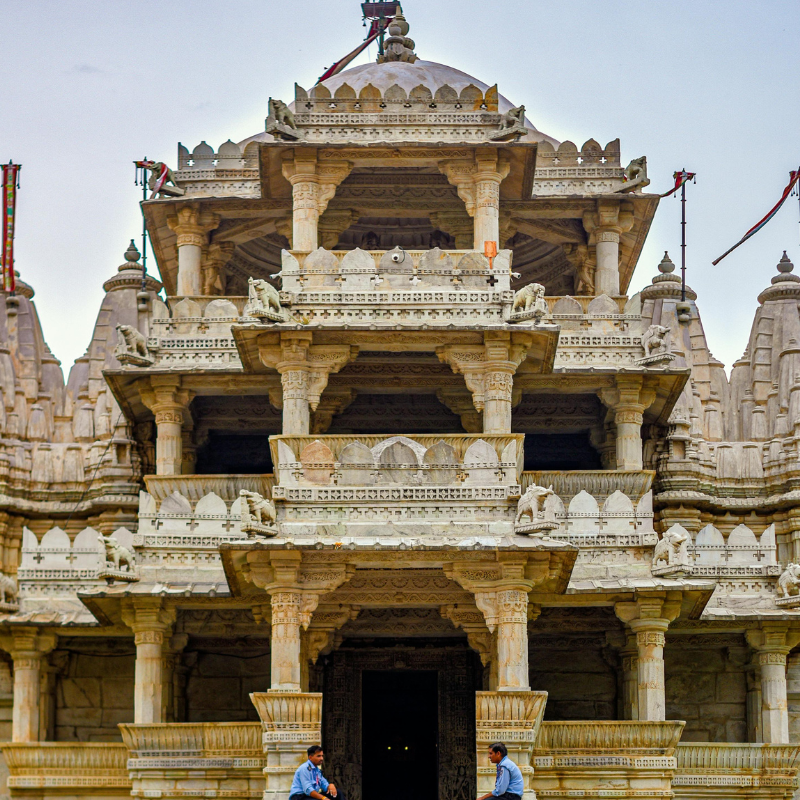
The forest of 1,444 uniquely carved marble pillars inside Ranakpur Jain Temple
Destination

Ranakpur Jain Temple

Ranakpur Jain Temple Ranakpur Jain Temple: Nestled in a quiet, forested valley on the western slopes of the Aravalli Range, the Ranakpur Jain Temple in Pali district is one of the largest, most spectacular, and artistically significant Jain temple complexes in the world. Built in the 15th century during the reign of the visionary Rajput monarch Rana Kumbha, this architectural marvel is constructed entirely of luminous light-colored marble and is dedicated to Lord Adinath (Rishabhadeva), the first Tirthankara of Jainism. What sets Ranakpur apart is its sheer geometric genius and staggering scale. Often described as a “forest of pillars,” the main three-story temple structure rises over a high stone platform, creating a sublime spiritual sanctuary designed to seamlessly blend structural engineering with cosmic harmony and natural light. The construction of the temple is tied to a profound spiritual vision. Legend states that Dharna Shah, a deeply pious and wealthy Porwal Jain merchant-minister, had a vivid dream of a Nalinitgulma Viman—a magnificent, multi-tiered celestial vehicle belonging to the gods. Determined to manifest this divine palace on earth, he invited master artisans from across the country. After rejecting dozens of design plans, he discovered Depa, an eccentric architect-sculptor who presented a master blueprint that perfectly captured the cosmic, multi-directional essence of the celestial vehicle. Dharna Shah presented his plan to Rana Kumbha, who generously granted land in this secluded mountain valley on the condition that the temple and the surrounding township bear his royal name (Ranakpur). Top Things to See & Do Inside: The Legend of the 1,444 Pillars: The entire main temple complex is supported by a mind-boggling network of 1,444 uniquely carved marble pillars. In an absolute masterclass of design, no two pillars are carved alike. Furthermore, the pillars are meticulously positioned so that they never obstruct your line of sight from any corner of the massive pillared halls to the central deity statue. The Four-Faced Chaumukha Layout: The primary shrine is built following the sacred Chaumukha (four-faced) design philosophy. The inner sanctum houses a colossal, 6-foot-tall white marble idol of Lord Adinath featuring four identical faces facing the four cardinal directions, symbolizing his spiritual omnipresence over the entire universe. The Inverted Intricate Domes: Look up into the central assembly halls to view a series of 24 massive corbelled domes. The ceilings are packed with impossibly delicate, lace-like carvings of dancing nymphs, geometric friezes, and massive hanging marble pendants shaped like lotus buds that appear completely weightless. The Unbelievable Single-Stone Leaf Carving: Hidden along one of the inner corridors sits an extraordinary marble panel carved out of a single slab of stone. It depicts a dense canopy of thousands of interlinked snakes guarding the deity Parshvanath; the carving is so incredibly complex that you can trace single bodies weaving completely through microscopic gaps in the stone. View Nearby Destinations All Events Destination Ranakpur Jain Temple Deshnoke Saheliyon-ki-Bari Jag Mandir Shilpgram Jaigarh Fort Load More End of Content.
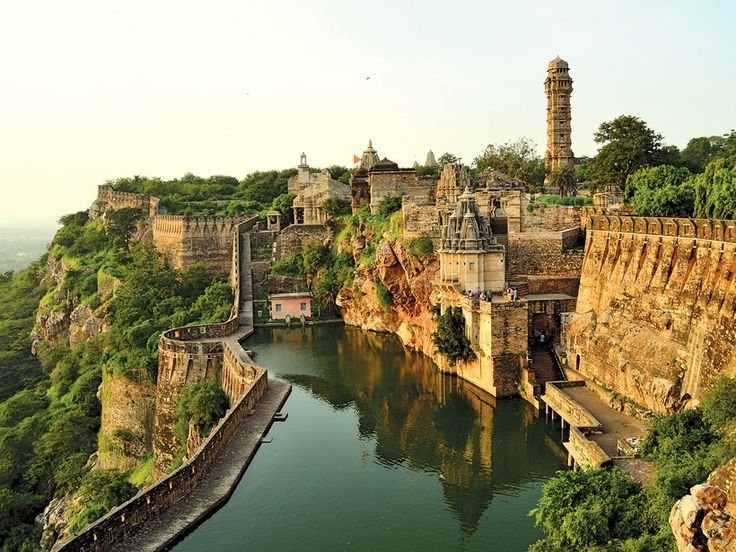
The massive ramparts and Vijay Stambh of Chittorgarh Fort, India’s largest fort
Destination

Chittorgarh Fort

Chittorgarh Fort Chittorgarh Fort: Spread across a colossal 700-acre hilltop plateau that rises abruptly out of the plains of southern Rajasthan, Chittorgarh Fort is the largest fortified complex in India and a UNESCO World Heritage Site. Originally constructed by the Mori Rajputs in the 7th century and later serving as the glorious, fiercely defended capital of the Mewar Kingdom, this epic citadel stands as the ultimate national symbol of Rajput courage, sacrifice, and chivalry. Unlike valley palaces designed purely for luxury, Chittorgarh is a massive, self-sustaining hill fort engineered to hold entire city populations during years of medieval warfare. Shaped roughly like a giant fish when viewed from above, its rocky cliffs are ringed by kilometers of thick stone battlements that have witnessed some of the most dramatic battles in Indian history. Chittorgarh’s legendary status is forged by its tragic history of three great historical sieges, each ending in the ultimate sacrifice of Jauhar (sacred self-immolation by royal women) and Saka (a final, desperate battle unto death by the warriors): 1303 AD: Besieged by Alauddin Khalji of the Delhi Sultanate, driven by imperial expansion and legends surrounding the beauty of Queen Padmini. 1535 AD: Attacked by Bahadur Shah of Gujarat, pushing the young fortress to its structural limits. 1567-1568 AD: Invaded by the Mughal Emperor Akbar. Despite a ferocious defense led by the young commanders Jaimal and Patta, the fort fell, prompting Maharana Udai Singh II to retreat into the hills and establish the new capital of Udaipur. Iconic Landmarks and Architectural Wonders to Explore: Ascend the Seven Fortified Gates: The winding, 1-kilometer uphill road to the plateau forces travelers through seven monumental, heavy stone gateways. The final entryways—including Bhairon Pole and Ram Pole—feature historical cenotaphs marking the exact spots where brave Rajput commanders fell defending the fort. Marvel at the Vijay Stambha (Tower of Victory): Constructed between 1440 and 1448 AD by Rana Kumbha to celebrate his triumph over the combined armies of Malwa and Gujarat, this breathtaking 9-story stone tower rises 37 meters high. The entire surface is covered in fine carvings of Hindu deities, structural weapons, and musical instruments. Discover the Kirti Stambha (Tower of Fame): A stunning 22-meter-high tower built by a wealthy Digambara Jain merchant in the 12th century. Dedicated to Adinath, the first Jain Tirthankara, this 7-story architectural marvel features a narrow inner staircase and is completely blanketed from base to summit in deeply carved figures of Jain monks. Explore Padmini’s Palace and Gaumukh Kund: Visit the serene, water-side palace structure where Queen Padmini resided. Nearby sits the Gaumukh Kund, a deeply carved, natural rock reservoir fed by a continuous spring that flows out from a cliff face shaped like a cow’s mouth (gaumukh), serving as the fort’s main water source during ancient sieges. Walk the Grounds of Rana Kumbha Palace: Wander through the atmospheric, vaulted stone ruins of the oldest palace complex on the plateau. This historic site features grand elephant stables, hidden royal chambers, and the subterranean vaults where historical royal ceremonies took place View Nearby Destinations All Events Destination Chittorgarh Fort Deshnoke Saheliyon-ki-Bari Jag Mandir Shilpgram Jaigarh Fort Load More End of Content.
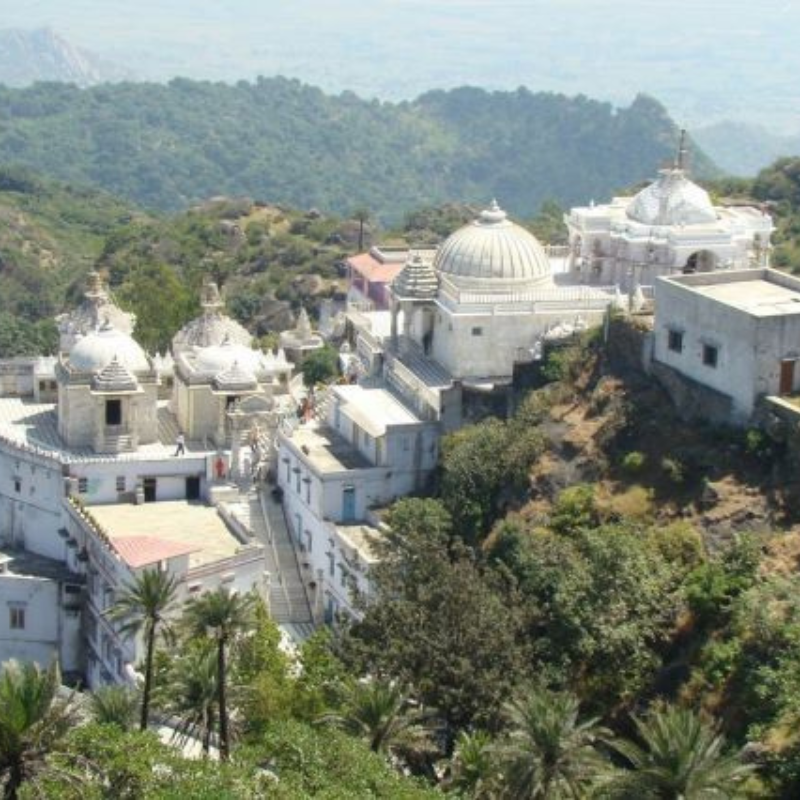
Historic ruins and temple complex of Achalgarh Fort in Mount Abu
Destination

Achalgarh Fort

Achalgarh Fort Achalgarh Fort: Perched on a mountain peak about 11 kilometers north of the main Mount Abu town center, Achalgarh Fort is an impressive historic citadel steeped in medieval military strategy and sacred spiritual legends. Originally constructed in the 9th century by the rulers of the Paramara dynasty, the fortress was extensively rebuilt, expanded, and fortified in 1452 AD by the legendary warrior-king Rana Kumbha of Mewar to safeguard the southern borders of his kingdom. Unlike the heavily manicured and bustling palaces found down in the valleys, Achalgarh presents a raw, atmospheric experience. Its weathered stone ramparts blend seamlessly into the dense forest terrain of the Aravalli hills, offering a quiet sanctuary for history lovers, trekkers, and spiritual seekers. Rana Kumbha, who famously constructed over 30 massive forts across Mewar (including the world-renowned Kumbhalgarh), recognized Achalgarh’s incredible strategic value. Perched at a towering height, the fort commands an absolute bird’s-eye view over the winding mountain passes connecting the plains of Gujarat to Rajasthan. The fortifications were meticulously designed to counter medieval siege tactics. The main approach route features heavy, multi-layered stone walls and monumental defensive gates like the Hanuman Pole and the Champa Pole. These entryways were engineered with sharp, sudden bends to prevent enemy war elephants from building up momentum to ram down the heavy iron-spiked wooden doors. Top Things to See & Do Inside: Visit the Achaleshwar Mahadev Temple: Located just below the main fort gates, this legendary 9th-century shrine is dedicated to Lord Shiva. It holds a unique place in Indian spiritual architecture: instead of a traditional projecting Shiva Lingam, the inner sanctum features a deep natural pit representing the divine toe of Lord Shiva, which is believed to extend deep into the earth to hold the mountain stable. See the Nandi Cast from Five Metals: Right outside the Achaleshwar temple courtyard stands a colossal, majestic statue of Nandi (the sacred bull). This grand sculpture is cast entirely from Panchadhatu (a sacred blend of five distinct metals: gold, silver, copper, bronze, and iron) and bears historical battle marks from medieval invasions. Climb to the Beautiful Achalgarh Jain Temples: Positioned higher up the rocky mountain trail within the fort walls sits a stunning cluster of white stone Jain shrines. Built in 1513 AD, the temples are famous for their fine structural carvings and house a massive, gleaming metal idol of the Tirthankara Adinath cast from shimmering brass. Relax by the Mandakini Lake: Nestled at the base of the fort cliffs lies a peaceful, historic water reservoir. The stone-lined banks are adorned with large, ancient rock carvings of mythical animals, historical heroes, and three stone buffaloes linked to legends of demons trying to drink the oasis dry View Nearby Destinations All Events Destination Achalgarh Fort Deshnoke Saheliyon-ki-Bari Jag Mandir Shilpgram Jaigarh Fort Load More End of Content.
Destination

Guru Shikhar

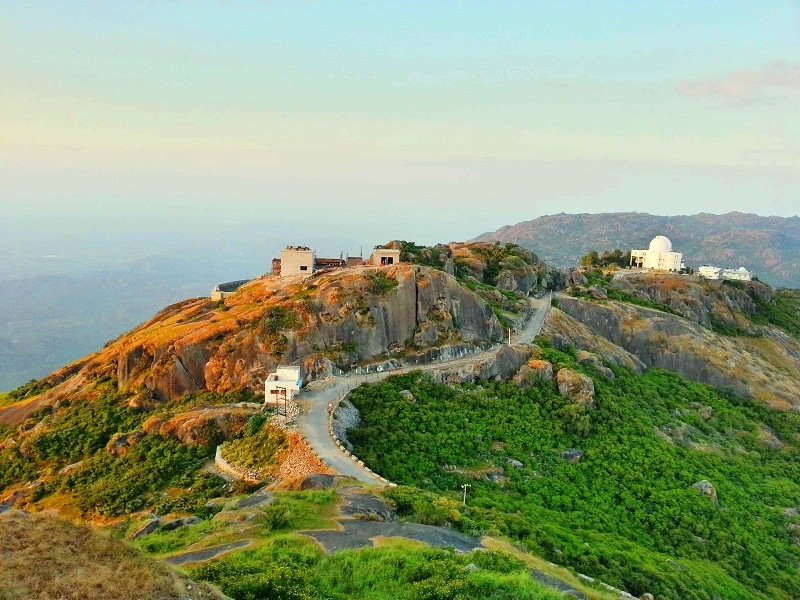
Guru Shikhar Guru Shikhar: The Highest Peak of Rajasthan Rising grandly to an elevation of 1,722 meters (5,650 feet) above sea level, Guru Shikhar is the highest point of the ancient Aravalli Range and the absolute apex of Rajasthan. Located roughly 15 kilometers from the main town center of Mount Abu, this majestic peak offers panoramic, unobstructed views of sweeping valleys, rugged granite cliffs, and floating layers of mist that make you feel like you are standing on the edge of the clouds. Named “The Peak of the Guru,” the summit is deeply revered as both a natural wonder and an important spiritual site. It successfully transitions Rajasthan’s identity from a land of low-lying desert expanses to a dramatic, high-altitude sanctuary. The mountain peak is heavily tied to the history of Guru Dattatreya, a legendary wandering sage believed by Hindus to be a divine incarnation combining the powers of the holy trinity: Brahma, Vishnu, and Shiva. According to ancient texts, Dattatreya spent long periods of intense meditation on this isolated rock outcropping. Right at the very tip of the summit, tucked inside a natural granite cave, rests a small, white-domed temple dedicated to him. Rather than a traditional stone statue, the inner sanctuary houses a pair of footprints (padukas) carved directly into the rock floor, marking the exact spot where the sage is said to have stood. Key Landmarks and Experiences at the Summit: Climb to the Guru Dattatreya Temple: Reaching the cave shrine requires climbing roughly 300 stone steps from the upper parking lot. The path is lined with small shops selling local snacks and mountain berries. At the top, you can ring a massive brass bell whose ringing sound echoes across the entire mountain valley. See the Mount Abu Infrared Observatory: Perched on an adjacent ridge right next to the temple sits a massive white dome operated by the Physical Research Laboratory (PRL). This high-tech facility houses a powerful 1.2-meter infrared telescope, utilizing the peak’s exceptionally clear mountain air and low humidity to map distant stars and galaxies. Visit the Ahilya Temple: Located just a short walk below the main peak, this quiet shrine is dedicated to Guru Dattatreya’s mother, Anasuya. It offers an incredibly peaceful courtyard that is far less crowded than the main summit. Take in the 360-Degree Panoramic View: From the viewing decks next to the main temple, you can see the entire rugged landscape of the Mount Abu Wildlife Sanctuary spread out below, with Nakki Lake appearing as a tiny blue gem hidden in the distant hills. View Nearby Destinations All Events Destination Guru Shikhar Deshnoke Saheliyon-ki-Bari Jag Mandir Shilpgram Jaigarh Fort Load More End of Content.
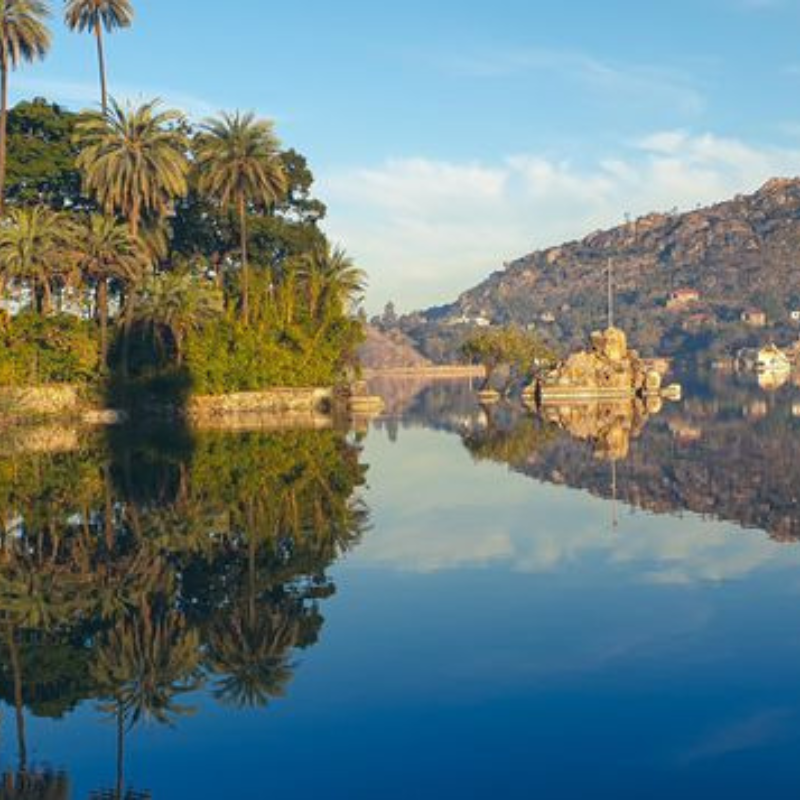
Scenic view of Nakki Lake in Mount Abu surrounded by unusual rock formations
Destination

Nakki Lake

Nakki Lake Nakki Lake: Perched beautifully at an altitude of approximately 1,200 meters inside Rajasthan’s only hill station, Nakki Lake is the geographical and cultural heartbeat of Mount Abu. This vast, serene body of water is surrounded by the ancient, rugged ridges of the Aravalli Range, strange volcanic rock formations, and lush green hillsides, offering a cool, misty retreat that contrasts sharply with the sweeping desert plains below. What makes Nakki Lake deeply captivating is its romantic atmosphere and its profound place in local mythology. It holds the proud distinction of being India’s first man-made lake to be carved out at such a high altitude, and it remains a deeply sacred site for the local Garasia tribal communities. The very name “Nakki” tells the story of the lake’s legendary origin. Derived from the Hindi word for fingernail (nakh), local folklore states that the lake was dug out overnight by the gods using nothing but their bare nails to seek protection from a powerful demon king. Another popular romantic legend credits the creation of the lake to a young sculptor named Rasiya Balam. The local king promised his daughter’s hand in marriage to anyone who could dig a deep lake into the mountain rock before the next morning’s rooster crowed. Working through the freezing mountain night, Rasiya scooped out the valley with his nails, only for the wicked stepmother to mimic a rooster early, tragically breaking the young lover’s heart. Today, a small temple dedicated to Rasiya Balam stands near the lakeside to commemorate the story. Top Things to See & Do Around Nakki Lake: Go Boating on the Mountain Waters: This is the signature experience at the lake. You can rent colorful pedal boats or rowboats from the main jetty to cruise past small rocky islands and fountains. Boating during the late afternoon offers front-row seats to the changing colors of the sky. Hike Up to Toad Rock: Rising dramatically over the edge of the lake sits Toad Rock, a gigantic, naturally formed granite boulder that looks exactly like a giant toad frozen in mid-leap into the water. A short, energetic climb up a flight of stone steps leads you straight to the top, providing a spectacular bird’s-eye view of the entire lake basin. Stroll the Promenade and Markets: The lake is encircled by a clean, well-paved walking track lined with tall palm trees and manicured gardens. Right across the promenade lies a bustling bazaar filled with cozy cafes, local ice cream parlors, and handicraft stalls selling traditional Rajasthani textiles and Kota sarees. Watch the Sunset from Sunset Point: Located a short walk or horse-ride away from the southwest side of the lake, this vantage point offers an incredible panoramic view as the sun dips completely below the horizon, casting deep shades of orange and purple across the valley gaps. View Nearby Destinations All Events Destination Nakki Lake Deshnoke Saheliyon-ki-Bari Jag Mandir Shilpgram Jaigarh Fort Load More End of Content.
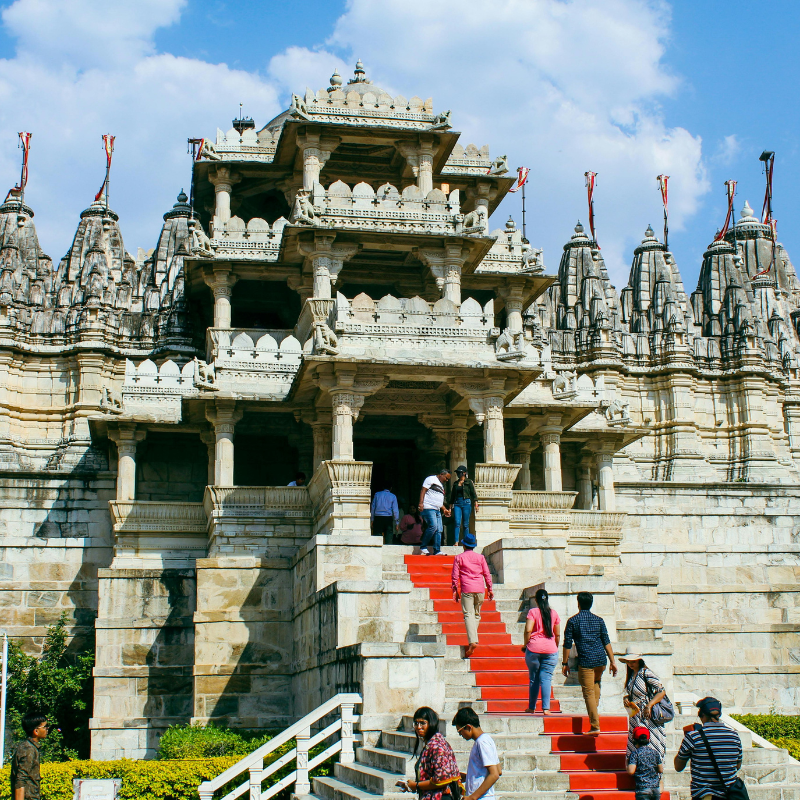
Intricate white marble carvings inside the Dilwara Jain Temples in Mount Abu
Destination

Dilwara Jain Temples

Dilwara Jain Temples Dilwara Jain Temples: Tucked away amidst the lush, forested hills of Mount Abu—Rajasthan’s only hill station—the Dilwara Jain Temples represent one of the absolute greatest architectural and stone-carving achievements in human history. Built between the 11th and 16th centuries during the reign of the Solanki dynasty, this complex consists of five legendary, interconnected temples constructed entirely out of luminous, pure white marble. What makes Dilwara a global marvel is its extraordinary philosophy of hidden luxury. From the outside, the temples present a deliberately plain, modest stone facade designed historically to avoid attracting the attention of passing invaders. However, the moment you step across the threshold, the interior explodes into a jaw-dropping, lace-like maze of marble carvings so impossibly delicate that the stone appears completely translucent. The architectural brilliance of Dilwara is heavily magnified when you consider the sheer physics of its construction. The pristine white marble used to carve these structures was not sourced locally; it was mined from the famous quarries of Makrana, located over 300 kilometers away. Because Mount Abu rises to an altitude of over 1,200 meters, medieval engineers had to transport thousands of tons of massive marble blocks up steep, unpaved mountain cliffs without any modern machinery. Teams of hundreds of workers used massive lines of elephants to slowly drag the stone up the mountain ridges. To ensure absolute perfection, artisans were historically paid in gold dust equivalent to the exact weight of the marble shavings they carved away, encouraging them to create details as thin as silk thread. The Five Architectural Masterpieces to Explore: Vimal Vasahi Temple (Dedicated to Lord Rishabhdev): Built in 1031 AD by Vimal Shah, a minister of the Solanki ruler, this is the oldest and most opulently decorated temple in the complex. The absolute highlight is its central dome, which features a breathtaking circular ceiling adorned with 16 uniquely carved Vidyadevis (goddesses of knowledge) and hanging, lace-like marble pendants that defy gravity. Luna Vasahi Temple (Dedicated to Lord Neminath): Built in 1230 AD by two wealthy merchant brothers, Vastupal and Tejpal, this structure rivals the Vimal Vasahi in pure artistry. The master artisans carved the central dome to resemble a lotus flower in full bloom, with marble petals carved so incredibly thin that light passes right through the stone. Pithalhar Temple (Dedicated to Lord Adinath): This grand temple is famous for housing a massive, majestic idol of the first Jain Tirthankara cast out of five distinct metals (Panchadhatu), dominated heavily by solid brass. Parshvanath Temple (Chaumukha Temple): Built in 1459 AD, this is the tallest, multi-story structure in the complex. It features a unique four-faced (Chaumukha) design, meaning the central grey-stone image of Lord Parshvanath can be viewed clearly from all four cardinal directions. Mahavir Swami Temple: Constructed in 1582 AD, this is a relatively small, deeply intimate shrine dedicated to the final Jain Tirthankara, featuring exceptional wall paintings on its inner porches. View Nearby Destinations All Events Destination Dilwara Jain Temples Deshnoke Saheliyon-ki-Bari Jag Mandir Shilpgram Jaigarh Fort Load More End of Content.
Destination

Malsisar

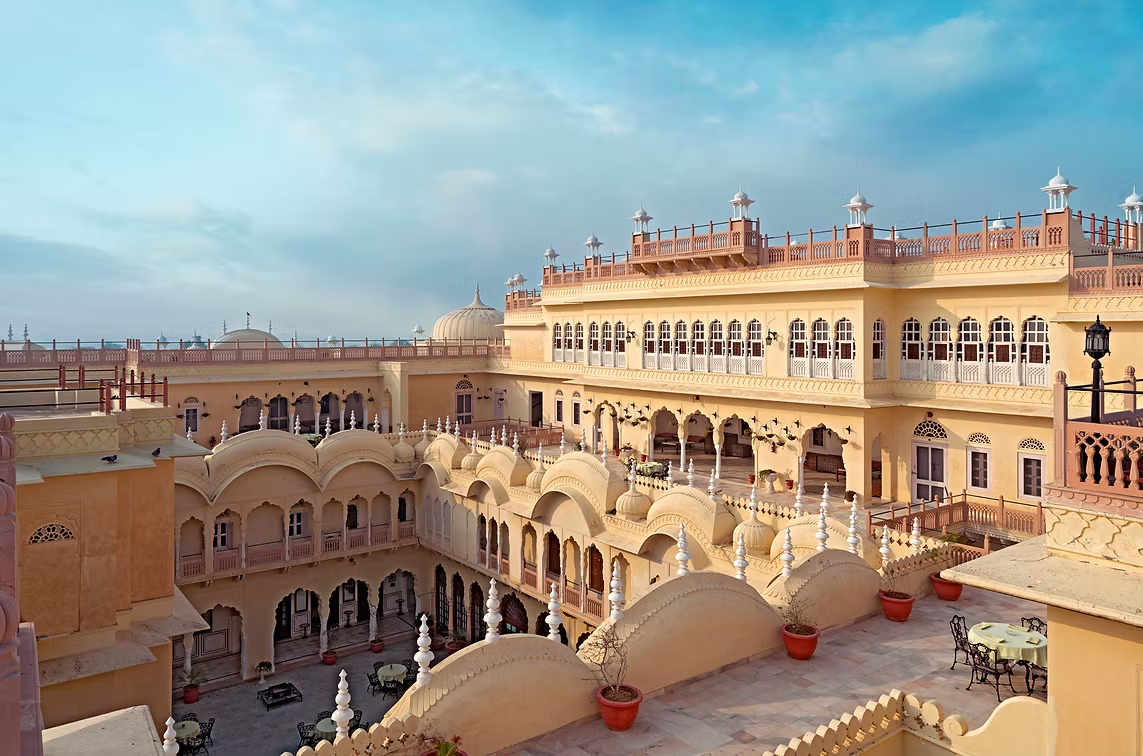
Malsisar Malsisar: Tucked away in the far northern stretches of the Jhunjhunu district, Malsisar is one of the most wonderfully authentic, off-the-beaten-path heritage towns in the Shekhawati region. Historically twinned in local lore with its immediate neighbor Alsisar, Malsisar was established in the 18th century as a fortified frontier enclave under the brave Shekhawat Rajput chieftains. Because it sits further away from the main commercial highway loops that connect Jaipur to Bikaner, Malsisar feels like a town completely untouched by time. It offers a rare, peaceful atmosphere where travelers can wander down quiet, sandy village paths to explore majestic, semi-abandoned family forts and crumbling merchant mansions completely free from tourist crowds. The Frontier Fort of the Desert Plains The historical heart of the town centers around the Malsisar Fort, constructed in the late 1700s to defend the northern trade boundaries of the Shekhawati region. Unlike the highly ornamental, residential palaces found in southern parts of the state, Malsisar’s defensive architecture features heavy stone ramparts, thick watchtowers, and deep courtyards engineered to withstand border skirmishes and the harsh elements of the Thar Desert. The protective cover of this remote military fort drew wealthy Marwari merchant guilds to settle within the township. These elite trading families funneled their immense fortunes into constructing grand Havelis. The frescoes here are deeply fascinating to art lovers; because the town was remote, local artists relied purely on natural desert minerals, vegetable extracts, and indigo to cover entire alley walls in magnificent, deep-toned narrative murals that have resisted centuries of fading. Top Places and Painted Havelis to Explore: Discover the Malsisar Fort and Environs: Take a walk around the massive outer stone battlements of the historic fort area. The structure displays the raw, heavy masonry style typical of the northern Shekhawati frontier, providing a beautiful viewpoint over the town’s flat clay roofs and surrounding sandy dunes. Marvel at the Jhunjhunwala and Banthia Havelis: These sprawling mansion complexes are incredible hidden gems. Their interior courtyards feature incredibly well-preserved, traditional fresco artwork. Look closely at the archways to spot beautifully detailed panels illustrating classic mythological epics alongside sprawling desert camel caravans. Explore the Ancient Village Stepwells (Baoris): Malsisar features several beautiful historic stepwells built centuries ago on the edges of the settlement. These deep, symmetric stone structures acted as life-saving water conservation reservoirs and shady social spaces for weary travelers crossing the desert sands. Take a Desert Dune Walk at Sunset: Because Malsisar borders the open expanses of the Thar Desert, the town is surrounded by pristine, sweeping sand dunes. A short walk past the historic buildings brings you directly into the quiet dunes, offering a spectacular, unobstructed view of the Rajasthani sunset. View Nearby Destinations All Events Destination Malsisar Deshnoke Saheliyon-ki-Bari Jag Mandir Shilpgram Jaigarh Fort Load More End of Content.
Destination

Mukundgarh

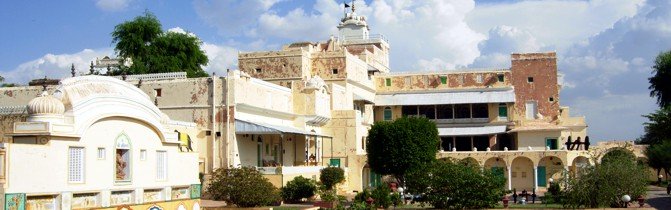
Mukundgarh Fort Mukundgarh Fort: Situated in the Jhunjhunu district of northern Rajasthan, Mukundgarh is a classic, beautifully preserved heritage town on the popular Shekhawati art circuit. Founded in the mid-18th century by Raja Mukund Singh, the town was structured as a secure, walled community centered around a grand fort complex to invite affluent Marwari merchants to set up their ancestral trading estates. While deep desert paths link it to neighboring art hubs, Mukundgarh stands out for its massive central marketplace and vibrant handicraft heritage. It is highly celebrated by travelers not just for its sprawling wall murals, but as a premier regional center where local artisans continue centuries-old traditions of iron crafting, brass work, and fine wood carving. The historic identity of the town is anchored completely by Mukundgarh Fort. Sprawling across several acres right in the center of the town layout, this imposing stronghold features classic Rajput military design, complete with thick defensive stone walls, sweeping ramparts, and spacious courtyards lined with fine arched verandas. The security provided by the fort allowed wealthy merchant families to build grand mansions (havelis) right outside its gates. Mukundgarh’s frescoes are famous for their sheer scale, covering massive public facades with narrative panels. These murals treat onlookers to a visual history book, capturing ancient spiritual epics right alongside the arrival of early Western colonial objects like mechanical clocks, bicycles, and grand trains. Top Places and Painted Havelis to Explore: Roam the Grounds of Mukundgarh Fort: Take a walk through the fort’s beautifully arranged courtyards and look up at its multi-tiered balconies. The property showcases fine architectural elements of the Shekhawati region and has hosted heritage travelers for decades, offering a wonderful view over the surrounding old town markets. Marvel at the Kanoria and Saraf Havelis: These sprawling mansion complexes are absolute must-visits for art lovers. Their double-courtyard layouts feature some of the most vibrant, detailed fresco art in the area, showcasing traditional royal processions, intricate geometric borders, and whimsical turn-of-the-century modern motifs. Stroll the Historic Brass and Iron Craft Bazaar: Mukundgarh boasts one of the most active old craft markets in Shekhawati. Take a leisurely walk past the old wooden shopfronts to see local craftsmen shaping brassware, creating detailed iron fixtures, and carving high-quality wooden chest replicas modeled after antique Marwari furniture. Discover the Venu Gopal Temple: A beautiful historical temple complex dedicated to Lord Krishna. Beyond its spiritual significance, the temple is highly valued for its fine structural carvings and well-preserved ceiling frescoes that display exceptional color preservation. View Nearby Destinations All Events Destination Mukundgarh Deshnoke Saheliyon-ki-Bari Jag Mandir Shilpgram Jaigarh Fort Load More End of Content.
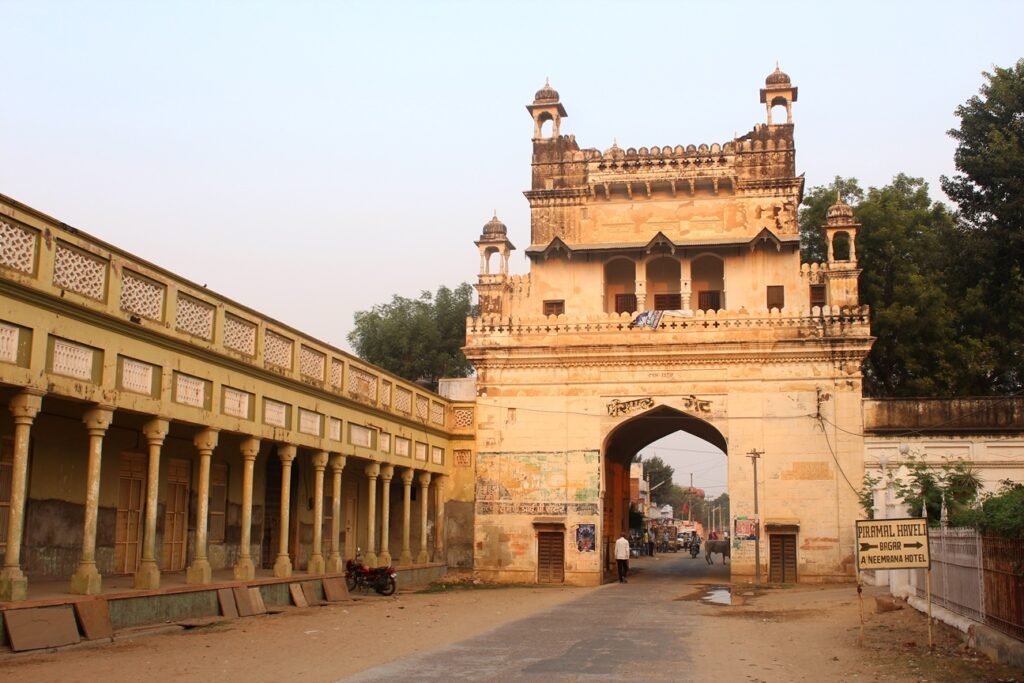
Baggar
Destination

Baggar

Baggar Baggar: Located in the Jhunjhunu district of northern Rajasthan, Baggar (also spelled Bagar) is an enchanting, offbeat heritage town within the Shekhawati region. Unlike its more commercialized neighbors, Baggar offers a beautifully serene and undisturbed look into the twilight era of the great Marwari merchant dynasties. Established initially as a fortified settlement, the town underwent a massive architectural boom in the late 19th and early 20th centuries. Wealthy industrialist families—most notably the Piramals and the Rungtas—funneled their trading fortunes back into their ancestral home, creating massive, sprawling compounds that represent a fascinating blend of traditional Rajasthani design and early European art deco style. What makes Baggar uniquely significant to art historians is the timing of its construction. Most of its major mansions were built around the 1920s to 1930s, long after the old desert caravan trade routes had declined and British colonial influence had fully integrated into Indian elite life. As a result, the frescoes of Baggar are deeply unique. While they still depict classic religious narratives, they are completely dominated by early 20th-century modernity. Walking past the old pillared verandas, you will spot highly accurate, detailed murals of British lifestyle, early motor cars, gramophones, mechanical clocks, and European-style portraits featuring unique shades of imported synthetic paints that have beautifully resisted fading over the decades. Top Places and Havelis to Explore in Baggar: Marvel at the Piramal Haveli: The absolute crown jewel of Baggar. Built in 1928 by Seth Piramal Chaturbhuj Makharia, this sprawling mansion features a highly unusual architectural layout. Instead of the classic closed double-courtyard design, it features an open, pillared courtyard heavily influenced by British colonial architecture. The upper terraces are swathed in magnificent frescoes showing flying angels, old motor cars, and traditional royal processions. Explore the Rungta Havelis: A spectacular cluster of massive, interconnected family mansions. These havelis are famous for their colossal wooden doorways, intricate ironwork balconies, and grand exterior walls completely covered in detailed line art and pastel-toned fresco panels. Discover the Miya Ki Baori: A historic, deeply carved stepwell located on the outskirts of the town. Engineered centuries ago to conserve precious desert rainwater, it features symmetric stone staircases and subterranean chambers that provided a cool, shady refuge for traveling caravans. Stroll Through the Old Bazaar Lanes: Take a slow walk through the old town market lines to see beautifully carved wooden shopfronts, old temples, and hidden, semi-restored structures that show the authentic, unhurried pace of rural Rajasthani life. View Nearby Destinations All Events Destination Baggar Deshnoke Saheliyon-ki-Bari Jag Mandir Shilpgram Jaigarh Fort Load More End of Content.

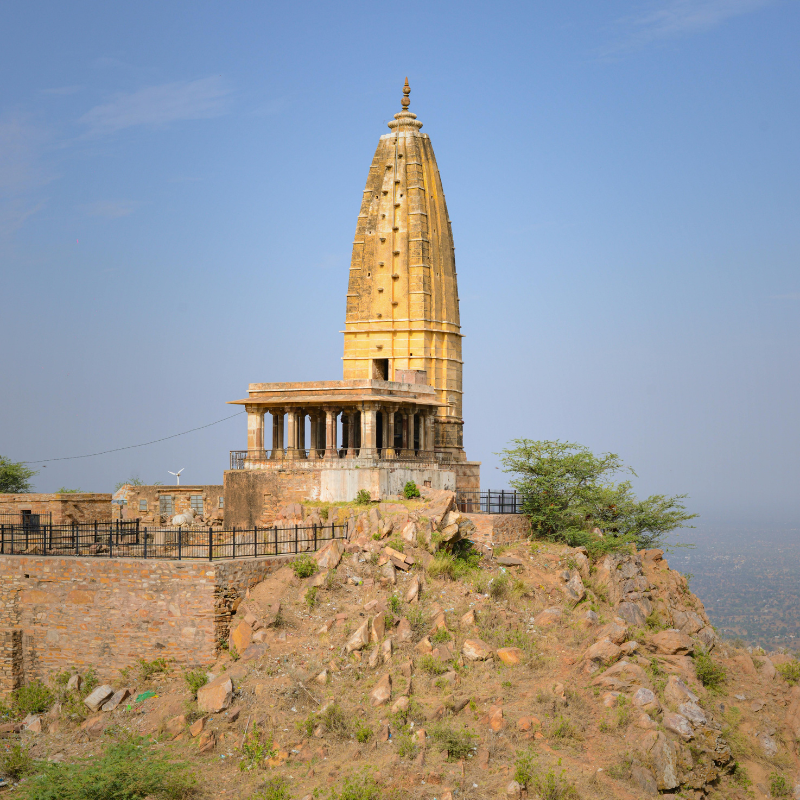
Ancient heritage forts and intricately carved temples in the historic town of Sikar
Destination

Sikar

Sikar Sikar: Serving as the bustling administrative capital and foundational anchor of the Shekhawati region, Sikar is a majestic heritage city that seamlessly blends monumental fortification with artistic brilliance. Established in the late 17th century and heavily fortified under the visionary rule of Rao Raja Devi Singh in the 18th century, Sikar was once the richest thikana (feudal state) under the princely state of Jaipur. Unlike the smaller, quieter museum-towns tucked deeper into the desert sands, Sikar is a grand urban center defined by its massive stone architecture. It features colossal fortified gateways, sprawling royal stepwells, and magnificent public temples that boast some of the finest structural stone carvings in northern Rajasthan. The Fortified Capital of Feudal Splendor Sikar’s dramatic rise to prominence was fueled by its strategic positioning along critical trade routes. The ruling clan constructed a series of massive walls and seven heavily guarded gates—including the famous Bawari Gate and Suraj Pole—to secure the immense fortunes of the local Oswal and Marwari merchant guilds. The wealth that flowed into the capital gave birth to a highly sophisticated local school of architecture and fresco painting. Sikar’s master artisans specialized in grand, high-ceilinged Havelis and vast temple complexes where the walls were treated with multiple layers of lime plaster (araish) to host deep indigo, emerald, and gold leaf murals that have withstood the test of centuries. Top Landmarks and Havelis to Explore: Marvel at the Devgarh Fort: Perched dramatically on a rugged hill about 10 kilometers outside the main city center, this formidable 18th-century fortress was built by Rao Raja Devi Singh. It features imposing ramparts, massive bastions, and a spectacular palace complex that offers a stunning panoramic view of the surrounding semi-arid plains. Explore the Sikar Royal Haveli Cluster: Wander through the old quarters to find architectural masterpieces like the Biyani Haveli and the Somani Haveli. The Biyani Haveli is globally renowned for its unique blue and white color scheme and extensive use of genuine gold leaf trim decorating its high-ceilinged inner reception rooms. Visit the Laxminarayan Temple (Gopinath Ji Temple): A stunning spiritual epicenter right in the heart of the city. The temple features massive, towering domes and interior walls completely blanketed in exquisite, continuous fresco panels illustrating scenes from the life of Lord Krishna alongside royal court processions. Discover the Harshnath Temple Ruins: Located on a scenic hill ridge roughly 14 kilometers from Sikar, this historical site houses the beautifully carved stone ruins of a 10th-century Shiva temple complex. The site is a paradise for history buffs and features breathtaking valley views. View Nearby Destinations All Events Destination Sikar Deshnoke Saheliyon-ki-Bari Jag Mandir Shilpgram Jaigarh Fort Load More End of Content.

Scroll to Top
