Author name: yash soman

Destination

Albert Hall Museum

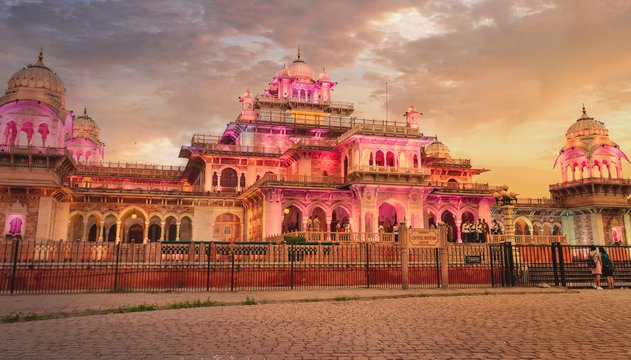
Albert Hall Museum Albert Hall Museum Situated in the middle of the lush, green Ram Niwas Garden just outside the old city walls, the Albert Hall Museum Click to open side panel for more information is the oldest and most grand state museum in Rajasthan. Opened to the public in 1887, the building itself is an absolute masterpiece of Indo-Saracenic architecture, designed with elegant domes, carved stone pillars, and beautiful archways that mirror classic British and Indian design elements. A World of Artifacts Under One RoofInside the cool, grand stone galleries, the museum houses an incredible collection of royal artifacts, ancient pottery, traditional textiles, intricately carved woodwork, weapons, and rare miniature paintings from across Rajasthan’s history. But the most surprising exhibit is an authentic 2,300-year-old Egyptian Mummy named Tutu, which sits perfectly preserved in its own specialized glass display case. Why You Should Visit at Night: The Spectacular Light Show: While the museum is highly engaging during the day, make sure to drive past it after dark. The Atmosphere: The entire exterior facade is illuminated with hundreds of changing, vibrant colored lights, turning the historic building into a breathtaking visual display. View Nearby Destinations All Events Destination Saheliyon-ki-Bari Mehrangarh Fort Patrika Gate Albert Hall Museum Ajmer & Pushkar Bikaner Load More End of Content.

Destination

Jaigarh Fort

Jaisalmer Fort Step Inside Jaisalmer Fort: The Golden Living Citadel of the Thar Desert Rising like a massive sandcastle right out of the heart of the Thar Desert, Jaisalmer Fort (affectionately called Sonar Qila or the Golden Fort) is easily one of the most breathtaking sights in India. But what makes this 12th-century UNESCO World Heritage site truly mind-blowing isn’t just its massive yellow sandstone walls—it’s the fact that it is a “living fort.” A Vibrant City Within Walls Unlike most forts in India that serve purely as empty museums, a quarter of Jaisalmer’s old city population still lives right inside these walls! As you wander through the labyrinth of narrow, winding alleyways, you’ll walk past vibrant homes, bustling local tea stalls, souvenir shops selling colorful textiles, and ancient families who have inhabited the citadel for generations. It’s like stepping directly into a living, breathing time capsule. Top Things to See & Do Inside: The Fort Palace (Raj Mahal): The spectacular former residence of the Maharawal, offering a deep dive into royal history. The Cannon Points:Head out to the edge of the fort walls for an unbelievable 360-degree view of the entire golden city sprawling beneath you. Cafe Culture: Sit by a rooftop cafe built directly into the stone bastions and enjoy a hot cup of Masala Chai as the sun starts to dip. Traveler Tip: There is no entry fee to simply walk into the fort itself, though specific monuments like the Palace Museum do have a nominal ticket price. Try to visit early in the morning to beat both the mid-day desert sun and the heavy influx of tour groups! View Nearby Destinations All Events Destination Saheliyon-ki-Bari Mehrangarh Fort Patrika Gate Jaigarh Fort Ajmer & Pushkar Bikaner Load More End of Content. Jaigarh Fort If Amer Fort was built for royal luxury, Jaigarh Fort Click to open side panel for more information was built for pure, uncompromising military strength. Standing tall on the cliff edge directly above the Amer palace complex, this massive 18th-century structure is commonly called the Cheel ka Teela (Hill of Eagles) or the Victory Fort, designed explicitly to protect the palace below from invading armies. Home to the Mighty Jaivana CannonThe absolute main reason travelers head up to Jaigarh Fort is to lay eyes on the legendary Jaivana Cannon. Cast right inside the fort’s own specialized foundry in 1720, this massive weapon was once the world’s largest operational cannon on wheels. The barrel alone weighs a mind-boggling 50 tons, and it required a team of four elephants to turn it on its axis! Key Features to Explore: Advanced Water Harvesting: The fort features an incredible network of massive underground water storage tanks capable of holding millions of gallons of rainwater to sustain soldiers during long military sieges. The Secret Tunnel: Discover the ancient, secure underground passage that physically connects Jaigarh Fort directly down to Amer Fort, built to help the royal family escape safely during times of trouble.

Destination

Jaswant Thada

Jaswant Thada Located just a short, scenic walk down the hill from the main gates of Mehrangarh Fort, Jaswant Thada Click to open side panel for more information is a breathtakingly peaceful white marble memorial. Built in 1899 by Sardar Singh in loving memory of his father, Maharaja Jaswant Singh II, this architectural marvel sits gracefully next to a quiet, rocky lake, offering a beautiful space for quiet reflection. The Miracle of Translucent StoneWhat makes Jaswant Thada so completely unforgettable is the unique quality of the stone used in its construction. The monument was built using incredibly thin, highly polished sheets of pure Makrana marble. When the bright Rajasthani sun hits the exterior walls at certain angles during the morning or evening hours, the marble actually glows with a warm, translucent, amber-like inner light. Key Details to Notice: The Intricate Screen Work: The window screens feature marble carvings so delicate and fine they closely resemble woven lace. The Royal Cremation Ground: The surrounding multi-tiered garden terraces serve as the official cremation ground for the past rulers of Jodhpur, decorated with smaller, pillared stone domes. View Nearby Destinations :-  Umaid Bhawan Palace View more Mehrangarh Fort View more Clock Tower – Ghanta Ghar View more Toorji Ka Jhalra View More Mandore Gardens View More Kaylana Lake View More Balsamand Lake View More Rao Jodha Desert Rock Park View More

Destination

Nathmal Ki Haveli

Jaisalmer Fort Step Inside Jaisalmer Fort: The Golden Living Citadel of the Thar Desert Rising like a massive sandcastle right out of the heart of the Thar Desert, Jaisalmer Fort (affectionately called Sonar Qila or the Golden Fort) is easily one of the most breathtaking sights in India. But what makes this 12th-century UNESCO World Heritage site truly mind-blowing isn’t just its massive yellow sandstone walls—it’s the fact that it is a “living fort.” A Vibrant City Within Walls Unlike most forts in India that serve purely as empty museums, a quarter of Jaisalmer’s old city population still lives right inside these walls! As you wander through the labyrinth of narrow, winding alleyways, you’ll walk past vibrant homes, bustling local tea stalls, souvenir shops selling colorful textiles, and ancient families who have inhabited the citadel for generations. It’s like stepping directly into a living, breathing time capsule. Top Things to See & Do Inside: The Fort Palace (Raj Mahal): The spectacular former residence of the Maharawal, offering a deep dive into royal history. The Cannon Points:Head out to the edge of the fort walls for an unbelievable 360-degree view of the entire golden city sprawling beneath you. Cafe Culture: Sit by a rooftop cafe built directly into the stone bastions and enjoy a hot cup of Masala Chai as the sun starts to dip. Traveler Tip: There is no entry fee to simply walk into the fort itself, though specific monuments like the Palace Museum do have a nominal ticket price. Try to visit early in the morning to beat both the mid-day desert sun and the heavy influx of tour groups! View Nearby Destinations All Events Destination Saheliyon-ki-Bari Jag Mandir Shilpgram Jaigarh Fort Nathmal Ki Haveli Bada Bagh Load More End of Content. Nathmal Ki Haveli Nathmal Ki Haveli: The Architectural Masterpiece Built by Twin BrothersEvery historic mansion in Jaisalmer has a unique story, but Nathmal Ki Haveli holds one of the most delightful tales of sibling rivalry and artistic genius. Built in the late 19th century to serve as the grand residence for the then Prime Minister, this stunning sandstone haveli is famous for its almost-symmetrical look that reveals hidden surprises the closer you look. A Tale of Two HalvesThe mansion was constructed simultaneously by two architect brothers named Halu and Lalu. Instead of working together on a single blueprint, they decided to split the project down the middle: one brother built the left side of the mansion, while the other built the right side! While the two halves look beautifully balanced from a distance, a closer inspection reveals that the window carvings, balconies, and decorative pillars on each side are entirely unique. Look For the Whimsical Carvings: The Stone Sentinels: Two life-sized, magnificent elephants carved out of a single piece of yellow sandstone stand guard right at the main entrance. Modern Marvels of the 1800s: Fascinatingly, neither brother had ever seen a train or a bicycle in real life, but based entirely on descriptions from travelers, they carved intricate depictions of steam locomotives and bicycles onto the interior stone pillars!

Destination

Bada Bagh

Jaisalmer Fort Step Inside Jaisalmer Fort: The Golden Living Citadel of the Thar Desert Rising like a massive sandcastle right out of the heart of the Thar Desert, Jaisalmer Fort (affectionately called Sonar Qila or the Golden Fort) is easily one of the most breathtaking sights in India. But what makes this 12th-century UNESCO World Heritage site truly mind-blowing isn’t just its massive yellow sandstone walls—it’s the fact that it is a “living fort.” A Vibrant City Within Walls Unlike most forts in India that serve purely as empty museums, a quarter of Jaisalmer’s old city population still lives right inside these walls! As you wander through the labyrinth of narrow, winding alleyways, you’ll walk past vibrant homes, bustling local tea stalls, souvenir shops selling colorful textiles, and ancient families who have inhabited the citadel for generations. It’s like stepping directly into a living, breathing time capsule. Top Things to See & Do Inside: The Fort Palace (Raj Mahal): The spectacular former residence of the Maharawal, offering a deep dive into royal history. The Cannon Points:Head out to the edge of the fort walls for an unbelievable 360-degree view of the entire golden city sprawling beneath you. Cafe Culture: Sit by a rooftop cafe built directly into the stone bastions and enjoy a hot cup of Masala Chai as the sun starts to dip. Traveler Tip: There is no entry fee to simply walk into the fort itself, though specific monuments like the Palace Museum do have a nominal ticket price. Try to visit early in the morning to beat both the mid-day desert sun and the heavy influx of tour groups! View Nearby Destinations All Events Destination Saheliyon-ki-Bari Jag Mandir Shilpgram Jaigarh Fort Bada Bagh Ajmer & Pushkar Load More End of Content. Bada Bagh Bada Bagh: The Golden Royal Cenotaphs Where History Stands TallLocated just a short 6 km drive north of Jaisalmer, Bada Bagh (meaning Big Garden) is a visually striking monument complex that feels like a peaceful open-air gallery. Set beautifully against a harsh, dramatic desert backdrop, this site houses a majestic collection of chhatris—royal stone cenotaphs built in memory of the past rulers and Maharajas of the Jaisalmer state. A Tribute in Yellow Sandstone Each cenotaph at Bada Bagh tells a specific story. Carved out of the region’s signature glowing yellow sandstone, these monuments feature beautifully pillared pavilions with elegant, dome-shaped roofs. On the stone plaques inside each structure, you can find detailed carvings showing the ruler on his horse alongside symbolic inscriptions representing their reign. Why Photographers Love It: The Golden Hour Glow: Because the monument sits on a small hill overlooking a vast wind farm, the golden sandstone completely transforms during sunrise and sunset, glowing a brilliant amber color. The Contrast: The smooth, sweeping lines of the ancient carved domes set against the modern, turning wind turbines in the distance creates an incredibly unique contrast.It’s a peaceful, highly reflective spot that offers a quiet break from the main city bazaar while giving you an up-close appreciation for royal Rajasthani masonry.

Destination

Kuldhara Village

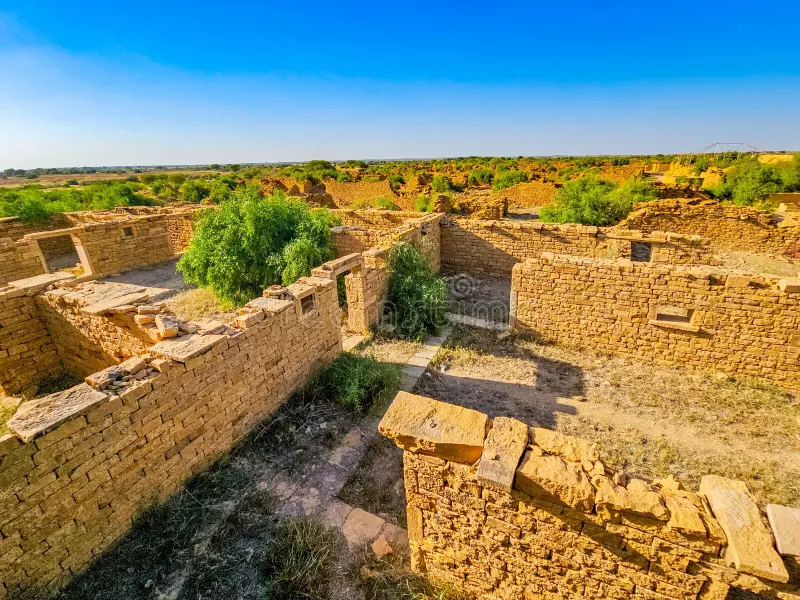
Kuldhara Village The Mystery of Kuldhara: Jaisalmer’s Eerie, Haunted Ghost TownFor travelers who love a good mystery or a spine-chilling legend, a trip to Kuldhara Village is absolutely mandatory. Located roughly 15 kilometers west of Jaisalmer, this sprawling, eerie archaeological site consists of hundreds of ruined, roofless stone homes that have sat completely empty and silent for over two centuries. The Night a Whole Clan VanishedKuldhara was once a prosperous, wealthy village inhabited by Paliwal Brahmins since the 13th century. The story goes that the cruel and powerful prime minister of the state, Salim Singh, set his eyes on the beautiful daughter of the village chief and threatened the villagers with heavy taxes if they didn’t hand her over. Rather than compromise their honor, the entire population of Kuldhara—along with 83 neighboring villages—completely vanished into thin air in a single night. The Cursed Ground: The Permanent Curse: Before leaving, the villagers reportedly cast a dark curse on the land, declaring that no one would ever be able to settle or live in Kuldhara again. Walking the Ruins: Today, as you walk down the dusty, empty streets and step inside the crumbling kitchens and courtyards, the silence is incredibly heavy. The Paranormal Allure: It is widely regarded as one of the most haunted places in India, and the government has set up a gate to ensure no visitors stay inside the village grounds after sunset. View Nearby Destinations All Events Destination Kuldhara Village Ajmer & Pushkar Bikaner Jodhpur Udaipur Jaipur Load More End of Content.

Destination

Sam Sand Dunes

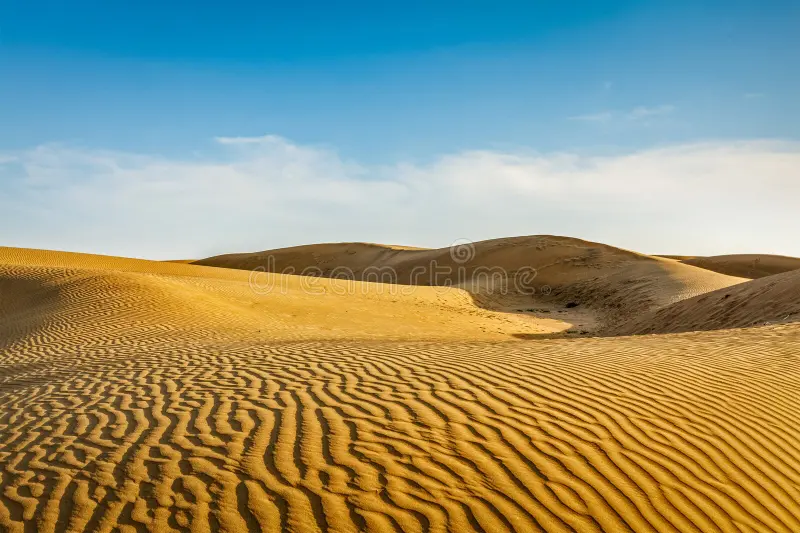
Sam Sand Dunes Sam Sand Dunes: The Pulsating Heart of Jaisalmer’s Desert Adventures If Khuri is for the peace-seekers, Sam Sand Dunes is for the thrill-seekers! Situated 45 kilometers west of the golden city, Sam is the undisputed capital of desert tourism in Rajasthan. This is where you go to experience the absolute energy, color, and excitement of a classic desert carnival. High-Octane Desert Activities The sand dunes here are massive, constantly shifting with the desert wind to create dramatic ridges and valleys. From the moment you arrive in the afternoon, the dunes come alive with non-stop adventure activities. You can hop into an open-top 4*4 jeep for some heart-pounding dune bashing, ride quad bikes across the crests, or take a traditional camel ride led by local kids in colorful turbans. What a Night at Sam Looks Like: Sunset Spectacle: Hundreds of people gather on the highest crests to watch the dramatic desert sunset—it’s a lively, shared celebration. Luxury Desert Camps: After sunset, everyone heads to the tent resorts lined up along the dunes. Cultural Nights:Expect a vibrant evening around a roaring campfire featuring traditional Kalbelia snake dances, soulful Rajasthani folk music, and a massive buffet of local specialties like Ker Sangri. View Nearby Destinations All Events Destination Sam Sand Dunes Ajmer & Pushkar Bikaner Jodhpur Udaipur Jaipur Load More End of Content.

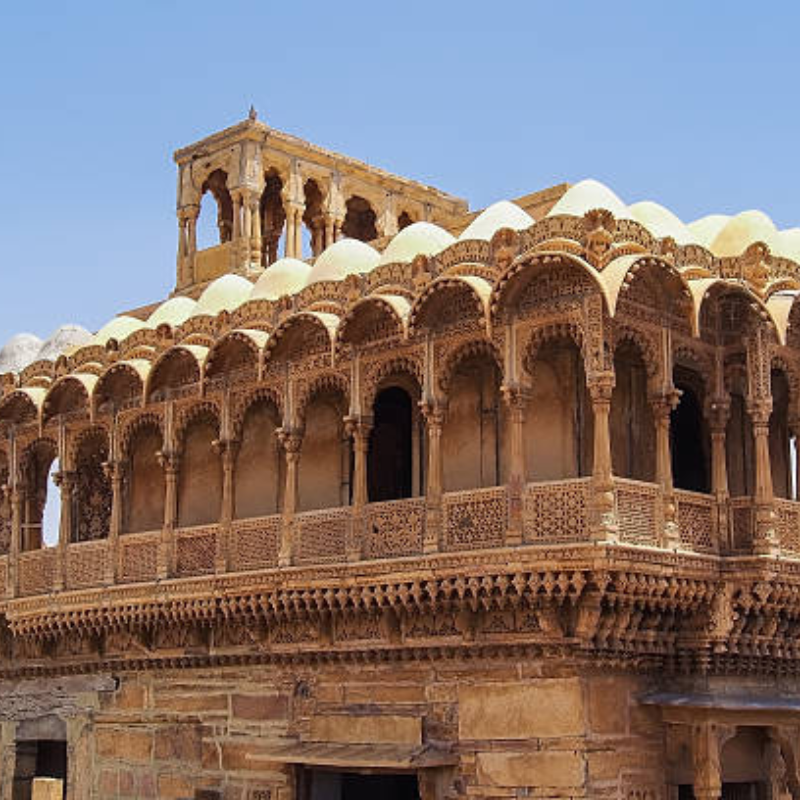
The unique arched peacock-shaped roof of Salim Singh Ki Haveli
Destination

Salim Singh Ki Haveli

Salim Singh Ki Haveli Salim Singh Ki Haveli The Peacock Mansion Born Out of Royal AmbitionIf you think you’ve seen all types of heritage architecture, Salim Singh Ki Haveli will quickly make you think twice. Located just a short stroll away from the base of the Jaisalmer Fort, this highly unique, 300-year-old mansion stands out instantly due to its bizarre and fascinating silhouette—the top storey narrows out and juts forward, looking remarkably like a dancing peacock. A Cut Above the Rest The mansion was commissioned by Salim Singh, a notorious and incredibly powerful Prime Minister of Jaisalmer who wanted to build a residence that would physically tower over the King’s own palace. Legend has it that the King wasn’t too thrilled with this bold display of ambition and ordered the topmost storeys to be dismantled! Even with those missing floors, the structure remains an absolute architectural marvel. What to Look For The Unique Roof Profile: Take a moment from the outside to admire the arched balconies that look like the spread feathers of a peacock. Intricate Balconies:The mansion features 38 distinctly carved balconies, each displaying stonework so fine it looks more like delicate lace than solid sandstone. No Mortar Construction: Fascinatingly, the entire structure was put together using an intricate system of interlocking stones and iron rods without a single drop of cement or mortar. View Nearby Destinations All Events Destination Salim Singh Ki Haveli Ajmer & Pushkar Bikaner Jodhpur Udaipur Jaipur Load More End of Content.

Destination

Jaisalmer Fort

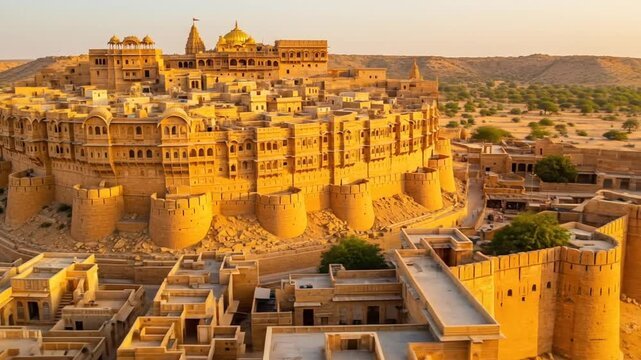
Jaisalmer Fort Step Inside Jaisalmer Fort: The Golden Living Citadel of the Thar Desert Rising like a massive sandcastle right out of the heart of the Thar Desert, Jaisalmer Fort (affectionately called Sonar Qila or the Golden Fort) is easily one of the most breathtaking sights in India. But what makes this 12th-century UNESCO World Heritage site truly mind-blowing isn’t just its massive yellow sandstone walls—it’s the fact that it is a “living fort.” A Vibrant City Within Walls Unlike most forts in India that serve purely as empty museums, a quarter of Jaisalmer’s old city population still lives right inside these walls! As you wander through the labyrinth of narrow, winding alleyways, you’ll walk past vibrant homes, bustling local tea stalls, souvenir shops selling colorful textiles, and ancient families who have inhabited the citadel for generations. It’s like stepping directly into a living, breathing time capsule. Top Things to See & Do Inside: The Fort Palace (Raj Mahal): The spectacular former residence of the Maharawal, offering a deep dive into royal history. The Cannon Points:Head out to the edge of the fort walls for an unbelievable 360-degree view of the entire golden city sprawling beneath you. Cafe Culture: Sit by a rooftop cafe built directly into the stone bastions and enjoy a hot cup of Masala Chai as the sun starts to dip. Traveler Tip: There is no entry fee to simply walk into the fort itself, though specific monuments like the Palace Museum do have a nominal ticket price. Try to visit early in the morning to beat both the mid-day desert sun and the heavy influx of tour groups! View Nearby Destinations All Events Destination Jaisalmer Fort Ajmer & Pushkar Bikaner Jodhpur Udaipur Jaipur Load More End of Content.

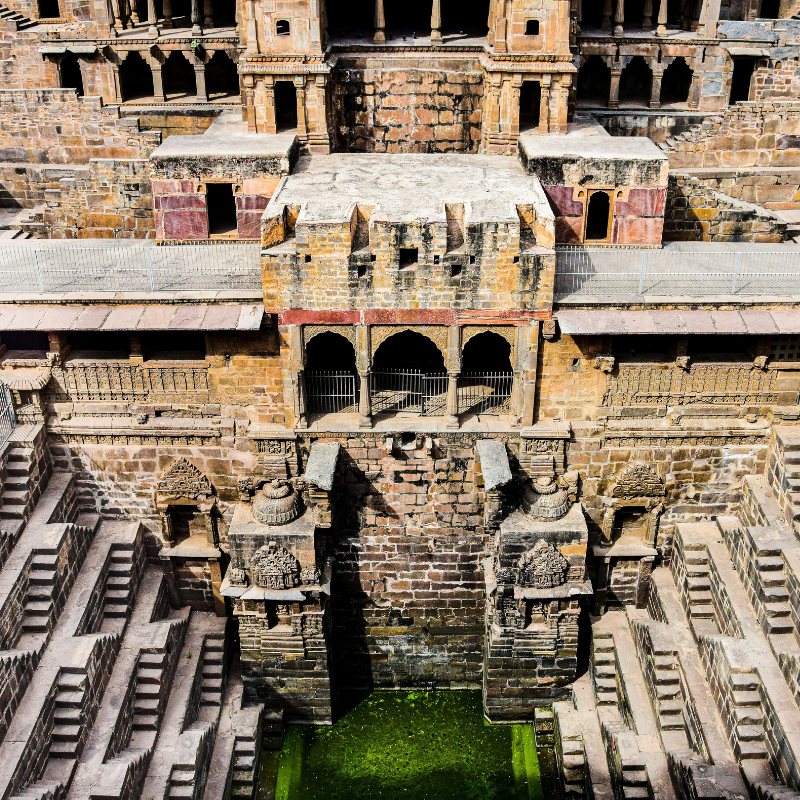
The symmetrical geometric steps of Chand Baori stepwell in Abhaneri
Destination

Historical Places in Rajasthan

Historical Places in Rajasthan Hidden Gems & Lesser-Known Historical Places in Rajasthan (2026 Guide) | Beyond the Tourist Trail Planning to explore beyond Rajasthan’s famous cities? Discover the state’s most extraordinary hidden gems and lesser-known historical destinations with our 2026 guide. We cover Bhangarh, Abhaneri, Osian, Nagaur, and more — with expert tips for the curious and adventurous traveler. Every traveler who has explored Rajasthan’s famous circuit — Jaipur, Jodhpur, Jaisalmer, Udaipur — has sensed that there is something more just beyond the edge of the well-worn path. They are right. Rajasthan is one of the most historically layered states in India, and for every celebrated fort or famous palace that draws thousands of visitors daily, there are a dozen extraordinary historical sites — ancient temple complexes, haunted ruins, medieval stepwells, forgotten forts, rock art sites, and sacred lakes — that receive a fraction of the attention they deserve. These are the places where the dust of history lies thickest, where the solitude is most profound, and where the connection to Rajasthan’s extraordinary past feels most immediate and alive. Use this 2026 guide to venture beyond the tourist trail and discover the Rajasthan that most travelers never find. Enquire Now Hidden Gems at a Glance Destination Nearest Major City Distance Best Time to Visit Why It Matters Bhangarh Fort Jaipur / Alwar ~85 km from Jaipur Oct – Mar India’s most famous “haunted” ruins Abhaneri (Chand Baori) Jaipur ~95 km Oct – Mar World’s largest and finest stepwell Osian Jodhpur ~65 km Oct – Mar Ancient temple complex, living desert town Nagaur Fort Jodhpur / Bikaner ~135 km from Jodhpur Oct – Mar One of Rajasthan’s most underrated forts Bairath (Viratnagar) Jaipur ~90 km Oct – Mar Ancient Mauryan and Pandava heritage site Mandore Jodhpur ~9 km Oct – Mar Ancient Marwar capital, royal cenotaphs Gagron Fort Jhalawar ~12 km Oct – Mar UNESCO water fort at river confluence Kiradu Temples Barmer ~35 km Oct – Mar Rajasthan’s Khajuraho, in the desert Sambhar Salt Lake Jaipur ~90 km Oct – Feb India’s largest inland saltwater lake Neemrana Fort Palace Alwar / Delhi ~122 km from Delhi Oct – Mar 15th-century fort, pioneering heritage hotel Karauli Jaipur ~160 km Oct – Mar Ancient temple town, red stone architecture Alwar Jaipur ~150 km Oct – Mar Forgotten royal city, Siliserh Lake Churu Bikaner ~90 km Oct – Mar Desert town of painted havelis Baroli Temples Kota ~45 km Oct – Mar 10th-century temple cluster, finest in Hadoti Kolayat Bikaner ~50 km Oct – Mar Sacred lake, ancient ashrams, desert fair Northern Rajasthan Hidden Gems 1. Bhangarh Fort, Alwar District The Vibe: India’s most famous ruined fort and its most celebrated haunted heritage site — a largely intact but entirely abandoned 17th-century fortified town in the Sariska forest belt of Alwar district, officially declared by the Archaeological Survey of India as a site where entry is prohibited between sunset and sunrise. Bhangarh was founded in 1573 by Raja Bhagwant Das and at its height was home to a population of over 10,000 people — today nothing remains within its walls but ruins, temples, and an atmosphere of extraordinary, windswept desolation that is genuinely unlike any other site in Rajasthan. The legends surrounding Bhangarh’s abandonment are numerous and colorful — involving a sorcerer’s curse, a doomed love story, and a tantric priest — none of which have historical basis but all of which contribute to an atmosphere that even the most rational visitor finds difficult to entirely dismiss. What is historically certain is that Bhangarh was abandoned suddenly, the reasons for which remain a matter of genuine historical debate. The ruins include a series of temples in varying states of preservation — the Gopinath Temple, Mangla Devi Temple, Someshwar Temple, and Keshav Rai Temple — along with the remains of the royal palace complex, market streets, and the massive fortification walls and gates that still stand to impressive height. Bhangarh is most commonly visited as a day trip from Jaipur (85 km) or combined with a Sariska Tiger Reserve visit from Alwar. The site is managed by the Archaeological Survey of India and entry is free. Visit in the morning for the best light and to arrive before tour groups from Jaipur. 2. Abhaneri — Chand Baori Stepwell The Vibe: One of the most extraordinary architectural achievements of medieval India — the Chand Baori stepwell at Abhaneri village in Dausa district is the largest and most geometrically perfect stepwell in the world, dating back to the 8th to 10th centuries AD and built by King Chanda of the Nikumbha dynasty. The stepwell descends 13 storeys and approximately 30 metres below ground level through 3,500 narrow steps arranged in a perfectly symmetrical V-shape on three sides, while the fourth side is occupied by a three-storey ornate pavilion of carved pillars and arched galleries that once served as a royal rest house. The scale, the geometry, and the visual effect of the descending stepped walls are so precisely and breathtakingly executed that Chand Baori has become one of the most photographed and architecturally admired historical sites in India. Adjacent to the stepwell is the Harshat Mata Temple — a partially reconstructed 8th-century temple dedicated to the goddess of joy, whose elaborately carved sculptures and architectural fragments are displayed in the temple courtyard in a manner that gives a vivid sense of the original building’s extraordinary decorative ambition. Abhaneri is located 95 km from Jaipur on the Jaipur-Agra highway — a convenient stop for travelers moving between Jaipur and Agra, or an easy half-day trip from Jaipur. The site is managed by the Archaeological Survey of India and entry requires a small fee. 3. Bairath (Viratnagar) The Vibe: One of the most historically significant and least visited ancient sites in Rajasthan — the town of Bairath in the Jaipur district is a place of extraordinary layered history stretching back over 2,500 years. Bairath is identified by historians as the ancient Viratnagar — capital of the Matsya

Scroll to Top