Rajasthan Tour: 10 Nights 11 Days Itinerary Day 1 Pick up at jaipur and stay Day 2 Jaipur sightseeing,…
Historical Places in Rajasthan
Hidden Gems & Lesser-Known Historical Places in Rajasthan (2026 Guide) | Beyond the Tourist Trail
Planning to explore beyond Rajasthan's famous cities? Discover the state's most extraordinary hidden gems and lesser-known historical destinations with our 2026 guide. We cover Bhangarh, Abhaneri, Osian, Nagaur, and more — with expert tips for the curious and adventurous traveler.
Every traveler who has explored Rajasthan’s famous circuit — Jaipur, Jodhpur, Jaisalmer, Udaipur — has sensed that there is something more just beyond the edge of the well-worn path. They are right. Rajasthan is one of the most historically layered states in India, and for every celebrated fort or famous palace that draws thousands of visitors daily, there are a dozen extraordinary historical sites — ancient temple complexes, haunted ruins, medieval stepwells, forgotten forts, rock art sites, and sacred lakes — that receive a fraction of the attention they deserve. These are the places where the dust of history lies thickest, where the solitude is most profound, and where the connection to Rajasthan’s extraordinary past feels most immediate and alive. Use this 2026 guide to venture beyond the tourist trail and discover the Rajasthan that most travelers never find.
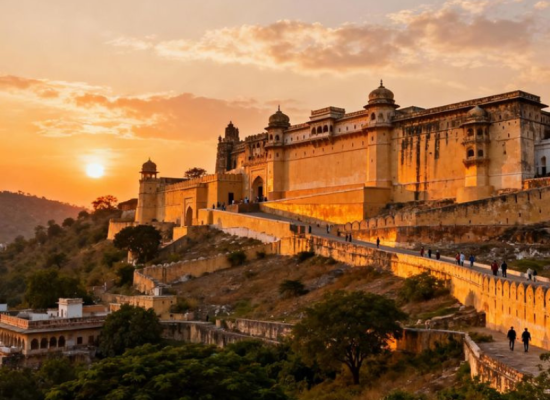
Hidden Gems at a Glance
| Destination | Nearest Major City | Distance | Best Time to Visit | Why It Matters |
|---|---|---|---|---|
| Bhangarh Fort | Jaipur / Alwar | ~85 km from Jaipur | Oct – Mar | India’s most famous “haunted” ruins |
| Abhaneri (Chand Baori) | Jaipur | ~95 km | Oct – Mar | World’s largest and finest stepwell |
| Osian | Jodhpur | ~65 km | Oct – Mar | Ancient temple complex, living desert town |
| Nagaur Fort | Jodhpur / Bikaner | ~135 km from Jodhpur | Oct – Mar | One of Rajasthan’s most underrated forts |
| Bairath (Viratnagar) | Jaipur | ~90 km | Oct – Mar | Ancient Mauryan and Pandava heritage site |
| Mandore | Jodhpur | ~9 km | Oct – Mar | Ancient Marwar capital, royal cenotaphs |
| Gagron Fort | Jhalawar | ~12 km | Oct – Mar | UNESCO water fort at river confluence |
| Kiradu Temples | Barmer | ~35 km | Oct – Mar | Rajasthan’s Khajuraho, in the desert |
| Sambhar Salt Lake | Jaipur | ~90 km | Oct – Feb | India’s largest inland saltwater lake |
| Neemrana Fort Palace | Alwar / Delhi | ~122 km from Delhi | Oct – Mar | 15th-century fort, pioneering heritage hotel |
| Karauli | Jaipur | ~160 km | Oct – Mar | Ancient temple town, red stone architecture |
| Alwar | Jaipur | ~150 km | Oct – Mar | Forgotten royal city, Siliserh Lake |
| Churu | Bikaner | ~90 km | Oct – Mar | Desert town of painted havelis |
| Baroli Temples | Kota | ~45 km | Oct – Mar | 10th-century temple cluster, finest in Hadoti |
| Kolayat | Bikaner | ~50 km | Oct – Mar | Sacred lake, ancient ashrams, desert fair |
Northern Rajasthan Hidden Gems
1. Bhangarh Fort, Alwar District
The Vibe: India’s most famous ruined fort and its most celebrated haunted heritage site — a largely intact but entirely abandoned 17th-century fortified town in the Sariska forest belt of Alwar district, officially declared by the Archaeological Survey of India as a site where entry is prohibited between sunset and sunrise. Bhangarh was founded in 1573 by Raja Bhagwant Das and at its height was home to a population of over 10,000 people — today nothing remains within its walls but ruins, temples, and an atmosphere of extraordinary, windswept desolation that is genuinely unlike any other site in Rajasthan.
The legends surrounding Bhangarh’s abandonment are numerous and colorful — involving a sorcerer’s curse, a doomed love story, and a tantric priest — none of which have historical basis but all of which contribute to an atmosphere that even the most rational visitor finds difficult to entirely dismiss. What is historically certain is that Bhangarh was abandoned suddenly, the reasons for which remain a matter of genuine historical debate. The ruins include a series of temples in varying states of preservation — the Gopinath Temple, Mangla Devi Temple, Someshwar Temple, and Keshav Rai Temple — along with the remains of the royal palace complex, market streets, and the massive fortification walls and gates that still stand to impressive height.
Bhangarh is most commonly visited as a day trip from Jaipur (85 km) or combined with a Sariska Tiger Reserve visit from Alwar. The site is managed by the Archaeological Survey of India and entry is free. Visit in the morning for the best light and to arrive before tour groups from Jaipur.
2. Abhaneri — Chand Baori Stepwell
The Vibe: One of the most extraordinary architectural achievements of medieval India — the Chand Baori stepwell at Abhaneri village in Dausa district is the largest and most geometrically perfect stepwell in the world, dating back to the 8th to 10th centuries AD and built by King Chanda of the Nikumbha dynasty. The stepwell descends 13 storeys and approximately 30 metres below ground level through 3,500 narrow steps arranged in a perfectly symmetrical V-shape on three sides, while the fourth side is occupied by a three-storey ornate pavilion of carved pillars and arched galleries that once served as a royal rest house. The scale, the geometry, and the visual effect of the descending stepped walls are so precisely and breathtakingly executed that Chand Baori has become one of the most photographed and architecturally admired historical sites in India.
Adjacent to the stepwell is the Harshat Mata Temple — a partially reconstructed 8th-century temple dedicated to the goddess of joy, whose elaborately carved sculptures and architectural fragments are displayed in the temple courtyard in a manner that gives a vivid sense of the original building’s extraordinary decorative ambition.
Abhaneri is located 95 km from Jaipur on the Jaipur-Agra highway — a convenient stop for travelers moving between Jaipur and Agra, or an easy half-day trip from Jaipur. The site is managed by the Archaeological Survey of India and entry requires a small fee.
3. Bairath (Viratnagar)
The Vibe: One of the most historically significant and least visited ancient sites in Rajasthan — the town of Bairath in the Jaipur district is a place of extraordinary layered history stretching back over 2,500 years. Bairath is identified by historians as the ancient Viratnagar — capital of the Matsya kingdom mentioned in the Mahabharata where the Pandavas spent their thirteenth year of exile in disguise at the court of King Virat. The town contains the remains of a remarkable 3rd-century BC Buddhist circular temple — the oldest freestanding Buddhist structure discovered in India outside the Gangetic plain — built during the reign of the Mauryan Emperor Ashoka. Rock edicts of Ashoka were discovered here in the 19th century and are now preserved in the Calcutta Museum. The site also contains a Mughal-period garden pavilion built by Emperor Jahangir and a hilltop Bijak ki Pahadi (Scripture Hill) where the original Buddhist relics were found.
Bairath receives very few visitors despite its extraordinary historical significance — a remarkable oversight given its proximity to Jaipur (90 km) and the depth and variety of its heritage. It is ideal for travelers with a serious interest in ancient Indian history who want to experience a site of genuine archaeological importance in near-total solitude.
4. Sambhar Salt Lake
The Vibe: India’s largest inland saltwater lake and one of the most extraordinary natural and historical landscapes in Rajasthan — a vast, shimmering expanse of salt flats, saline water, and seasonal wetlands located 90 km west of Jaipur on the ancient trade route between Sindh and the Gangetic plain. Sambhar Lake has been a source of salt for the Indian subcontinent for at least 2,000 years — the ancient salt trade was the economic foundation of the Chahamana (Chauhan) Rajput dynasty that ruled this region before the Delhi Sultanate.
Between October and February, Sambhar Lake transforms into one of the most important flamingo and migratory waterbird habitats in inland India — tens of thousands of lesser flamingos, demoiselle cranes, pelicans, and wading birds gather on the saline flats creating a wildlife spectacle of extraordinary beauty. The lake is also surrounded by the ancient ruins of Shakambhari — a sacred Shakti Pitha and one of the 51 most revered goddess shrines in the Hindu tradition, drawing pilgrims throughout the year. The combination of ancient salt trade history, flamingo watching, and sacred pilgrimage makes Sambhar one of the most unexpectedly layered and rewarding day trips from Jaipur.
5. Neemrana Fort Palace, Alwar District
The Vibe: A magnificent 15th-century hill fort built by the Chauhan Rajput rulers of Neemrana — and one of India’s most celebrated and pioneering heritage hotel conversions, transformed from a derelict ruin into a multi-level palace hotel over several decades by the Neemrana Hotels group. The fort cascades down a rocky hillside in ten levels of courtyards, gardens, swimming pools, and palatial rooms, offering a combination of architectural grandeur, dramatic views of the Aravalli Hills, and one of the most atmospheric heritage hotel experiences in northern India.
Neemrana is located just 122 km from Delhi on the Delhi-Jaipur highway — making it the most accessible major heritage fort experience from the capital and an extremely popular weekend destination for Delhi residents. As a heritage stay, Neemrana is in a category of its own in northern Rajasthan — the quality of the restoration, the range of activities including a zipline across the fort ramparts, and the sheer drama of the architecture make it worth a dedicated overnight stay rather than a day visit.
6. Alwar — The Forgotten Royal City
The Vibe: A large, historically significant, and almost entirely overlooked royal city in northeastern Rajasthan — the capital of the former Alwar princely state and home to a remarkable collection of heritage buildings, a world-class museum, a dramatic hilltop fort, and a serene royal lake that together constitute one of the most undervisited urban heritage experiences in Rajasthan. The City Palace of Alwar — now housing the Government Museum — contains one of the finest and most eclectic royal collections in Rajasthan including Mughal miniature paintings, Persian manuscripts, royal carriages, and an extraordinary collection of weapons and armour. The Bala Quila (Alwar Fort) — a massive 5th-century fort predating the Rajput period — crowns the rocky ridge above the city and offers sweeping views of the surrounding Aravalli landscape.
The Siliserh Lake Palace — a small, romantically situated royal hunting lodge converted into a heritage hotel on the banks of an artificial lake 13 km from Alwar — is one of the most charming and affordable heritage accommodation options in Rajasthan and one of the region’s best-kept secrets. Alwar’s proximity to Delhi (150 km via NH 48) makes it an ideal weekend destination and its position at the gateway of the Sariska Tiger Reserve adds significant wildlife appeal to any visit.
Western Rajasthan Hidden Gems
7. Osian — The Khajuraho of Rajasthan
The Vibe: A living desert town 65 km north of Jodhpur that contains one of the finest and most intact concentrations of ancient Hindu and Jain temples in western India — a cluster of 16 temples built between the 8th and 12th centuries in the Pratihara and Solanki styles that represent a pinnacle of early medieval temple architecture in the region. The Sachiya Mata Temple — a living, actively worshipped goddess temple of great regional importance — is the most significant of the Osian temples and combines ancient architectural fabric with living religious practice in a way that gives the site a vibrancy and authenticity rarely found at purely archaeological destinations.
Osian is also the departure point for some of the finest and most authentic camel safari experiences in the Thar Desert — the surrounding landscape of golden sand dunes, thorny scrub forest, and ancient village settlements offers a more genuinely remote and less commercialized desert experience than the more famous Sam Sand Dunes near Jaisalmer. The town itself — its narrow lanes, ancient wells, and unhurried pace of life — is a beautiful and authentic Rajasthani desert settlement that has changed remarkably little over the centuries.
8. Nagaur Fort
The Vibe: One of the most historically significant and architecturally impressive forts in Rajasthan — and one of the most criminally undervisited. Nagaur Fort is a massive fortification with origins dating back to the 4th century AD that was successively occupied and expanded by the Nagavanshi rulers, the Chahamana Rajputs, the Delhi Sultanate, the Mughals, and finally the Rathore rulers of Jodhpur — making it one of the most historically layered fortifications in western India. The fort complex contains a remarkable series of Mughal-period royal apartments, audience halls, and pavilions with extraordinarily well-preserved original frescoes, mirror inlay work, and decorative plasterwork that rival anything found in the more famous forts of Rajasthan.
The restoration of Nagaur Fort — undertaken over several years by a partnership between the Mehrangarh Museum Trust and the Getty Conservation Institute — is one of the most significant and successful heritage conservation projects in India. The fort also hosts the annual Nagaur Fair (Ramdeoji Cattle Fair) — one of the largest cattle fairs in India and a spectacular cultural event drawing traders, farmers, and folk performers from across Rajasthan every January or February.
9. Kiradu Temples, Barmer District
The Vibe: Perhaps the greatest hidden archaeological treasure in all of Rajasthan — a cluster of five 11th and 12th-century temples in the Barmer district of far western Rajasthan, built in the Solanki style and featuring stone carvings of extraordinary sensuality, refinement, and technical mastery that have led scholars to describe Kiradu as the Khajuraho of Rajasthan. The temples are dedicated to Shiva and Vishnu and were built during the reign of the Solanki kings of Gujarat, who controlled this region before the rise of the Delhi Sultanate. The principal temple — the Someshwar Temple — is the best preserved and most elaborate, with exterior walls covered in intricately carved panels of gods, goddesses, celestial beings, and erotic scenes of remarkable quality.
Kiradu receives very few visitors — located 35 km from the remote district town of Barmer in far western Rajasthan near the Pakistan border, it requires genuine effort and planning to reach. But for travelers with a serious interest in Indian temple sculpture and medieval architecture, the journey to Kiradu is one of the most rewarding and memorable heritage experiences in Rajasthan — a site of world-class significance that exists in almost complete isolation and solitude.
10. Kolayat — The Sacred Lake of the Desert
The Vibe: A serene and deeply sacred desert oasis 50 km south of Bikaner — a small town of ancient ashrams, dharamshalas, and temples surrounding a beautiful natural lake that has been a site of Hindu pilgrimage and scholarship for at least 2,000 years. Kolayat is associated with the sage Kapila — the founder of the Samkhya school of Hindu philosophy — who is believed to have meditated and taught here, and the town continues to function as a centre of Vaishnava learning and devotion. The lake — ringed by 52 ghats and surrounded by ancient pipal trees — has an atmosphere of extraordinary spiritual calm that is among the most peaceful and authentic pilgrimage experiences in Rajasthan.
The annual Kolayat Fair — held during the Kartik Purnima full moon in November — is one of the most atmospheric and least touristed religious fairs in Rajasthan, drawing pilgrims, sadhus, and devotees from across the region for a five-day celebration of bathing, worship, and cultural performance. For travelers visiting Bikaner between October and November, Kolayat is an essential and unforgettable half-day excursion.
Hidden Gems & Lesser-Known Historical Places in Rajasthan
Bhangarh Fort
India's most "haunted" site, located near the Sariska reserve.
Taragarh Fort (Bundi)
A rugged, historic fort offering a glimpse into the medieval era.
Bala Quila (Alwar)
A massive fort offering a commanding view of the Alwar region.
Baroli Temples
A cluster of ancient temples in Chittorgarh known for their architecture.
Chand Baori (Abhaneri)
One of the deepest and most visually symmetrical stepwells in India.
Raniji ki Baori
The "Queen’s Stepwell" in Bundi, a masterpiece of water architecture.
Deeg Palace
Known for its "Water Palaces" and elaborate fountain systems.
Bundi Palace
Famous for its medieval murals and "Umaid Mahal."
Neemrana Fort Palace
A 15th-century heritage hotel perched on a cliff.
Tonk
Famous for the Sunehri Kothi, a mansion with intricate gold-work interiors.
Frequently Asked Questions (FAQ)
How do I plan a practical itinerary covering Rajasthan's hidden gems?
The most practical approach is to layer hidden gems onto an existing Rajasthan itinerary rather than building a separate trip around them. Abhaneri slots naturally onto the Jaipur-Agra route. Osian is an easy day trip from Jodhpur. Nagaur sits between Jodhpur and Bikaner. Bhangarh pairs perfectly with Sariska from Alwar or Jaipur. Kolayat is a half-day from Bikaner. Baroli is a half-day from Kota or Bundi. This approach allows you to cover both the famous highlights and the hidden gems without doubling back unnecessarily.
Are these hidden gem sites properly maintained and accessible?
Maintenance levels vary significantly. Sites managed by the Archaeological Survey of India—Abhaneri, Bhangarh, Bairath, and Baroli—are generally well maintained with basic visitor facilities and clear signage. Fort and palace sites managed by the Rajasthan government or private trusts—Nagaur, Neemrana—are exceptionally well maintained. Sites in remote locations like Kiradu are minimally managed and require some navigation and initiative. Living pilgrimage sites like Kolayat and Karauli are maintained by their religious communities and are in active, excellent condition.
What is the best hidden gem in Rajasthan for photography?
Abhaneri's Chand Baori stepwell is arguably the single most photographically extraordinary site in all of Rajasthan — the geometric perfection of the stepped walls, the quality of light in the morning hours, and the sheer visual drama of the descent make it one of the finest photography locations in India. Sambhar Lake during flamingo season (November to January), the Osian temples at golden hour, and the painted haveli facades of Churu are equally compelling for photographers with different interests and styles.
Tours & Packages
Jodhpur Jaisalmer Bikaner Chittorgarh: 5 Nights Itinerary Day 1 Pick up at Bikaner; visit the Karni Maa Temple, the…
Rajasthan Mewar Tour Package: 6 Nights Itinerary Day 1 Pick up at Jaipur, visit the City Palace, Hawa Mahal,…