
Raniji ki Baori
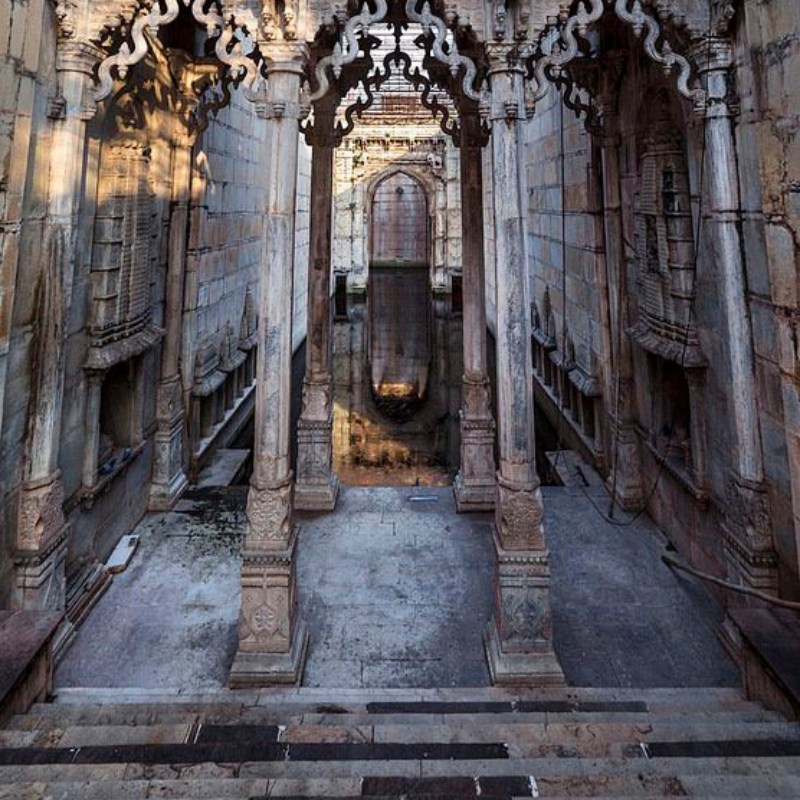
Raniji ki Baori:
Located right in the heart of Bundi town, Raniji Ki Baori (The Queen’s Stepwell) is widely recognized as the architectural crown jewel among the hundred-plus stepwells that dot this historic region. Built in 1699 AD, this breathtaking subterranean structure was commissioned by Rani Nathavati, the younger queen of the ruling Hada Chauhan monarch Rao Raja Anirudh Singh, during the regency of her young son Maharao Raja Budh Singh.
While many stepwells across India were designed primarily as utilitarian water-gathering stations, Raniji Ki Baori was built as an exquisite, multi-story spiritual monument and a high-art community sanctuary. Plunging 46 meters (150 feet) into the earth, its dramatic vertical corridors seamlessly blend complex hydraulic design with some of the finest high-relief stone carvings found in southeastern Rajasthan.
The Legacy of the Benevolent Queen
In the arid landscape of Rajasthan, constructing a water body was considered the ultimate act of religious merit and civic benevolence. Rani Nathavati, renowned for her deep spirituality and care for her subjects, stepped forward during a period of intense drought to finance and oversee the construction of this massive well.
The stepwell was engineered not just to tap into deep underground aquifers, but to serve as a cool, underground palace for women to socialize away from the blazing summer heat. The design follows an exceptionally elegant linear path, guiding visitors down a wide flight of steps through a series of increasingly grand, pillared subterranean gateways that mark the transition from the sunny surface to the cool, sacred depths of the water table.
Top Things to See & Do Inside:
The Sinuous Torana Arches: The absolute highlight of the structure is its beautifully preserved entry gates. The pillars are joined by magnificent, S-shaped Torana arches carved out of fine sandstone. These arches are incredibly delicate, featuring intricate scrollwork and floral waves that look almost weightless despite being carved from massive stone slabs.
The Avatars of Lord Vishnu: Study the stone panels lining the interior walls and pillars as you descend. The stepwell serves as an open-air religious gallery, housing masterfully executed carvings of the Dashavatara (the ten divine incarnations of Lord Vishnu). The reliefs of Lord Varaha (the boar) and Narasimha (the lion-man) are exceptionally expressive and detailed.
The Intricate Elephant Corbel Brackets: Look closely at the tops of the structural pillars supporting the lower roofs. The brackets are carved into beautifully detailed figures of elephants with their trunks curled inward, looking as though they are effortlessly carrying the weight of the massive stone floors above them.
The Symmetrical Places of Rest: The stepwell features wide, sheltered stone platforms (jharokhas) on either side of the central staircase. These side bays allowed ancient travelers and locals to sit, meditate, and enjoy the cool, naturally air-conditioned drafts rising off the water surface below.
View Nearby Destinations
- All Events
- Destination


