
Rajasthan Tour: 10 Nights 11 Days Itinerary Day 1 Pick up at jaipur and stay Day 2 Jaipur sightseeing,…
Shekhawati
Best Places to Visit in Shekhawati: The Ultimate Guide to Rajasthan's Open Air Art Gallery
Planning a trip to Shekhawati? Explore Rajasthan's open air art gallery with our 2026 guide. We cover the finest painted havelis, heritage towns, and expert travel tips for an unforgettable journey through the frescoed heartland of northern Rajasthan.
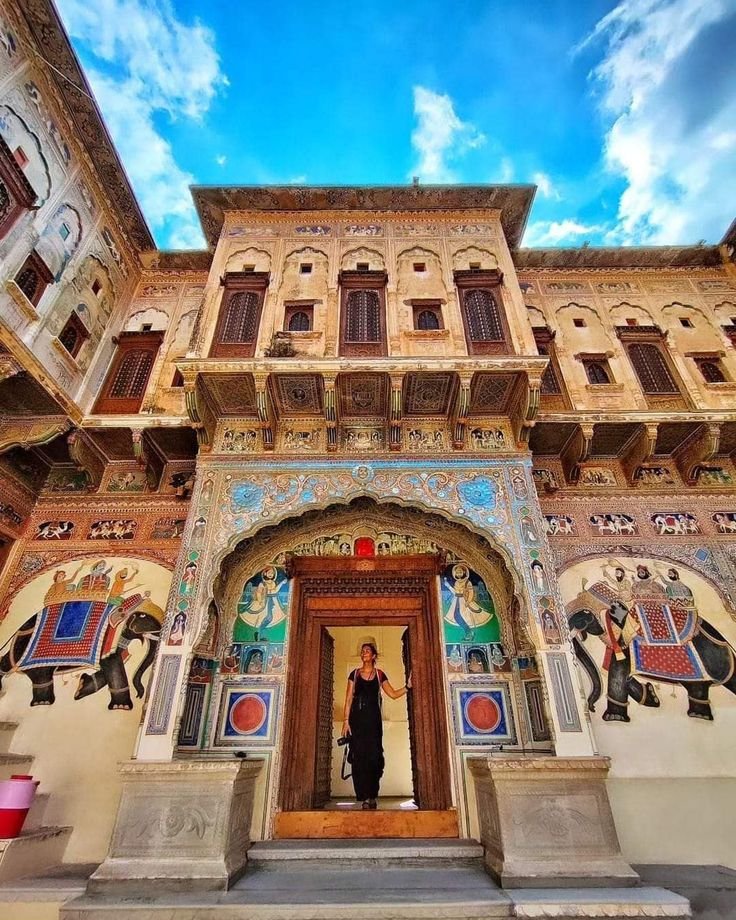
Spread across the sun-baked plains of northern Rajasthan between Jaipur and Bikaner, Shekhawati is one of the most extraordinary and least visited heritage regions in all of India. Known as the “Open Air Art Gallery of Rajasthan,” this semi-arid landscape is home to hundreds of elaborately painted merchant havelis — grand townhouses whose outer and inner walls are covered from floor to ceiling in breathtaking frescoes depicting mythological scenes, royal processions, European inventions, and the daily life of a civilization at the height of its prosperity. Built between the 17th and early 20th centuries by the wealthy Marwari merchant families — the Birlas, Poddars, Goenkas, Ruias, and Singhanias — whose trading empires stretched across India and beyond, these painted havelis represent one of the most remarkable concentrations of decorative art found anywhere in the world.
Unlike the more heavily touristed destinations of Rajasthan, Shekhawati remains largely off the mainstream tourist circuit — its towns unhurried, its havelis often half-forgotten, and its atmosphere one of quiet, faded grandeur that rewards the curious and the patient traveler above all others. Use this 2026 guide to navigate the region’s most important towns, finest frescoes, and essential travel logistics with confidence and depth.
Shekhawati Gateway: Key Towns at a Glance
Top Shekhawati Towns & Heritage Highlights
1. Mandawa
The Vibe: The most visited and best-serviced town in Shekhawati — a compact, atmospheric fortified settlement dominated by the impressive Mandawa Fort (now a heritage hotel) and surrounded by some of the finest and most accessible painted havelis in the entire region. Mandawa offers the ideal combination of excellent heritage accommodation, a manageable old town layout, and a high concentration of remarkable frescoes within easy walking distance of one another — making it the natural base for any first-time Shekhawati visit.
The finest havelis in Mandawa include the Hanuman Prasad Goenka Haveli, whose outer walls display frescoes of Krishna’s life alongside paintings of early European automobiles and a biplane — a collision of the sacred and the modern that is quintessentially Shekhawati. The Gulab Rai Ladia Haveli features extraordinarily detailed mythological scenes and the Double Haveli of the Saraf family is one of the grandest architectural statements in the town. The Murmuria Haveli contains some of the most unusual frescoes in Shekhawati — including a much-discussed painting of a European woman that caused considerable local controversy when it was painted.
2. Nawalgarh
The Vibe: The cultural and artistic capital of Shekhawati — a larger, more bustling town than Mandawa with the greatest total number and variety of painted havelis of any single town in the region. Nawalgarh is home to the remarkable Poddar Haveli Museum — one of the few havelis in Shekhawati that has been professionally restored, opened to the public as a museum, and properly interpreted with signage and guides — making it the single best introduction to Shekhawati fresco art for first-time visitors.
The Aath (Eight) Haveli complex, the Bhagton Ki Choti Haveli, the Kedarnath Kesardev Chamaria Haveli, and the extraordinary Morarka Haveli are among the finest examples of the fresco tradition in Nawalgarh. The town’s central bazaar area is also one of the most authentic and photogenic market streets in Shekhawati — lively, unhurried, and largely untouched by tourism.
The Roop Niwas Kothi — a heritage property on the edge of Nawalgarh — offers excellent accommodation and organizes horse safaris through the surrounding countryside, visiting smaller villages and rural havelis that most tourists never reach.
3. Fatehpur
The Vibe: One of the oldest and most historically significant towns in Shekhawati — founded in 1451 and home to some of the earliest and most elaborate frescoes in the region. Fatehpur is less visited than Mandawa and Nawalgarh, which gives it a more authentic, undiscovered atmosphere where the painted havelis exist as part of everyday town life rather than as curated tourist attractions.
The Nadine Le Prince Haveli — purchased and painstakingly restored by a French artist over several years — is the standout attraction of Fatehpur and one of the most impressive fresco restoration projects in Rajasthan. The haveli now functions as a cultural centre, art gallery, and guesthouse, and offers one of the most intimate and educational introductions to Shekhawati fresco art available anywhere in the region. The Singhania Haveli and the Devra Haveli are also exceptional and largely uncrowded.
4. Jhunjhunu
The Vibe: The administrative headquarters of the Jhunjhunu district and the largest town in Shekhawati — a busy, working city with a rich heritage layer beneath its modern surface. Jhunjhunu is home to the spectacular Rani Sati Temple — one of the most visited and financially prosperous temples in Rajasthan, dedicated to a legendary merchant’s wife and drawing enormous crowds of devotees particularly during the annual fair. The Khetri Mahal — a magnificent and structurally ingenious palace built without doors and ventilated entirely through its architectural design — is one of the most underrated heritage buildings in all of Shekhawati.
The Modi Haveli, the Tibrewala Haveli, and the Bisau Haveli contain excellent frescoes, while the Jhunjhunu fort and the surrounding old city area reward aimless exploration on foot. The town’s larger size and local business activity give it an energy quite different from the quieter heritage towns of Mandawa and Nawalgarh.
5. Dundlod
The Vibe: A small, serene, and exceptionally well-preserved village centred around the magnificent Dundlod Fort — one of the finest and most beautifully maintained heritage forts in Shekhawati, dating back to 1750 and now operating as a heritage hotel. Dundlod is the premier destination in Shekhawati for equestrian enthusiasts — it is the home of the famous Dundlod horse safaris, which offer multi-day rides through the Shekhawati countryside on Marwari horses, one of India’s most ancient and distinctive native breeds distinguished by their dramatically inward-curving ear tips.
The Goenka Double Haveli in Dundlod is one of the finest in the region and the town’s compact size makes it possible to see the main sights in a relaxed half-day visit, making it an ideal stop on a broader Shekhawati circuit.
6. Ramgarh
The Vibe: Perhaps the most visually striking and atmospheric town in all of Shekhawati — a planned merchant town founded in 1791 by the Poddar family that contains some of the most ornate and well-preserved havelis in the entire region, along with an extraordinary concentration of painted chhatris (memorial cenotaphs) at the town’s entrance that are unlike anything found elsewhere in Rajasthan. The Poddar family havelis in Ramgarh are among the grandest anywhere in Shekhawati — multi-storey structures with elaborately painted courtyards, reception rooms, and zenana quarters that give a vivid impression of the extraordinary wealth and refined taste of the great Marwari merchant families.
Ramgarh also has a remarkable painted Shani temple and a series of painted gateways that line the approach roads to the town, creating a procession of fresco art that begins even before you enter the settlement itself.
| Town | Distance from Jaipur | Distance from Bikaner | Distance from Delhi | Best Time to Visit |
|---|---|---|---|---|
| Mandawa | ~180 km | ~220 km | ~280 km | Oct – Mar |
| Nawalgarh | ~160 km | ~235 km | ~260 km | Oct – Mar |
| Fatehpur | ~175 km | ~195 km | ~265 km | Oct – Mar |
| Jhunjhunu | ~180 km | ~250 km | ~240 km | Oct – Mar |
| Dundlod | ~165 km | ~240 km | ~265 km | Oct – Mar |
| Ramgarh | ~200 km | ~210 km | ~300 km | Oct – Mar |
| Lachmangarh | ~175 km | ~215 km | ~280 km | Oct – Mar |
| Sikar | ~110 km | ~295 km | ~210 km | Oct – Mar |
Shekhawati Highlights
Mandawa
Famous for its open-air art galleries and painted Havelis.
Fatehpur
Renowned for the Nadine Prince Haveli and intricate murals.
Sikar
A historic town with various heritage forts and temples.
Nawalgarh
Often called the "Land of Havelis" with incredible fresco work.
Churu
A desert city with grand, massive merchant mansions.
Jhunjhunu
The capital of the Shekhawati region, rich in historic buildings.
Dundlod
Known for its impressive fort and stable of Marwari horses.
Frequently Asked Questions (FAQ)
What is the best time to visit Shekhawati?
October to March is the best time to visit. The weather is cool, dry, and pleasant — ideal for walking the town lanes and exploring havelis. December and January mornings can be cold and foggy in northern Rajasthan, so carry warm layers. Avoid April to June when temperatures in this part of Rajasthan regularly exceed 44°C and the experience of walking between havelis becomes genuinely uncomfortable.
Are the havelis open to visitors?
This varies significantly. Some havelis are open to the public with a small entry fee, some are accessible with the assistance of a local guide, and some remain in private family ownership and are not accessible to visitors. The Poddar Haveli Museum in Nawalgarh and the Nadine Le Prince Haveli in Fatehpur are the two most professionally managed and accessible heritage properties in the region. Do not assume any haveli is open — always check locally before visiting.
Is Shekhawati suitable for independent travel without a guide?
It is possible to explore the main towns independently, but a local guide adds enormous value to the Shekhawati experience. Many of the finest havelis are locked or in private ownership — a knowledgeable guide knows which can be opened, has relationships with caretakers, and can interpret the frescoes in historical and cultural context that transforms the experience entirely. Guides are available in Mandawa and Nawalgarh and can be arranged through heritage hotels.
Tours & Packages
Jodhpur Jaisalmer Bikaner Chittorgarh: 5 Nights Itinerary Day 1 Pick up at Bikaner; visit the Karni Maa Temple, the…
Rajasthan Mewar Tour Package: 6 Nights Itinerary Day 1 Pick up at Jaipur, visit the City Palace, Hawa Mahal,…


