Rajasthan Tour: 10 Nights 11 Days Itinerary Day 1 Pick up at jaipur and stay Day 2 Jaipur sightseeing,…
Ajmer & Pushkar
Best Places to Visit in Ajmer & Pushkar: The Ultimate Guide to Faith, Lakes & Desert Festivals
Planning a trip to Ajmer and Pushkar? Explore two of Rajasthan's most spiritually significant destinations with our 2026 guide. We cover the Dargah Sharif, Pushkar Lake, the famous Camel Fair, and expert travel tips for your pilgrimage and cultural adventure.
Ajmer and Pushkar are two of the most spiritually charged and culturally distinctive destinations in all of Rajasthan. Ajmer, founded in the 7th century, is home to the Dargah Sharif of Khwaja Moinuddin Chishti — one of the most important Islamic pilgrimage sites in the world, drawing millions of devotees of every faith every year. Pushkar, just beyond the hills, is one of Hinduism’s holiest cities, built around a sacred lake said to have been created by a lotus flower dropped by Lord Brahma — and home to one of the only Brahma temples in the world. Together, these two towns offer a rare and profound dual experience of India’s great spiritual traditions set against the backdrop of the Thar Desert. Use this 2026 guide to explore both destinations with depth, context, and practical ease.
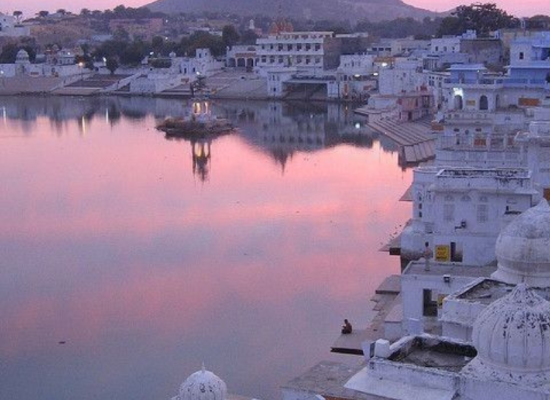
Ajmer & Pushkar Gateway: How to Reach Both Destinations
Planning your arrival? Here is how to reach the top attractions of Ajmer and Pushkar from the region’s major transit hubs.
| Destination | Distance from Ajmer Railway Station (AII) | Distance from Kishangarh Airport (KQH) | Best Time to Visit |
|---|---|---|---|
| Dargah Sharif (Ajmer) | ~1 km | ~30 km | Oct – Mar |
| Ana Sagar Lake (Ajmer) | ~2 km | ~31 km | Early Morning / Evening |
| Adhai Din Ka Jhonpra (Ajmer) | ~1.5 km | ~30 km | Morning |
| Taragarh Fort (Ajmer) | ~4 km | ~33 km | Morning |
| Pushkar Lake & Ghats | ~14 km | ~40 km | Oct – Mar |
| Brahma Temple (Pushkar) | ~14 km | ~40 km | Early Morning |
| Pushkar Camel Fair Ground | ~15 km | ~41 km | Nov (Fair Season) |
| Savitri Mata Temple (Pushkar) | ~15 km | ~41 km | Sunrise |
Top Ajmer Highlights
1. Dargah Sharif of Khwaja Moinuddin Chishti
The Vibe: One of the most revered and visited Islamic shrines in the world — the dargah (tomb) of the Sufi saint Khwaja Moinuddin Chishti, who arrived in Ajmer from Persia in 1192 and spent his life serving the poor and preaching a message of love, compassion, and unity. The shrine draws an estimated three million pilgrims and visitors annually — Hindus, Muslims, Sikhs, and people of all faiths — making it one of the most genuinely inclusive and moving religious experiences in all of India. The atmosphere inside the dargah complex, filled with the sound of qawwali devotional music, the fragrance of rose petals, and the constant movement of devotees, is unlike anything else in Rajasthan.
2. Ana Sagar Lake
The Vibe: A large, serene artificial lake created in the 12th century by Anaji, the grandfather of Prithviraj Chauhan, and later beautified by the Mughal emperors Jahangir and Shah Jahan who added the elegant marble pavilions — the Daulat Bagh Baradari — that line the eastern embankment. The lake offers a peaceful and photogenic contrast to the intensity of the Dargah, with the Aravalli Hills reflected on its calm surface in the early morning.
3. Adhai Din Ka Jhonpra
The Vibe: One of the oldest and most historically significant mosques in India — built in just two and a half days (adhai din) according to legend by Qutb ud-Din Aibak in 1192 on the site of a Sanskrit college, using material from demolished Hindu and Jain temples. The result is a hauntingly beautiful architectural hybrid — an Indo-Islamic structure of extraordinary elegance featuring a massive carved screen of seven arches that is considered a masterpiece of early Delhi Sultanate architecture.
4. Taragarh Fort
The Vibe: One of the earliest hill forts in India, perched dramatically on a 870-metre peak of the Aravalli Hills directly above Ajmer, offering sweeping views of the city, Ana Sagar Lake, and the surrounding desert landscape. Built in the 7th century and later reinforced by successive rulers, Taragarh — meaning Star Fort — once served as a strategic military stronghold commanding the entire region.
Top Pushkar Highlights
5. Pushkar Lake & the Ghats
The Vibe: The sacred heart of Pushkar — a holy lake believed in Hindu tradition to have been formed when Lord Brahma dropped a lotus flower to earth, with 52 bathing ghats surrounding its banks where pilgrims come to bathe, offer prayers, and perform rituals at sunrise and sunset. The atmosphere at the ghats — particularly at Brahma Ghat and Varaha Ghat at dawn — is one of the most serene and spiritually atmospheric experiences in Rajasthan, with the sound of temple bells, the smell of incense, and the soft light reflecting off the still water creating a scene of extraordinary calm.
6. Brahma Temple
The Vibe: One of the very few temples in the world dedicated to Lord Brahma, the Hindu god of creation — and the most important of them all. Located in the heart of Pushkar, just a short walk from the lake, the temple is believed to have been built over 2,000 years ago and is a site of immense religious significance for Hindu pilgrims from across India and the world. The distinct red spire and the sacred atmosphere within make it a deeply meaningful visit regardless of one’s personal faith.
7. Pushkar Camel Fair (Pushkar Mela)
The Vibe: One of the largest, most colourful, and most famous camel fairs in the world — held annually in the Hindu month of Kartik (typically November), drawing over 200,000 visitors, 50,000 camels, horses, and livestock, performers, folk musicians, traders, and pilgrims from across Rajasthan and beyond. The fair culminates on the full moon night of Kartik Purnima when thousands of pilgrims take a holy dip in Pushkar Lake — a spectacle of colour, faith, and celebration unlike anything else on the Indian subcontinent.
8. Savitri Mata Temple
The Vibe: A hilltop temple dedicated to Goddess Savitri — the first wife of Lord Brahma — perched on the Ratnagiri Hill above Pushkar and offering the most spectacular panoramic view of the town, Pushkar Lake, and the surrounding Aravalli desert landscape. The temple is reached either by a steep 20-minute trek up the hillside or by a ropeway cable car that was inaugurated in 2012.
Top Ajmer Highlights
Ajmer Sharif Dargah
The Sufi shrine of Khwaja Moinuddin Chishti.
Pushkar Lake
A sacred Hindu lake surrounded by 52 bathing ghats.
Varaha Temple
One of the oldest temples in Pushkar.
Ana Sagar Lake
An expansive, man-made lake in the heart of Ajmer.
Brahma Temple
One of the very few temples in the world dedicated to Lord Brahma.
Pushkar Mela
The vast fairground where the famous annual camel fair is held.
Adhai Din Ka Jhonpra
A historic mosque built in just two and a half days.
Savitri Temple
Located on a hill, providing a panoramic view of the entire Pushkar town.
Frequently Asked Questions (FAQ)
How many days do I need for Ajmer and Pushkar together?
2 to 3 days is ideal. Spend half a day to a full day in Ajmer covering the Dargah Sharif, Ana Sagar Lake, and Adhai Din Ka Jhonpra. Base yourself in Pushkar for the remaining 1.5 to 2 days to explore the lake, ghats, Brahma Temple, Savitri Hill, and the bazaar at a relaxed pace. If you are visiting during the Camel Fair in November, add an extra day specifically for the fairground.
What is the best time to visit Ajmer and Pushkar?
October to March is the best time overall. November is particularly special if you can time your visit to coincide with the Pushkar Camel Fair — one of the most extraordinary cultural events in Asia. Book accommodation in Pushkar many months in advance if you plan to attend the fair as the town fills to capacity and prices rise significantly.
Is the Dargah Sharif open to non-Muslim visitors?
Yes, the Dargah Sharif warmly welcomes visitors of all faiths and nationalities. There is no restriction on entry based on religion. Visitors are required to cover their heads inside the shrine — scarves are available at the entrance — and remove their shoes before entering the inner sanctum. Modest, respectful clothing is strongly advised.
Is Pushkar alcohol and non-vegetarian food free?
Yes, completely. Pushkar is one of the few towns in India where alcohol and non-vegetarian food — including eggs — are officially banned throughout the entire town out of respect for its sacred status. All restaurants serve vegetarian food only. Visitors should be aware of and respect this rule for the duration of their stay.
Tours & Packages
Jodhpur Jaisalmer Bikaner Chittorgarh: 5 Nights Itinerary Day 1 Pick up at Bikaner; visit the Karni Maa Temple, the…
Rajasthan Mewar Tour Package: 6 Nights Itinerary Day 1 Pick up at Jaipur, visit the City Palace, Hawa Mahal,…